
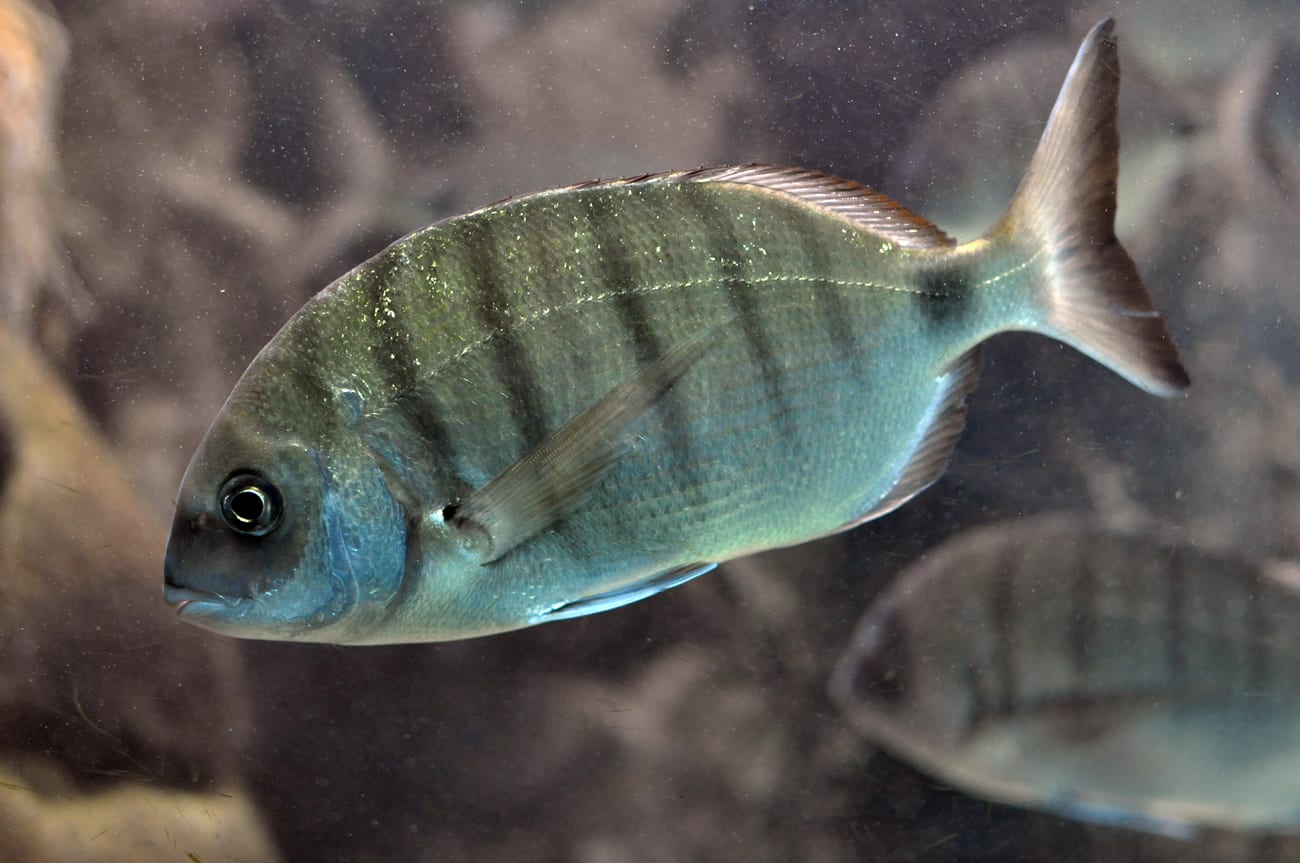
Taxonomy
- Kingdom
- Animalia
- Phylum
- Chordata
- Class
- Actinopterygii
- Order
- Siluriformes
- Family
- Sparidae
- Genus
- Diplodus
- Species
- sargus
Habitat
White seabream primarily inhabit coastal waters, including rocky reefs, sandy bottoms, and seagrass beds. They are found in the eastern Atlantic Ocean, Mediterranean Sea, and western Indian Ocean, typically at depths of 0 to 50 meters. These areas provide shelter and abundant food sources.
Diet
White seabream are omnivorous, feeding on benthic invertebrates like crabs, shrimp, and mollusks, as well as algae and seagrasses. They forage during the day in small groups, using their teeth to scrape food from rocks and substrates. Feeding activity is most intense in the morning and late afternoon.
Behavior
White seabream are diurnal and form schools, particularly juveniles, for protection against predators. They exhibit territorial behavior around feeding areas and can be aggressive towards intruders. These fish are curious and may approach divers, and they migrate to deeper waters during winter months.
Fishing
White seabream (Diplodus sargus) is a popular sport and food fish in the Mediterranean and eastern Atlantic regions, where recreational fishing supports conservation through license fees and habitat programs that protect coastal ecosystems. Anglers should target them using bottom fishing techniques with light to medium tackle, such as a 7-9 foot rod paired with 10-20 lb test line and a simple bottom rig with a size 1-2 hook, to effectively handle their strong runs in rocky areas; effective baits include crabs, shrimp, or worms that mimic their natural diet of benthic invertebrates, while small jigs or soft plastics can also entice strikes. The best season is spring through summer when they are more active during spawning, with peak fishing times in the early morning or late afternoon when feeding is most intense; focus on coastal habitats like rocky reefs, sandy bottoms, and seagrass beds at depths of 0-50 meters, where casting near structures or using anchored boats yields the best results. The IGFA all-tackle world record stands at around 4 pounds 1 ounce, reflecting their typical size of 20-40 cm with maximum lengths up to 60 cm. Conservation-wise, white seabream are listed as Least Concern by the IUCN, and angler-funded programs enforce slot limits and catch-and-release practices in many areas as effective tools to maintain healthy populations and support stocking initiatives that enhance fisheries sustainability.
Conservation Status
Listed as Least Concern by IUCN.