
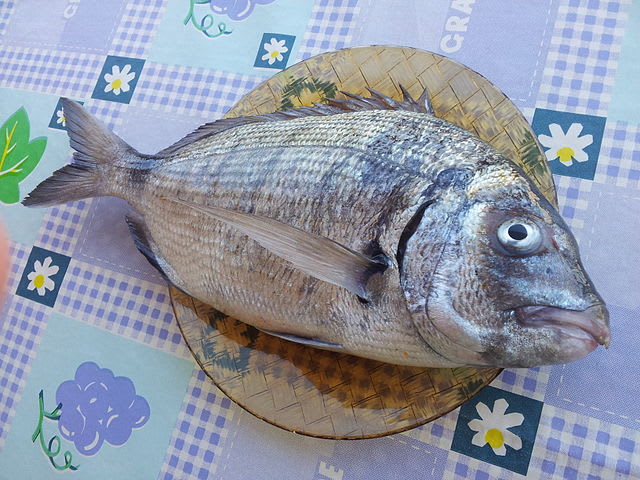
Taxonomy
- Kingdom
- Animalia
- Phylum
- Chordata
- Class
- Actinopterygii
- Order
- Siluriformes
- Family
- Sparidae
- Genus
- Diplodus
- Species
- sargus cadenati
Habitat
This species inhabits coastal waters of the Northeast Atlantic, preferring rocky reefs, sandy bottoms, and seagrass beds at depths of 5 to 200 meters. It is commonly found around the coasts of Morocco, Western Sahara, and the Canary Islands, where it seeks sheltered areas for feeding and shelter.
Diet
The Moroccan white seabream feeds primarily on crustaceans, mollusks, and small fish, with algae and other plant matter supplementing its diet. It exhibits diurnal feeding behavior, actively foraging in groups over rocky substrates during the day. Feeding often occurs near the bottom, using its strong jaws to crush hard-shelled prey.
Behavior
Moroccan white seabream are schooling fish that form groups to forage and evade predators, often displaying territorial behavior around prime feeding spots. They are primarily diurnal, active during daylight hours for feeding and resting in crevices at night. This species shows protandrous hermaphroditism, starting life as males and potentially changing to females as they age.
Fishing
Anglers targeting the Moroccan white seabream, a popular sport fish in the Northeast Atlantic, can use effective bottom fishing techniques with light tackle to capitalize on its schooling behavior and bottom-feeding habits, casting baits near rocky reefs, sandy bottoms, and seagrass beds. Opt for a medium-light spinning rod with 6-10 lb test line, a sensitive reel, and size 1/0 to 2/0 hooks baited with live shrimp, crabs, worms, or small fish imitations, as these mimic its diet of crustaceans and mollusks; artificial lures like jigs or soft plastics can also entice strikes during daylight hours. The best seasons are spring and summer when spawning occurs, with peak activity in the daytime over depths of 5 to 200 meters along the coasts of Morocco, Western Sahara, the Canary Islands, and nearby Atlantic regions, where sheltered areas provide ideal fishing spots. The IGFA all-tackle world record for the white seabream (Diplodus sargus) is 9 pounds 14 ounces, highlighting the species' potential for thrilling catches. As a Least Concern species per IUCN, conservation is bolstered by angler-funded programs through license fees that support habitat restoration and stocking efforts, with regulations like slot limits and catch-and-release in certain areas serving as proven tools to sustain healthy populations and promote ethical fishing practices.
Conservation Status
Listed as Least Concern by IUCN.