
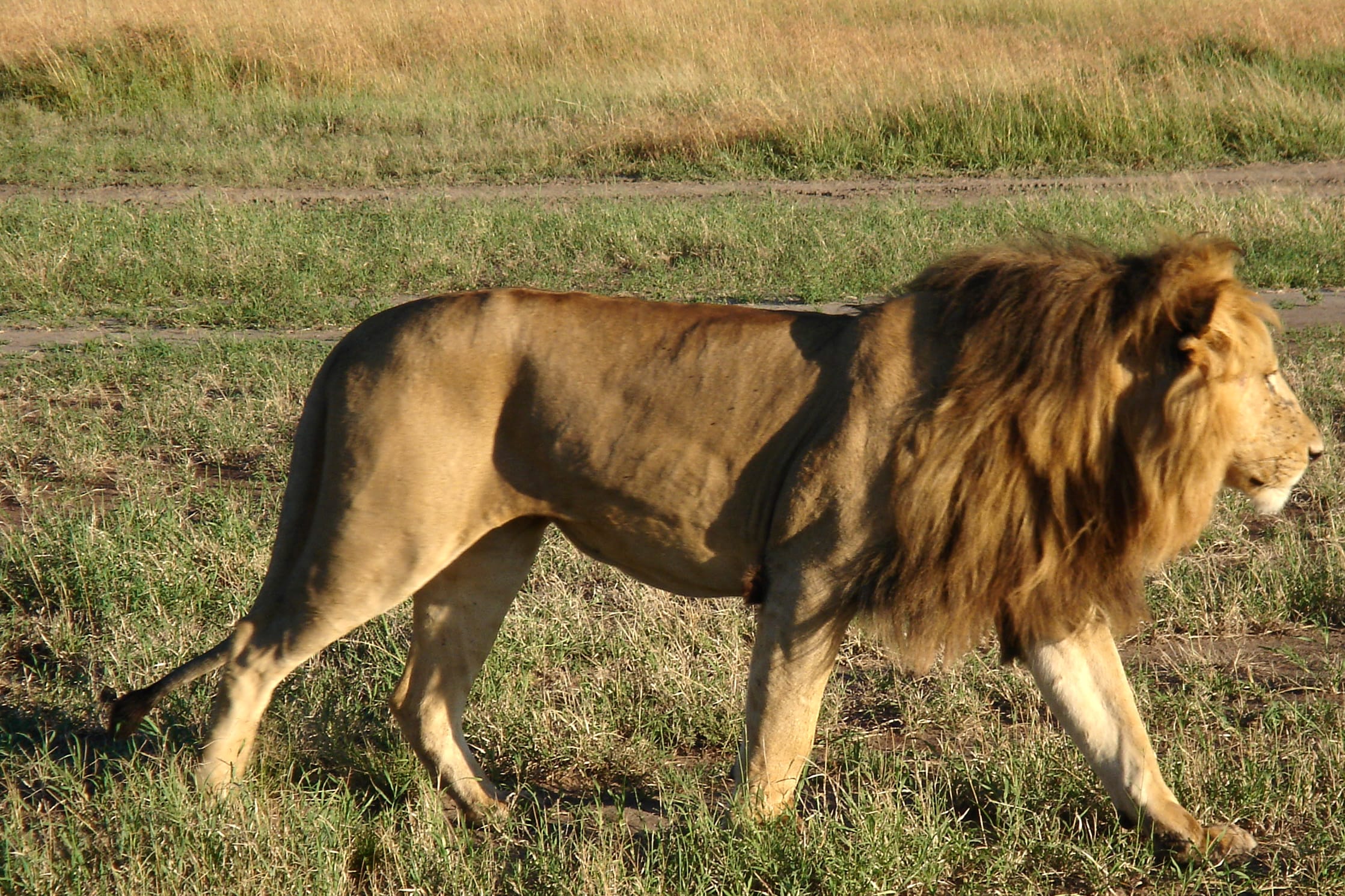
Overview
The lion is a large cat and apex predator native to Africa and India. Known as the "king of beasts" for their majestic appearance and social behavior in prides.
Taxonomy
- Class
- Mammalia
- Order
- Carnivora
- Family
- Felidae
- Genus
- Panthera
- Species
- leo
Habitat
Lions primarily inhabit savannas, grasslands, and open woodlands in sub-Saharan Africa, with a small population in the Gir Forest of India. They prefer areas with a mix of open spaces for hunting and cover like bushes or rocks for resting, and they require proximity to water sources. These habitats often feature warm climates and seasonal variations that influence their movement.
Diet
Lions are carnivores that primarily hunt large ungulates such as zebras, wildebeest, and antelopes, often working in groups to take down prey. They are opportunistic feeders, scavenging from kills made by other predators or hunting smaller animals like hares when larger prey is scarce. Feeding typically occurs at dawn or dusk, with prides sharing meals where dominant males eat first.
Behavior
Lions are highly social, living in prides of 10-15 individuals led by one or more dominant males, with females forming the core for cooperative hunting. They are primarily nocturnal or crepuscular, resting during the day in shaded areas and becoming active at night to hunt or defend territory. Lions exhibit territorial behavior, marking boundaries with urine and roaring to communicate, and they can be aggressive toward intruders or during mating disputes.
Hunting
Lion hunting is a regulated activity in select African countries, employing methods like spot and stalk or baited blinds in savanna and bushveld terrains to target mature males. Use a powerful rifle in at least .375 H&H caliber with premium controlled-expansion bullets for reliable penetration, focusing on precise shot placement behind the shoulder to ensure a quick, ethical harvest. The optimal season is the dry months from June to October, when visibility improves and lions congregate around water sources, enhancing success rates. Trophy criteria emphasize large, well-developed manes and overall body size, with top specimens recorded in Safari Club International (SCI) or Rowland Ward books. Legal hunting is available in countries such as South Africa, Namibia, Zimbabwe, and Tanzania, primarily on private game ranches and conservancies where permit fees fund essential anti-poaching patrols and habitat protection, demonstrating how regulated hunting under the Southern African conservancy systems has helped maintain stable lion populations and combat threats like habitat loss.
Conservation Status
The IUCN classifies the lion as Vulnerable, with populations declining due to habitat loss, human-wildlife conflict, and poaching. Major threats include fragmentation of habitats and retaliatory killings by livestock owners.