
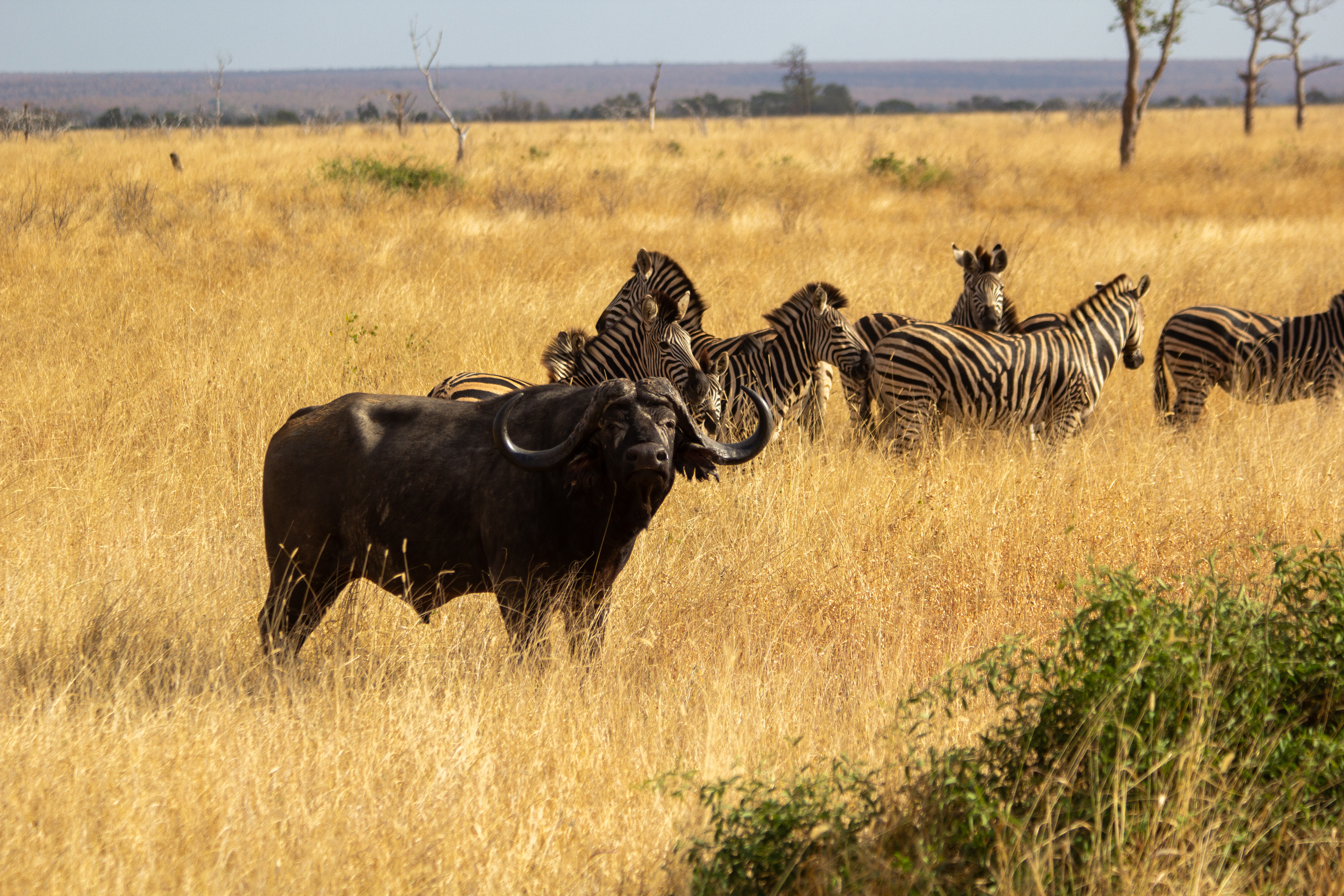
Overview
The African buffalo is one of Africa's "Big Five" and among the most dangerous animals to hunt. Known for their unpredictable temperament and massive curved horns.
Taxonomy
- Kingdom
- Animalia
- Phylum
- Chordata
- Class
- Mammal
- Order
- Artiodactyla
- Family
- Bovidae
- Genus
- Syncerus
Habitat
African buffaloes primarily inhabit savannas, grasslands, and open woodlands in sub-Saharan Africa. They prefer areas with access to water sources and can adapt to a range of terrains, from floodplains to montane forests.
Diet
African buffaloes are primarily grazers, feeding on a variety of grasses, sedges, and herbs. They also browse on shrubs and leaves during the dry season, typically foraging in herds during the early morning and late afternoon to avoid the heat of the day.
Behavior
African buffaloes live in large herds led by a dominant male, with complex social structures that include subgroups of females and young. They are active both day and night, exhibit strong territorial defense, and are known for their aggressive charges when threatened, making them one of the most dangerous animals in Africa. Herds communicate through vocalizations and maintain strong bonds, often returning to help injured members.
Hunting
{"best_methods": "Spot and stalk is the primary method for hunting African buffalo, as they inhabit open savannas and grasslands where you can glass herds from a distance and approach carefully. Stand hunting from blinds near waterholes or trails is also effective, especially during dawn and dusk when buffalo are most active. Calling is not commonly used due to their aggressive nature.", "recommended_calibers": "For safety and ethical reasons, use a minimum of .375 H&H Magnum or larger calibers such as .416 Rigby or .458 Winchester Magnum. These provide the necessary stopping power for a large, dangerous animal like the African buffalo.", "special_considerations": "African buffalo are highly wind-sensitive with excellent senses of smell and hearing, so always hunt downwind and use the terrain for cover. The best times are early morning or late afternoon when they feed; avoid midday heat. Terrain includes savannas and woodlands, which can have thick bush—be prepared for charges and always hunt with an experienced guide. They are one of the most dangerous game animals, so prioritize safety with backup rifles and proper tracking.", "trophy_criteria": "Trophy bulls are typically mature males with large, curved horns forming a prominent boss at the base. Aim for horns measuring at least 30-40 inches in length and spread, scored under systems like SCI or Rowland Ward. Focus on animals that are past their prime to promote herd health.", "legal_regions": "African buffalo are legally huntable in sub-Saharan African countries including South Africa, Namibia, Botswana, Zimbabwe, Zambia, Tanzania, and Mozambique, subject to strict quotas and licensing. Always verify with local wildlife authorities and ensure hunts are conducted through reputable outfitters to comply with CITES regulations."}
Conservation Status
The IUCN status of the African buffalo is Near Threatened, with populations declining due to habitat loss, poaching, and disease. Major threats include human-wildlife conflict and droughts exacerbated by climate change.