
Overview
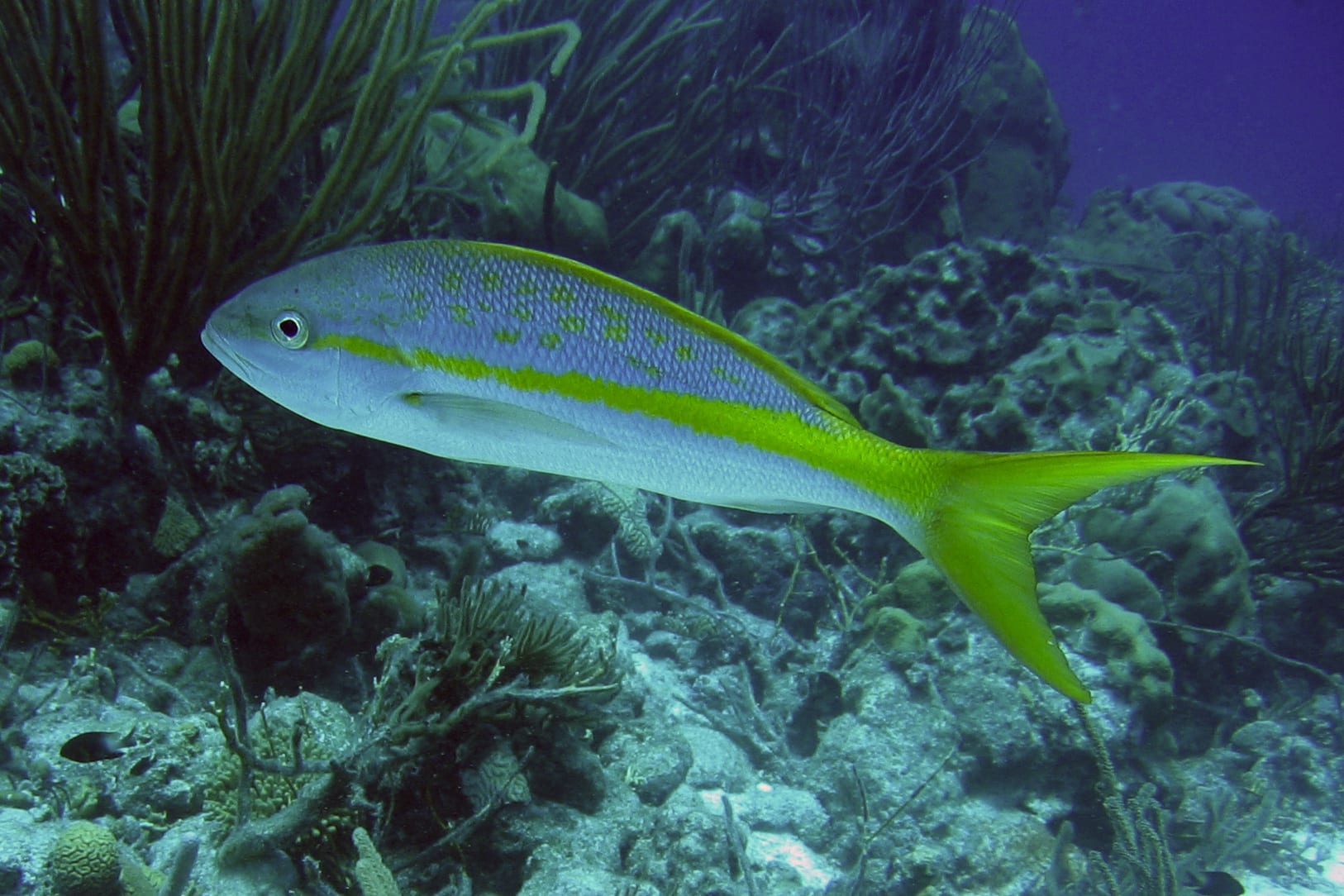
Snappers have an oval-shaped body. The deep fork of their caudal fin helps them swim quickly through the water. Their name comes from a yellow line that begins at the snout, widens down the length of the body, and covers their entire tail. Yellowtail have a slightly sweet flesh, making them a popular game fish. They are not currently being overfished and are a good sustainable seafood choice.
Taxonomy
- Kingdom
- Animalia
- Phylum
- Chordata
- Class
- Actinopterygii
- Order
- Perciformes
- Family
- Lutjanidae
- Genus
- Ocyurus
- Species
- chrysurus
Habitat
Yellowtail inhabit coastal water to a depth of 300 feet (91.5 m) and are mainly found associated with coral reefs. It can be found well above the bottom in loose schools or alone.
Diet
Yellowtail snappers primarily feed on small fish, shrimp, crabs, and other crustaceans found on or near coral reefs. They are opportunistic hunters, often foraging in schools during the day over the reef structure. Feeding activity peaks in the morning and late afternoon when prey is most abundant.
Behavior
Yellowtail snappers are schooling fish that form loose groups for protection and feeding, often swimming just above coral reefs. They are diurnal, being most active during the day and resting at night in reef crevices. These fish can exhibit curiosity towards divers or boats, sometimes approaching closely, and may show territorial behavior around feeding areas.
Fishing
A common approach to catching yellowtail is chumming at anchor. These finicky feeders are attracted to the chum and then fished with live or cut bait; even plugs and flies. Many of the largest yellowtails are caught bottom fishing in deep water with live pilchards or other fish, even large ballyhoo. The immensely popular species is an excellent sport fish and considered by many to be the tastiest of all the snappers.
Conservation Status
Listed as Data Deficient by IUCN.