
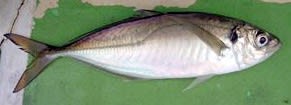
Taxonomy
- Kingdom
- Animalia
- Phylum
- Chordata
- Class
- Actinopterygii
- Order
- Perciformes
- Family
- Scombridae
- Genus
- Trachurus
- Species
- novaezelandiae
Habitat
This species primarily inhabits coastal and offshore waters of the Southwest Pacific, including around Australia and New Zealand, over continental shelves. They prefer pelagic environments from the surface down to about 200 meters depth, often near areas with upwellings that bring nutrient-rich waters.
Diet
Yellowtail horse mackerel feed mainly on small fish such as anchovies and sardines, as well as squid and crustaceans. They hunt in schools during the day, using their speed and agility to chase and capture prey in open water.
Behavior
These fish are highly schooling, forming large groups for protection against predators and coordinated hunting. They are diurnal, most active during the day, and exhibit migratory patterns following seasonal food availability. They can be aggressive when feeding but are not particularly territorial.
Fishing
Target Yellowtail horse mackerel, a fast-swimming schooling fish in the Scombridae family, using effective techniques like trolling with lures or jigging in open waters to mimic their prey; cast metal jigs, spoons, or feather lures that imitate small fish like anchovies, or use live bait such as sardines and squid for the best results. Opt for light to medium tackle, including a 6-8 foot spinning rod paired with a reel spooled in 10-20 lb monofilament line, to handle their agility in currents up to 200 meters deep. The prime season is summer during spawning migrations, with peak activity at dawn or dusk in daylight hours when they hunt in schools; focus on coastal and offshore pelagic habitats in the Southwest Pacific, such as around Whangaroa Harbor, the Great Australian Bight, and southeastern Australia, where upwellings bring nutrient-rich waters. These fish can reach up to 50 cm and 1 lb 2 oz, with the IGFA all-tackle record for related Trachurus species highlighting their sport value, though specific records for this variant may vary—always check local guidelines. Conservation efforts in Australia and New Zealand, supported by angler license fees, ensure healthy populations through regulated bag limits and slot sizes as effective tools for maintaining sustainable fisheries, promoting catch-and-release to support stocking programs and protect these waters for future generations.
Conservation Status
Listed as Not Evaluated by IUCN.