
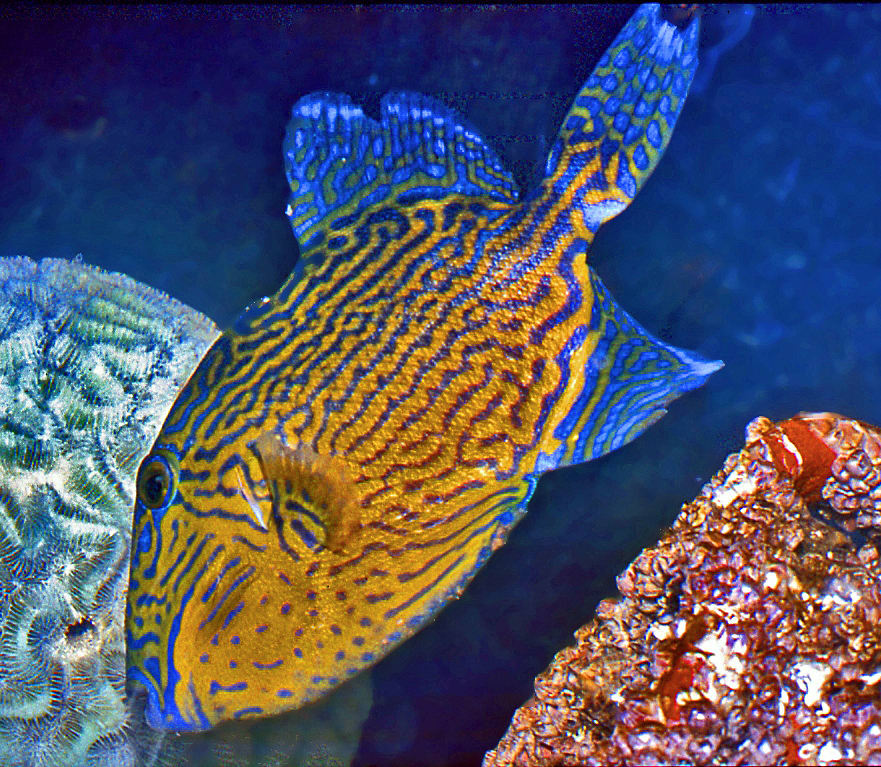
Taxonomy
- Kingdom
- Animalia
- Phylum
- Chordata
- Class
- Actinopterygii
- Order
- Beryciformes
- Family
- Balistidae
- Genus
- Pseudobalistes
- Species
- fuscus
Habitat
Yellowspotted triggerfish primarily inhabit coral reefs and rocky substrates in the Indo-Pacific region, from shallow coastal waters down to about 50 meters. They prefer areas with abundant hiding spots like caves and crevices for protection. Geographically, they are found from the Red Sea and East Africa to Japan, Australia, and the Great Barrier Reef.
Diet
Yellowspotted triggerfish are omnivorous, feeding mainly on benthic invertebrates such as crabs, sea urchins, and mollusks, which they crush with their strong jaws. They also consume algae and occasionally small fish. Feeding activity peaks during the day when they forage actively over the reef bottom.
Behavior
Yellowspotted triggerfish are solitary and highly territorial, aggressively defending their feeding and nesting areas from intruders. They are diurnal, active during daylight hours, and often display threat postures by erecting their spines. Notable behaviors include using their strong teeth to manipulate coral and shells, and they can be quite bold when approached by divers.
Fishing
As a proven conservation tool, recreational fishing for the Yellowspotted triggerfish supports aquatic habitat protection through angler-funded programs like license fees and excise taxes, which fund reef restoration in the Indo-Pacific. Target this species using bottom fishing techniques with a sturdy rod and reel setup, casting bait to coral reefs and rocky substrates where they hide in caves and crevices; use medium-heavy tackle with 20-30 lb test line and strong circle hooks to handle their powerful jaws and territorial behavior. Effective baits and lures include live or dead crabs, shrimp, or squid to mimic their diet of benthic invertebrates, while metal jigs can entice strikes from deeper waters. The best season is during warmer months in the Indo-Pacific regions like the Red Sea, Great Barrier Reef, or Japan, with peak activity in the daytime when they forage actively; focus on depths up to 50 meters for the highest success. Yellowspotted triggerfish can reach up to 60 cm (24 inches) and 7 lbs 4 oz, with no specific IGFA record noted, so anglers should aim for trophy catches while practicing catch-and-release to sustain populations. Slot limits and catch-and-release policies in some areas serve as effective management tools to ensure healthy stocks, encouraging participation in stocking programs that protect these vibrant reef ecosystems.
Conservation Status
Listed as Not Evaluated by IUCN.