
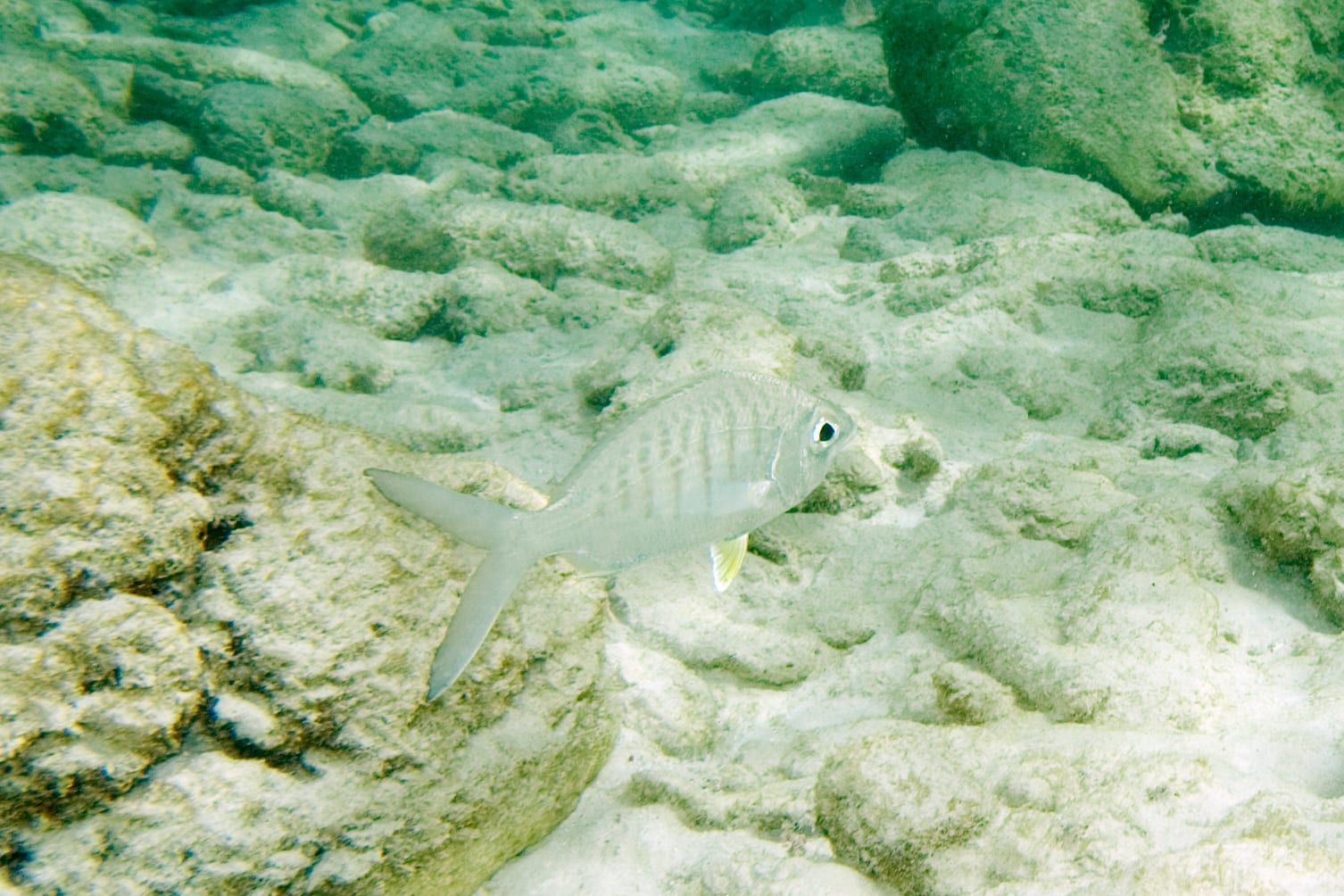
Taxonomy
- Kingdom
- Animalia
- Phylum
- Chordata
- Class
- Actinopterygii
- Order
- Perciformes
- Family
- Gerreidae
- Genus
- Gerres
- Species
- cinereus
Habitat
Yellowfin mojarra primarily inhabit shallow coastal waters, estuaries, and bays in the Western Atlantic, often over sandy or muddy substrates. They prefer areas with seagrass or mangroves and can tolerate a range of salinities from brackish to fully marine environments.
Diet
Yellowfin mojarra feed mainly on small invertebrates such as worms, crustaceans, and mollusks, which they pick from the bottom substrates. They are bottom-feeders active during the day, using their protrusible mouths to forage in sandy areas, and occasionally consume detritus or small fish.
Behavior
Yellowfin mojarra are schooling fish that form loose groups for protection and feeding, often in shallow waters. They are primarily diurnal, active during the day for foraging, and may burrow into the sand to hide from predators or rest. They exhibit territorial behavior around prime feeding spots but are generally not aggressive.
Fishing
Target yellowfin mojarra with effective bottom fishing techniques using light tackle to enjoy this accessible inshore species that supports conservation efforts through angler-funded programs; use a light spinning rod with 6-10 lb test line, small hooks (sizes 6-10), and split shot sinkers for precise bait presentation over sandy or muddy substrates. Opt for natural baits like shrimp, worms, or small crabs to mimic their diet of invertebrates, or try small jigs for a more active approach. The best season is year-round in tropical regions like the Western Atlantic, Gulf of Mexico, and Caribbean, with peak activity during daylight hours when they forage; focus on shallow coastal waters, estuaries, bays, and areas with seagrass or mangroves for the highest success. Yellowfin mojarra can reach up to 40 cm and 2 lbs 3 oz, highlighting their modest size for fun, manageable catches. As a Least Concern species per IUCN, sustainable practices like catch-and-release help maintain healthy populations, with regulations in places like Florida ensuring balanced fishing pressure that funds habitat restoration through license fees.
Conservation Status
Listed as Least Concern by IUCN.