
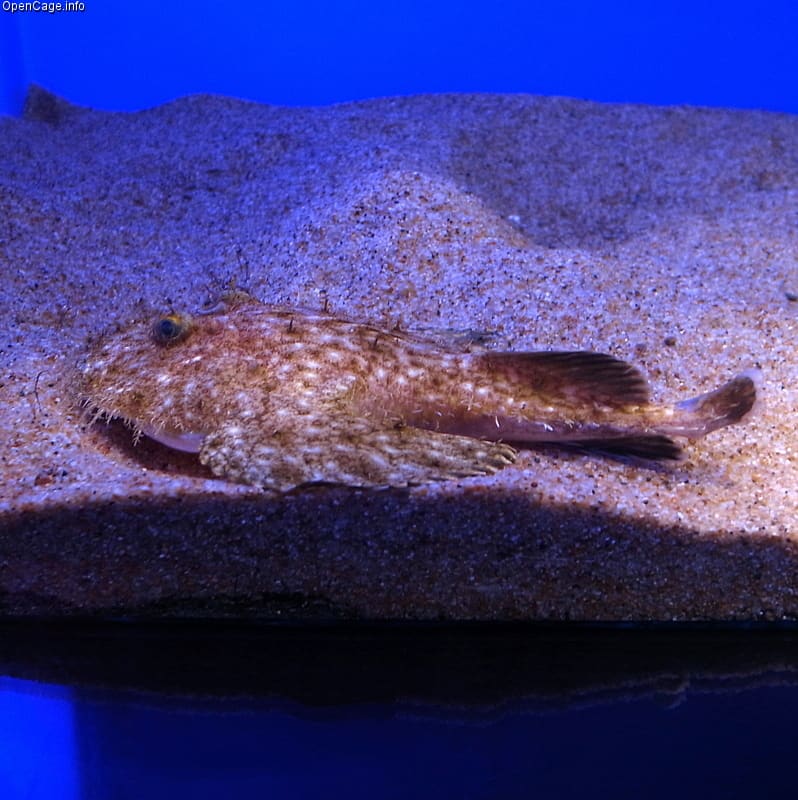
Taxonomy
- Kingdom
- Animalia
- Phylum
- Chordata
- Class
- Actinopterygii
- Order
- Perciformes
- Family
- Lophiidae
- Genus
- Lophius
- Species
- Litulon
Habitat
Yellow goosefish inhabit continental shelf waters at depths of 50-600 meters, preferring sandy or muddy substrates in the Northwest Pacific Ocean. They are commonly found in areas like the Yellow Sea, East China Sea, and around Japan and Korea, where they remain close to the seafloor.
Diet
Yellow goosefish are ambush predators that primarily eat fish, squid, and crustaceans, using their lure to entice prey within striking distance. They feed mainly at night or in low-light conditions, lying in wait on the ocean floor to capture passing food items.
Behavior
Yellow goosefish are solitary and sedentary, spending most of their time camouflaged on the seafloor waiting to ambush prey. They exhibit minimal migration, with activity peaking at dusk and dawn, and show aggressive feeding behavior when prey is near. They are not particularly territorial but will defend feeding areas if necessary.
Fishing
Target yellow goosefish, a prized bottom-dweller in the Northwest Pacific, using effective bottom fishing techniques like anchoring and drifting over sandy or muddy substrates at depths of 50-600 meters in areas such as the Yellow Sea, East China Sea, around Japan, and Korea; employ a sturdy rod and reel combo with heavy line (at least 50-pound test) and strong hooks to handle their weight and toothy mouths, paired with bait like live squid, fish, or crustaceans to mimic their natural prey and trigger strikes from these ambush predators. The best season is winter when they are more active during spawning, with prime fishing times at dusk or dawn in low-light conditions to align with their feeding behavior; focus on seafloor structures where they lie in wait, using GPS and fish finders for precise targeting in these deep waters. Yellow goosefish can reach impressive sizes, with the largest recorded at 44 pounds 15 ounces, making them a challenging catch that supports recreational fishing as a key conservation tool through license fees that fund habitat monitoring and population studies in the region. While not subject to specific slot limits or catch-and-release mandates, practicing selective harvest helps maintain stable populations, as evidenced by current fishery data, ensuring sustainable angling that protects these waters for future generations.
Conservation Status
Listed as Not Evaluated by IUCN.