
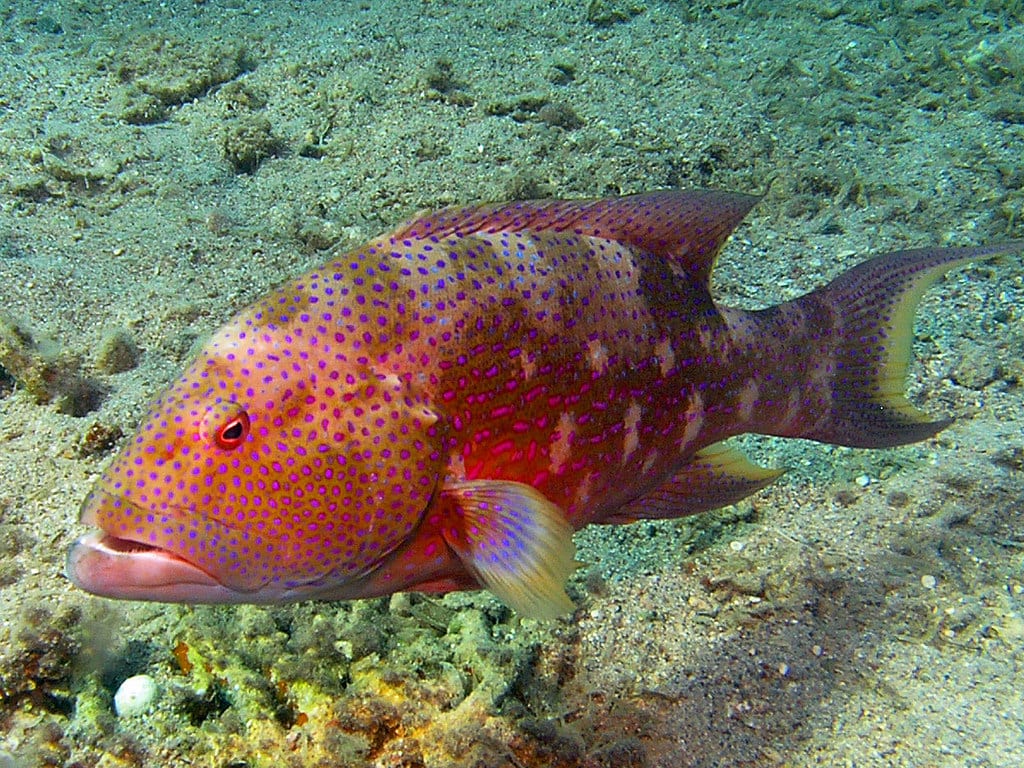
Taxonomy
- Kingdom
- Animalia
- Phylum
- Chordata
- Class
- Actinopterygii
- Order
- Scorpaeniformes
- Family
- Serranidae
- Genus
- Variola
- Species
- louti
Habitat
This species inhabits coral reefs, lagoons, and outer reef slopes in the Indo-Pacific region, typically at depths of 10 to 150 meters. It prefers areas with rocky or coral substrates for shelter and hunting. Geographic preferences include the Red Sea, Persian Gulf, and western Pacific islands.
Diet
The yellow-edged lyretail primarily feeds on small fish, crustaceans, and occasionally cephalopods. It employs an ambush strategy, hiding among corals and striking quickly at prey. Feeding activity peaks during the day in shallow reef areas.
Behavior
Yellow-edged lyretails are generally solitary or found in small groups, often defending territories around coral heads. They are diurnal, active during the day for hunting and resting at night in crevices. This species exhibits aggressive behavior when competing for food or mates.
Fishing
The Yellow-edged lyretail, a member of the grouper family, is a popular sport fish in the Indo-Pacific, where it supports conservation through angler-funded programs that protect coral reefs and marine habitats. Use bottom fishing or trolling techniques to target this ambush predator, employing medium-heavy rods with reels spooled in 20-50 lb test line and strong leaders to handle their structure-hugging behavior. Opt for live baits like small fish or squid, or effective lures such as jigs and diving plugs that imitate their prey. The best season is during warmer months around full moons for spawning activity, with peak fishing times in the daytime over coral reefs, lagoons, and outer slopes at depths of 10-150 meters in areas like the Red Sea, Persian Gulf, or Hawaiian Islands—focus on rocky or coral substrates for the best results. Record sizes reach up to 15 lbs and 1 meter, highlighting the thrill of the catch. Conservation measures, including slot limits and catch-and-release practices in certain regions, ensure sustainable populations, with fishing license fees directly contributing to habitat restoration and monitoring programs that safeguard these vital ecosystems.
Conservation Status
Listed as Least Concern by IUCN.