
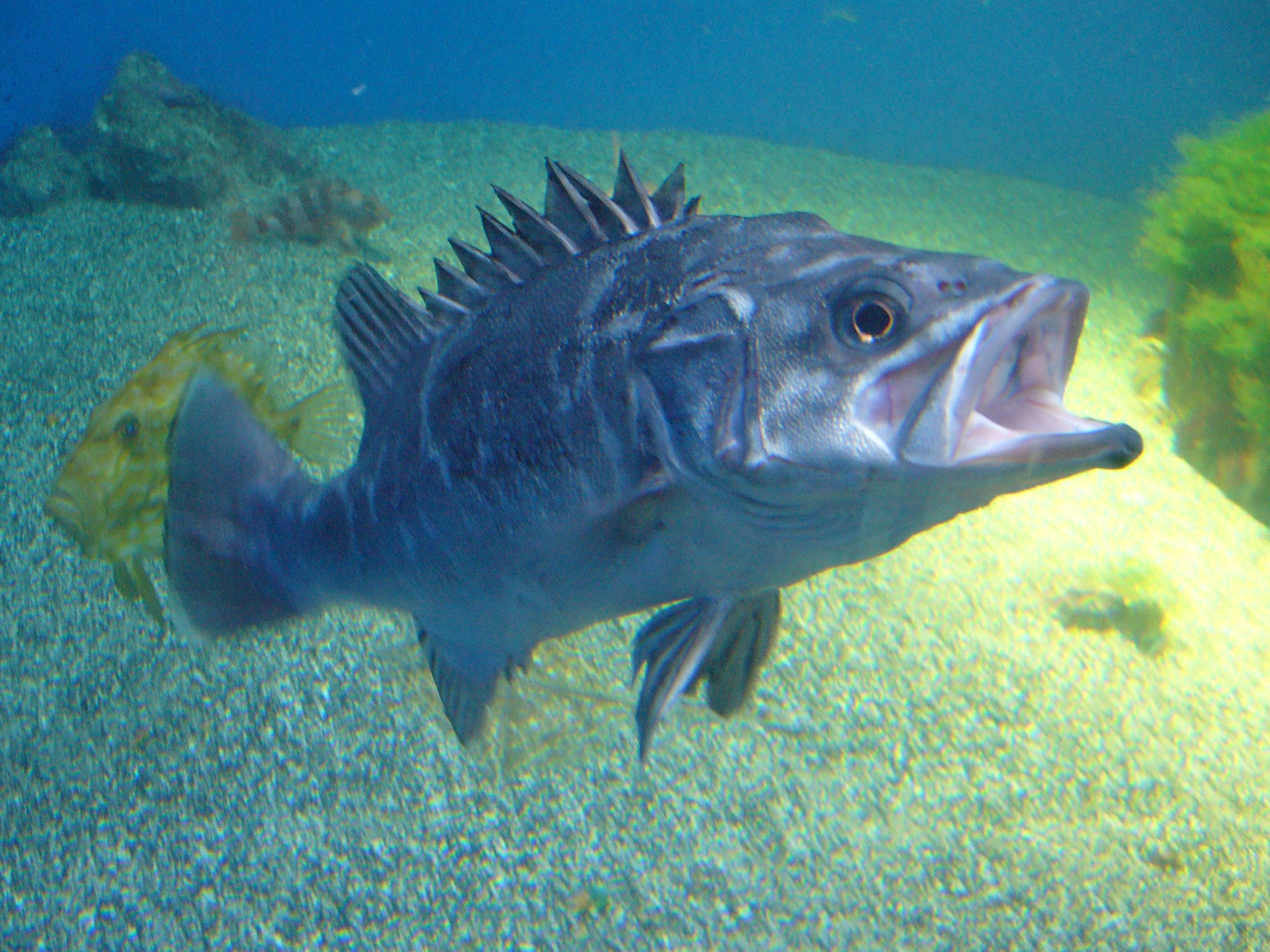
Taxonomy
- Kingdom
- Animalia
- Phylum
- Chordata
- Class
- Actinopterygii
- Order
- Perciformes
- Family
- Polyprionidae
- Genus
- Polyprion
- Species
- americanus
Habitat
Wreckfish primarily inhabit deep waters of the continental shelves and slopes, typically between 100 and 600 meters depth, over rocky reefs, wrecks, and areas with strong currents. They are found in temperate and tropical regions of the Atlantic, Indian, and Pacific Oceans, preferring structured environments that provide ambush points.
Diet
Wreckfish are carnivorous predators that primarily eat fish, squid, and crustaceans, often ambushing prey from hiding spots. They feed mainly at night in deep waters, using their large mouths to engulf whole prey items.
Behavior
Wreckfish are solitary and territorial, often staying near underwater structures like reefs or wrecks for protection and hunting. They are primarily nocturnal, remaining inactive during the day and actively foraging at night, with slow swimming patterns that help them conserve energy in deep waters.
Fishing
Wreckfish, a prized deep-sea target for anglers, are best pursued using heavy bottom fishing or deep-dropping techniques with strong rod-and-reel setups to handle their powerful runs in challenging depths; target them by dropping bait to the seafloor around wrecks, reefs, and underwater structures where they ambush prey. Use heavy-duty tackle including a stout rod rated for 50-80 pound test line, large circle hooks (size 8/0 to 12/0), and sturdy reels with high drag to manage fish up to 190 pounds in currents up to 600 meters deep—opt for live bait like squid, small fish, or crustaceans, or effective lures such as large jigs and soft plastics that mimic their natural diet. The best season is summer during their spawning periods in temperate and tropical regions of the Atlantic, Indian, and Pacific Oceans, with peak activity at night when they forage; focus on areas like the Gulf of Maine, North Carolina, or off South Africa for consistent catches. Target habitats in 100-600 meter depths over rocky shelves and slopes, using GPS and fish finders to locate structures for the best success. The IGFA all-tackle world record stands at 190 pounds 0 ounces, caught off Georgia, USA, showcasing their impressive size potential. Conservation-wise, while listed as Data Deficient by the IUCN, wreckfish benefit from angler-funded programs that support habitat protection and stock assessments; adhere to regional slot limits and catch quotas as effective management tools that ensure sustainable populations and promote catch-and-release practices to maintain healthy deep-water ecosystems.
Conservation Status
Listed as Data Deficient by IUCN.