
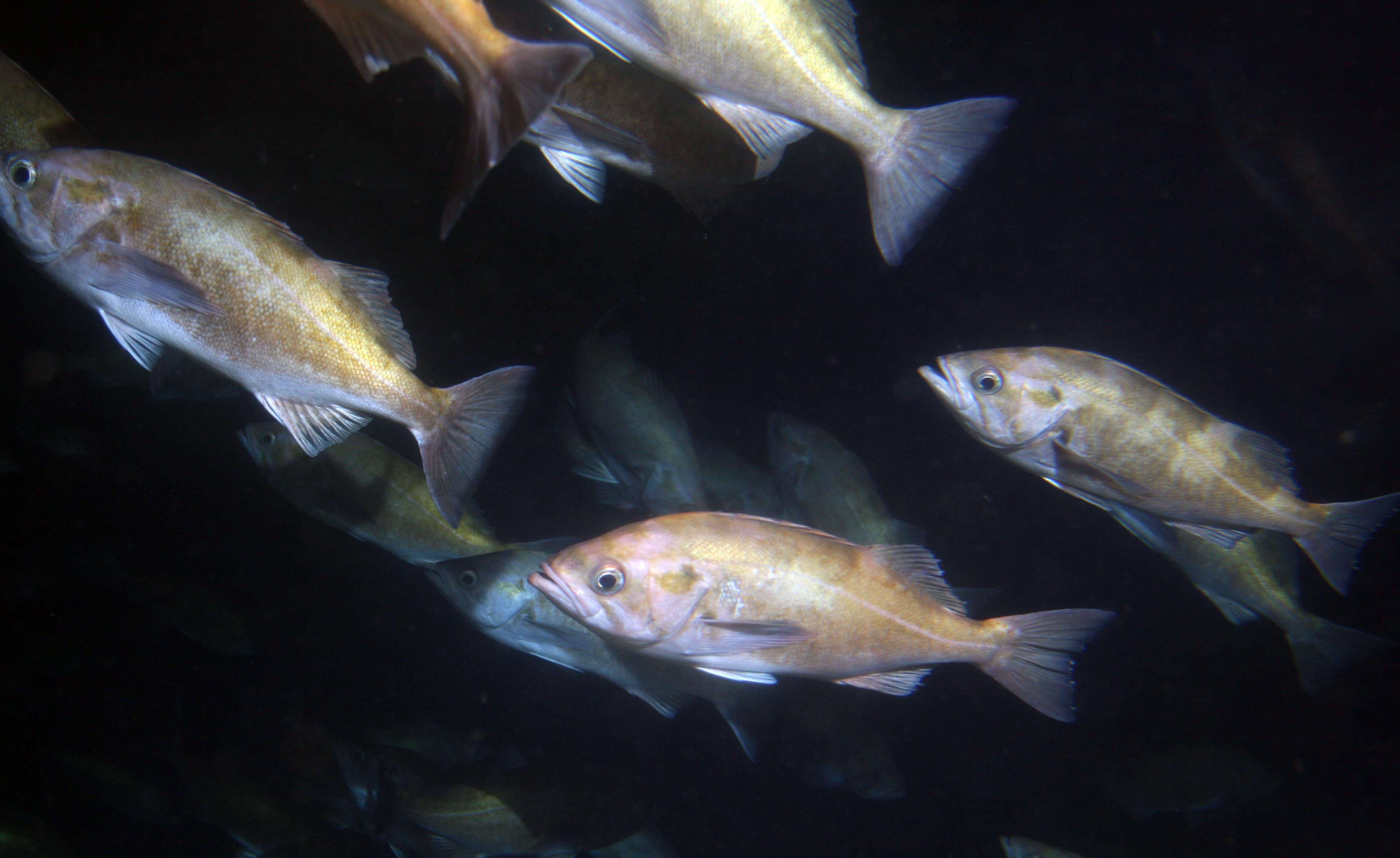
Taxonomy
- Kingdom
- Animalia
- Phylum
- Chordata
- Class
- Actinopterygii
- Order
- Scorpaeniformes
- Family
- Sebastidae
- Genus
- Sebastes
- Species
- entomelas
Habitat
Widow rockfish primarily inhabit rocky reefs and underwater structures in the northeastern Pacific Ocean, from Alaska to Baja California. They prefer depths of 50 to 400 meters, avoiding sandy or open pelagic areas. This habitat provides ample cover and food sources in cooler, deeper waters.
Diet
Widow rockfish feed mainly on small fish, squid, and crustaceans such as shrimp and krill. They are opportunistic predators that hunt in midwater or near the bottom, often ambushing prey. Feeding activity peaks at dusk and dawn when they are more active.
Behavior
Widow rockfish form large schools, particularly juveniles, and are generally inactive during the day, preferring to rest near the bottom. They exhibit vertical migration patterns, moving up in the water column at night to feed, and are not highly territorial. These fish can be cautious around divers or boats, making them challenging to observe.
Fishing
Widow rockfish are a favored sport fish in the Pacific Ocean, from Alaska to Baja California, where recreational fishing plays a key role in funding conservation efforts through license fees and habitat restoration programs. Use effective bottom fishing or vertical jigging techniques to target these deep-water species, employing heavy-duty rods (7-9 feet) paired with conventional reels spooled with 20-50 lb test line and strong leaders to handle depths of 50-400 meters around rocky reefs and underwater structures. For bait and lures, opt for squid, shrimp, or small fish imitations like metal jigs and soft plastics that mimic their natural diet of crustaceans and small prey, increasing your success during dawn and dusk when feeding activity peaks; prime seasons run from spring through fall for optimal weather and fish activity. Focus on areas with ample cover, such as Elfin Cove or Albatross Bank in the Gulf of Alaska, to locate schools and improve catches. The IGFA all-tackle world record is 5 pounds 6 ounces (2.4 kg), caught off the California coast, highlighting their impressive size potential. Conservation-wise, angler-supported measures like catch limits and slot sizes in certain regions are effective tools for maintaining healthy populations, aiding recovery from past overfishing and ensuring sustainable fishing practices that protect these vital marine ecosystems.
Conservation Status
Listed as Not Evaluated by IUCN.