
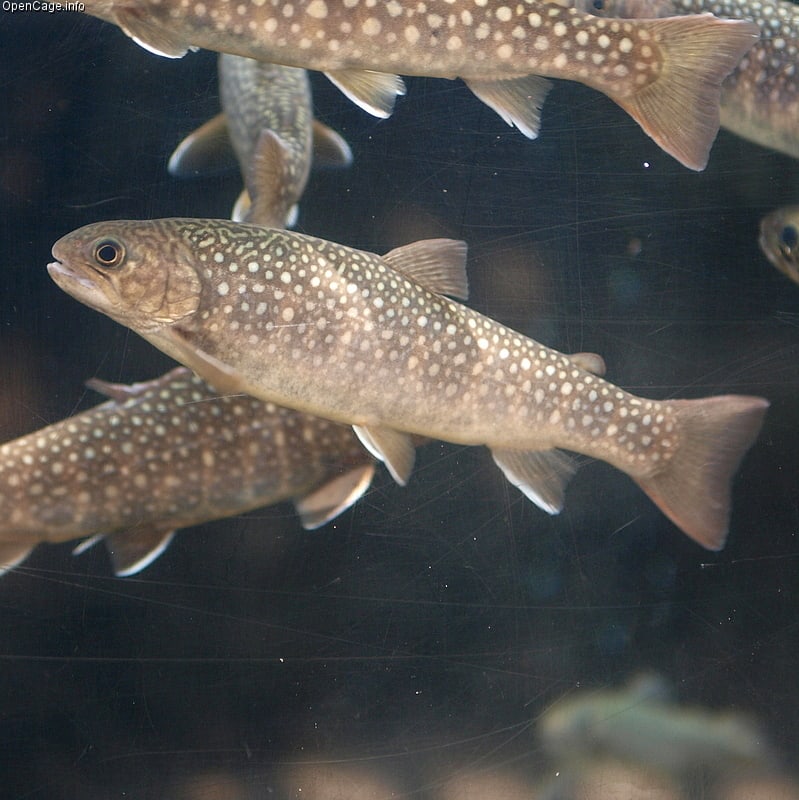
Taxonomy
- Kingdom
- Animalia
- Phylum
- Chordata
- Class
- Actinopterygii
- Order
- Perciformes
- Family
- Salmonidae
- Genus
- Salvelinus
- Species
- leucomaenis
Habitat
Whitespotted char primarily inhabit cold, clear, fast-flowing rivers and streams in mountainous regions, as well as some lakes in northern Asia. They prefer well-oxygenated waters with gravel or rocky substrates, commonly found in areas like Hokkaido, Japan, and the Russian Far East. These habitats are often in temperate to subarctic climates with low temperatures.
Diet
Whitespotted char feed on a variety of aquatic insects such as mayflies and caddisflies, as well as small fish, crustaceans, and occasionally fish eggs. They are opportunistic feeders, often hunting near the stream bottom during dawn and dusk. Their feeding behavior includes both drifting with the current to ambush prey and actively pursuing smaller organisms.
Behavior
Whitespotted char are generally solitary and territorial, especially during spawning when they defend specific gravel beds. They are most active in cooler water temperatures, typically at dawn and dusk, and exhibit migratory behavior between rivers and lakes for feeding and reproduction. This species is known for its agility in fast currents and can be cautious, making them challenging to approach.
Fishing
Anglers targeting Whitespotted char, a prized sport fish in the cold, clear, fast-flowing rivers and streams of Hokkaido, Japan, and the Russian Far East, should focus on fly fishing techniques using nymphs or dry flies to imitate their diet of aquatic insects, or light spinning with small spoons and spinners for a more versatile approach. Recommended tackle includes a 5-7 weight fly rod with a floating line and tippet sizes of 4-6X, or a light spinning rod with 4-8 lb test monofilament line; effective baits and lures are mayfly patterns, caddis imitations, worms, or small crankbaits to match their opportunistic feeding habits. The best season runs from spring through fall, with peak activity at dawn and dusk when they are most aggressive in well-oxygenated waters with gravel or rocky substrates—target deeper pools and riffles in mountainous regions for the best results. Whitespotted char can reach impressive sizes, with the largest recorded specimen weighing up to 17 pounds 8 ounces, though IGFA all-tackle records for this species are not widely documented; always verify local regulations. Conservation-wise, fishing for Whitespotted char supports aquatic habitat restoration through angler-funded programs like license fees in Japan and Russia, promoting catch-and-release practices and slot limits that ensure sustainable populations and protect these subarctic waterways from degradation.
Conservation Status
Listed as Not Evaluated by IUCN.