
Overview
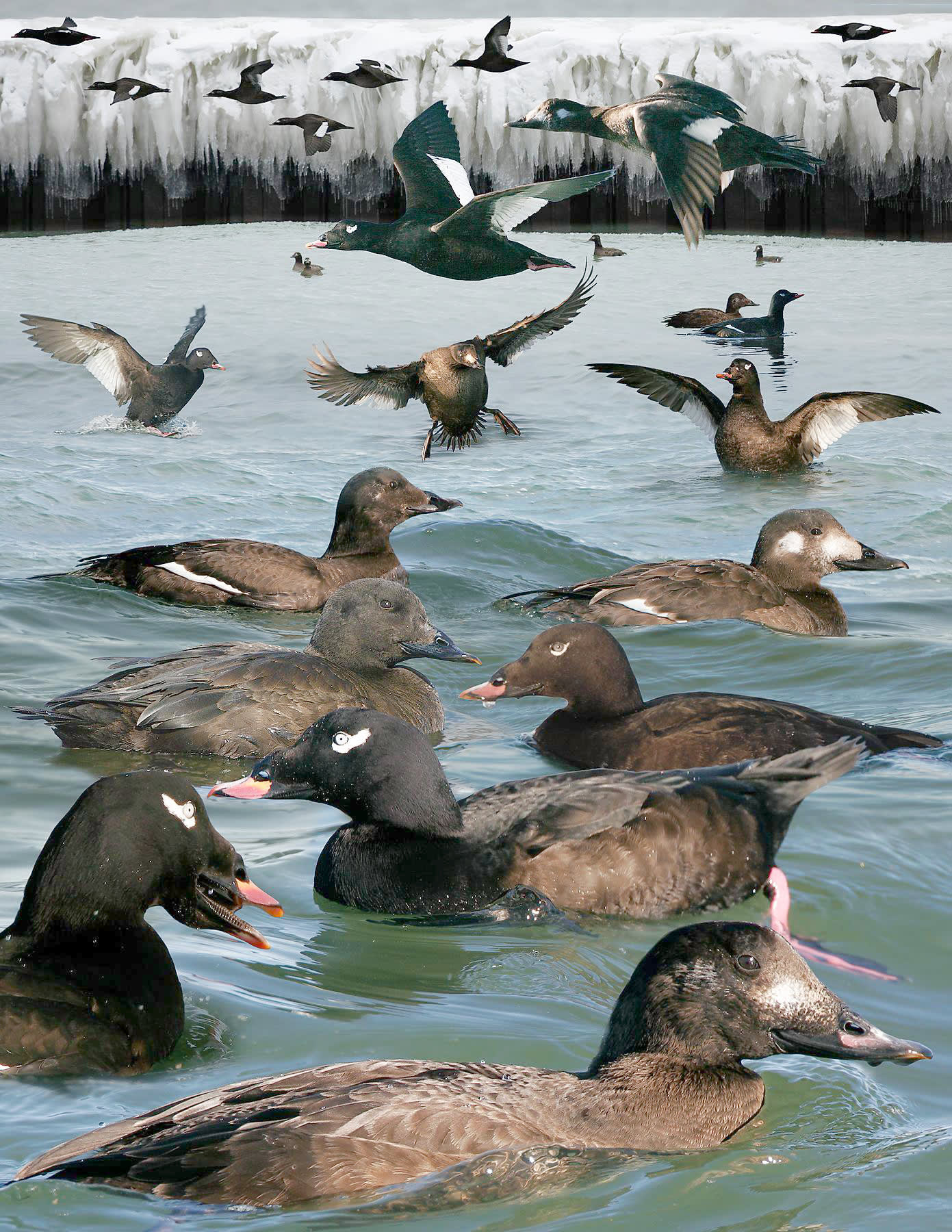
It is characterised by its bulky shape and large bill. It is the largest scoter at 51–58 cm. The male is all black, except for white around the eye and a white speculum. It has a bulbous yellow bill with a black base. The females are brown birds with two pale patches on each side of the head and white wing patches. It is a large sea duck, which breeds over the far north of Europe and Asia west of the Yenisey basin.The genus name is derived from Ancient Greek melas black and netta duck. The species name is from the Latin fuscus dusky brown.
Taxonomy
- Kingdom
- Animalia
- Phylum
- Chordata
- Class
- Bird
- Family
- Anatidae
- Genus
- Melanitta
- Species
- deglandi
Habitat
The lined nest is built on the ground close to the sea, lakes or rivers, in woodland or tundra. 5–11 eggs are laid. The pinkish eggs average 46.9 mm (1.85 in) in breadth, 68.2 mm (2.69 in) in length and 82.4 g (2.91 oz) in weight. The incubation period can range from 25 to 30 days. After about 21 days, neighboring females may start to behave aggressively towards other nesting females, resulting in confusion and mixing of broods. By the time she is done brooding, a female may be tending to as much as 40 offspring due to the mixing from these conflicts. The female will tend to her brood for up to 3 weeks and then abandon them, but the young will usually stay together from another 3 weeks. Flight capacity is thought to be gained at 63 to 77 days of age.
Diet
In freshwater, this species primarily feeds on crustaceans and insects; while in saltwater areas, it feeds on molluscs and crustaceans.
Behavior
Dives for food on surface and on bottom.
Hunting
Typically hunted with a 12 ga shotgun. Shot size #2-4 is sufficient. Effectively hunted with decoys and calling. Dogs are used for bird retrieval. Steel shot is required for waterfowl in the United States.
Conservation Status
Listed as Least Concern by IUCN.