
Overview
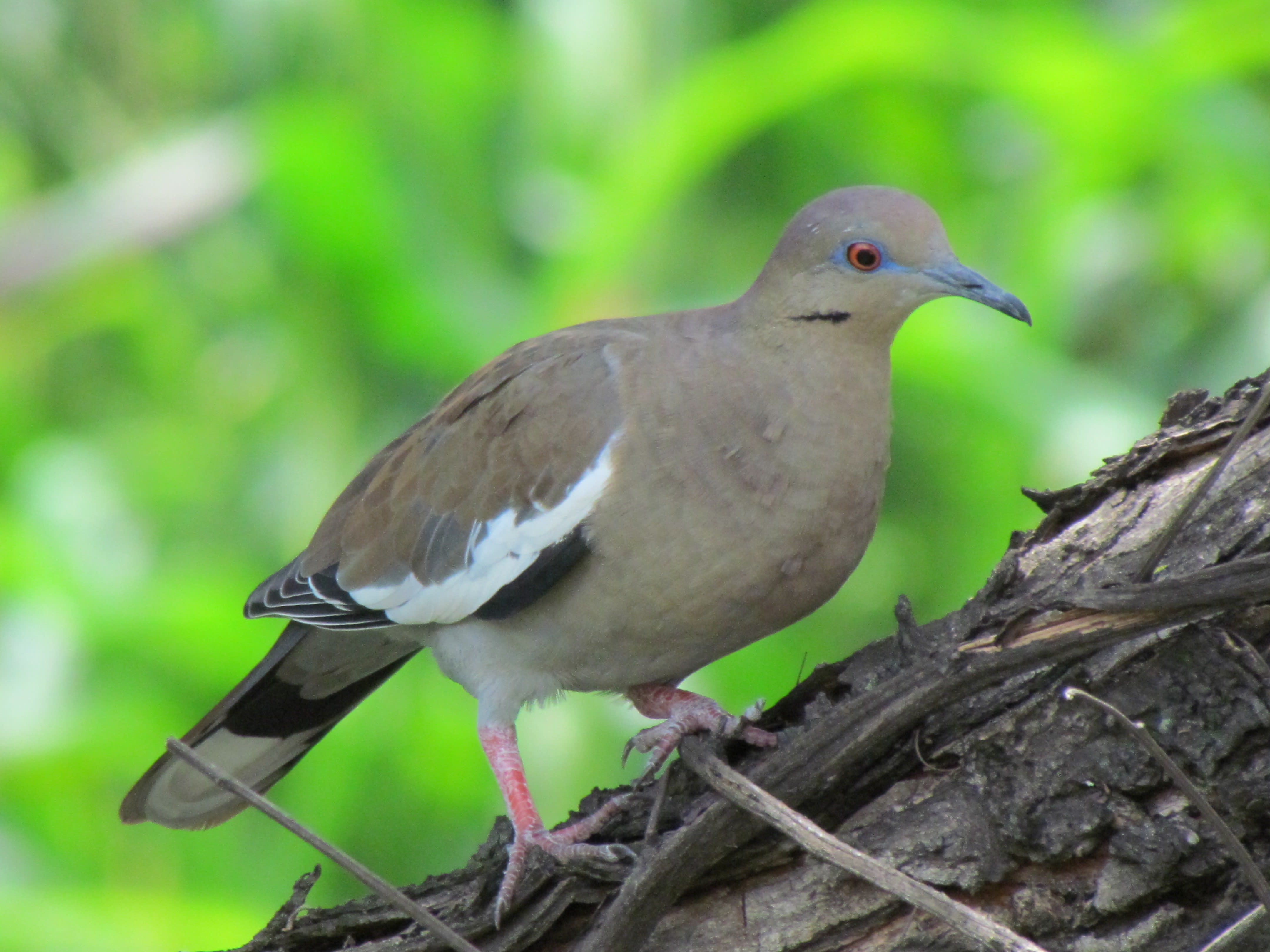
White-winged doves are large, plump doves at 11 in. They are brownish-gray above and gray below, with a bold white wing patch that appears as a brilliant white crescent in flight and is also visible at rest. Adults have a patch of blue, featherless skin around each eye and a long, dark mark on the lower face. Their eyes are bright crimson. The sexes are similar, but juveniles are more brown than adults. They have a blue eye ring and their legs and feet are brighter pink/red. Young also have brown eyes. Males have a slight iridescent sheen on their heads.
Taxonomy
- Kingdom
- Animalia
- Phylum
- Chordata
- Class
- Bird
- Family
- Columbidae
- Genus
- Zenaida
- Species
- asiatica
Habitat
The white-winged dove inhabits scrub, woodlands, desert, urban, and cultivated areas. It builds a flimsy stick nest in a tree of any kind and lays two cream-colored to white, unmarked eggs.
Diet
White-winged doves feed on a variety of seeds, grains, and fruits. Western white-winged doves (Zenaida asiatica mearnsii) migrate into the Sonoran Desert to breed during the hottest time of the year because they feed on pollen and nectar, and later on the fruits and seeds of the saguaro cactus. They also visit feeders, eating the food dropped on the ground. Cracked corn is a favorite of doves. This gregarious species can be an agricultural pest, descending on grain crops in large flocks. It is also a popular gamebird in areas of high population.
Behavior
The cooing calls is hoo, hoo, hoo-hoo hoo hoo . A drawn-out hoo-a sound is used to tell others about the presence of a predator. To impress females, males circle them with tail spread and wings raised. Males and females work together in raising the young. While calling, the tail flares. Families and nestmates often stay together for life, perching and foragingn together.
Hunting
A bird hunted by pass shooting over agriculture fields or watering holes.
Conservation Status
Listed as Least Concern by IUCN.