
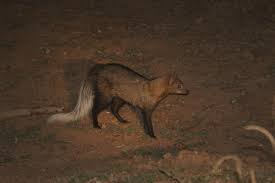
Taxonomy
- Kingdom
- Animalia
- Phylum
- Chordata
- Class
- Mammal
- Order
- Carnivora
- Family
- Herpestidae
- Genus
- Ichneumia
Habitat
White-tailed mongooses inhabit savannas, woodlands, and scrublands across sub-Saharan Africa, preferring areas with dense vegetation for cover. They are adaptable to various terrains, including rocky outcrops and riverine forests, and avoid dense rainforests or high-altitude regions.
Diet
They primarily eat insects like beetles and termites, small vertebrates such as rodents and birds, and fruits or eggs when available. White-tailed mongooses are nocturnal foragers, often hunting alone or in pairs by digging or pouncing on prey.
Behavior
White-tailed mongooses are primarily solitary or live in pairs, marking territories with scent glands to avoid conflicts. They are nocturnal, spending days in dens and actively foraging at night, and exhibit agile climbing and digging behaviors to escape threats or find food. They communicate through vocalizations and are known for their curious nature when encountering humans.
Conservation Status
The IUCN status is Least Concern, with a stable population trend across their range, though threats include habitat loss from agriculture and roadkill.