
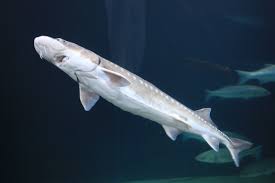
Taxonomy
- Kingdom
- Animalia
- Phylum
- Chordata
- Class
- Actinopterygii
- Order
- Anguilliformes
- Family
- Acipenseridae
- Genus
- Acipenser
- Species
- transmontanus
Habitat
White sturgeons primarily inhabit large rivers, estuaries, and coastal waters in the Pacific Northwest, preferring deep, slow-moving areas with sandy or gravel bottoms. They are anadromous, migrating between freshwater rivers and saltwater oceans, and are commonly found in regions like the Columbia River and Sacramento-San Joaquin system.
Diet
Juvenile white sturgeons feed on insects, amphipods, and small fish, while adults consume larger prey such as fish, shrimp, crabs, and mollusks. They are bottom-feeders that use their barbels to detect and suck up food from the substrate, often feeding at night or in low-light conditions.
Behavior
White sturgeons are generally solitary but may form loose schools during migration or feeding. They are mostly nocturnal, active at night for feeding and less so during the day, and exhibit migratory behavior between freshwater spawning grounds and marine habitats. They are not highly territorial but can be cautious and elusive when approached.
Fishing
Targeting white sturgeon offers an exciting challenge for anglers and supports conservation through license fees that fund habitat restoration in rivers like the Columbia and Sacramento-San Joaquin systems; as an anadromous species, fishing them helps monitor populations and promotes sustainable practices. Use heavy bottom-fishing techniques with stout rods (8-10 feet, rated for 50-80 pound test), strong reels with drag systems, and 50-100 pound monofilament or braided lines to handle their powerful runs, paired with circle hooks (size 8/0-12/0) for ethical catch-and-release. Opt for natural baits like herring, smelt, shrimp, or worms, fished on the bottom in deep, slow-moving waters with sandy or gravel bottoms, such as river channels, estuaries, or near dams during their migrations. The best seasons are spring and fall when they move for spawning, with prime times being early morning or evening due to their nocturnal feeding habits; focus on areas like the Columbia-Snake River or Fraser River drainage in Washington, Oregon, or British Columbia for the highest success. The IGFA all-tackle record stands at 468 pounds, caught in the Sacramento River, highlighting their impressive size potential. Conservation-wise, slot limits and catch-and-release mandates in many regions—such as keeping only fish between 50-72 inches in California—serve as effective tools to maintain healthy populations, while angler-supported stocking programs and excise taxes protect waterways from threats like habitat loss, ensuring white sturgeon thrive for future generations.
Conservation Status
Listed as Least Concern by IUCN.