
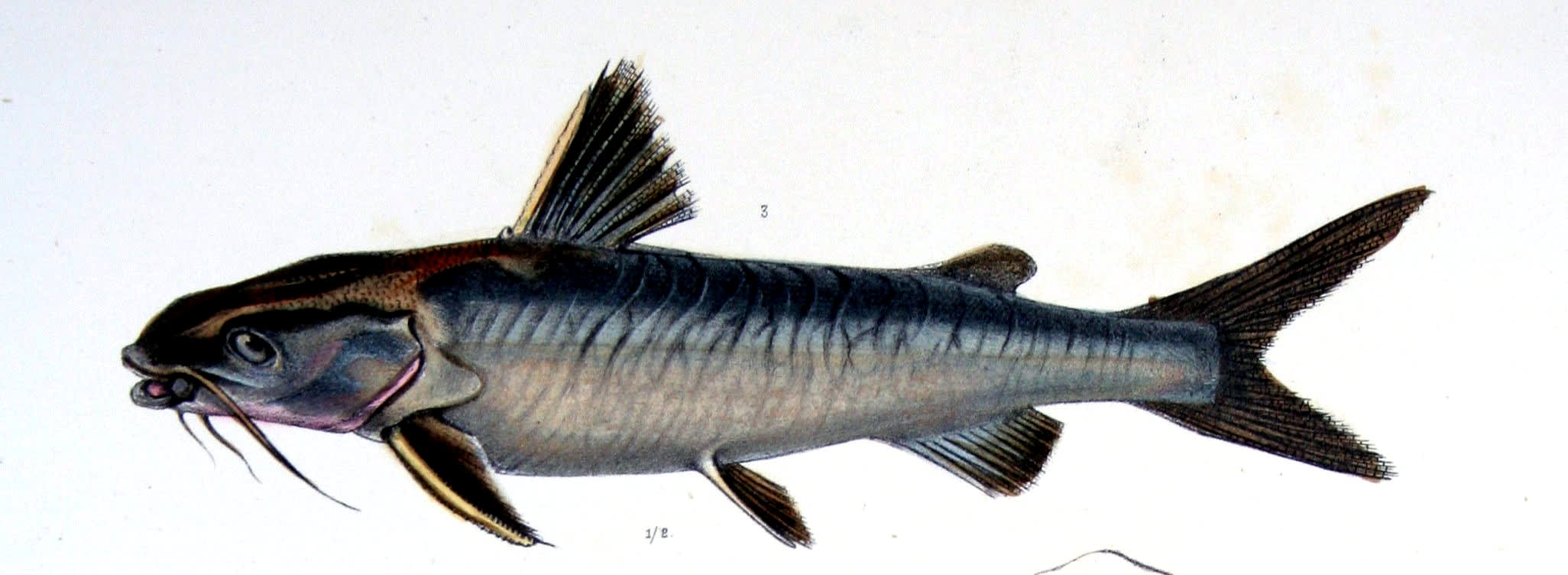
Taxonomy
- Kingdom
- Animalia
- Phylum
- Chordata
- Class
- Actinopterygii
- Order
- Aulopiformes
- Family
- Ariidae
- Genus
- Genidens
- Species
- barbus
Habitat
White sea catfish inhabit coastal marine waters, estuaries, and rivers in the Southwest Atlantic, particularly around Brazil and Argentina. They prefer shallow, murky environments with muddy or sandy bottoms, often near river mouths where freshwater mixes with saltwater.
Diet
They primarily feed on small fish, crustaceans, and mollusks found on the ocean floor. As bottom-feeders, they use their barbels to locate and capture prey, with feeding most active during nighttime hours in low-visibility conditions.
Behavior
White sea catfish are primarily nocturnal, spending days hiding in crevices or buried in sediment and emerging at night to hunt. They are generally solitary or form small groups, exhibiting territorial behavior around feeding sites, and can become aggressive if threatened or handled.
Fishing
Target white sea catfish with bottom fishing techniques, using live or cut bait like shrimp, small fish, or crabs to appeal to their diet of crustaceans and bottom-dwelling prey, as this method effectively mimics their natural feeding behavior and supports conservation through selective angling. Opt for medium-light spinning or baitcasting rods with 10-20 lb test line, circle hooks in sizes 2/0 to 4/0, and a sinker to maintain bait on the ocean floor, ensuring you handle their venomous spines carefully for safety. The best season is during warmer months from spring to summer when they spawn and are more active, with prime fishing times at night in low-visibility conditions. Focus on shallow, murky estuaries, river mouths, and coastal waters of the Southwest Atlantic, such as those around Brazil and Argentina, where freshwater mixes with saltwater over muddy or sandy bottoms—areas that benefit from angler-funded habitat restoration programs to protect these ecosystems. While the IGFA all-tackle world record for white sea catfish is not listed, typical catches reach up to 3 pounds, and although the species is not evaluated by IUCN, practicing catch-and-release helps maintain healthy populations through sustainable fishing regulations that fund waterway conservation efforts.
Conservation Status
Listed as Not Evaluated by IUCN.