
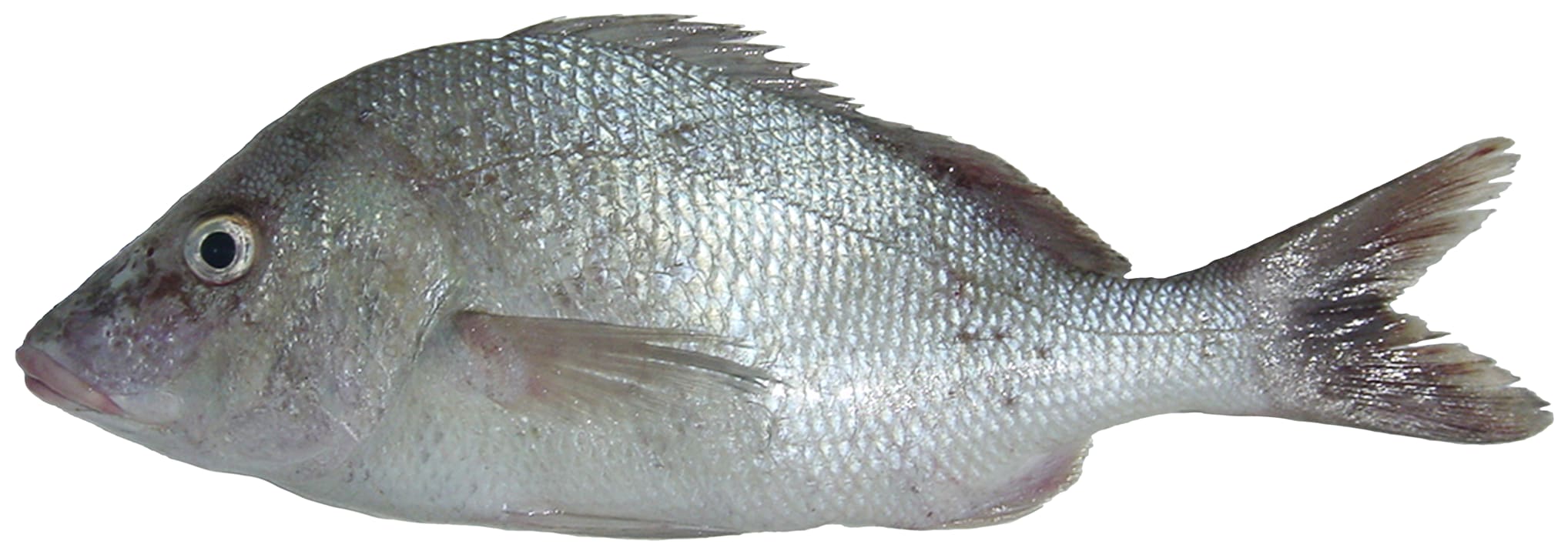
Taxonomy
- Kingdom
- Animalia
- Phylum
- Chordata
- Class
- Actinopterygii
- Order
- Albuliformes
- Family
- Acanthuridae
- Genus
- Haemulon
- Species
- album
Habitat
White margate inhabits coral reefs, rocky bottoms, and sandy areas in shallow to moderate depths, typically 10-30 meters. They are commonly found in the western Atlantic, from the southeastern United States to northern South America, preferring warm tropical waters.
Diet
White margate primarily feeds on benthic invertebrates such as crabs, shrimp, and worms. They forage at night over reefs and sandy substrates, using their sensitive mouths to detect and consume prey.
Behavior
White margate are schooling fish that form groups during the day and disperse at night to feed. They are generally nocturnal and can produce grunting sounds by grinding their teeth, which serves as a defense mechanism. These fish are not highly territorial but may seek shelter in reefs when threatened.
Fishing
Anglers targeting white margate, a popular sport and food fish in the Western Central Atlantic and Caribbean regions, should use bottom fishing techniques with light to medium tackle, such as a 7-foot rod paired with 20-30 pound test monofilament line and a size 1/0 to 2/0 hook, baited with live shrimp, crabs, or worms to imitate their nocturnal diet of benthic invertebrates; small jigs or soft plastics can also entice strikes. The best season is summer during spawning aggregations, with optimal fishing times at night when these schooling fish disperse to feed over coral reefs, rocky bottoms, and sandy areas in depths of 10-30 meters, particularly around the Florida Keys, Gulf of Mexico, and Northern Yucatan Peninsula. The IGFA all-tackle world record for white margate is 19 pounds 8 ounces, highlighting the potential for thrilling catches. As a species listed as Data Deficient by the IUCN, conservation is bolstered by angler-funded programs through license fees that support habitat restoration and stocking initiatives, with effective management tools like slot limits and catch-and-release practices in some areas ensuring sustainable populations and protecting these vital tropical waterways.
Conservation Status
Listed as Data Deficient by IUCN.