
Taxonomy
- Kingdom
- Animalia
- Phylum
- Chordata
- Class
- Actinopterygii
- Order
- Perciformes
- Family
- Merlucciidae
- Genus
- Urophycis
- Species
- tenuis
Habitat
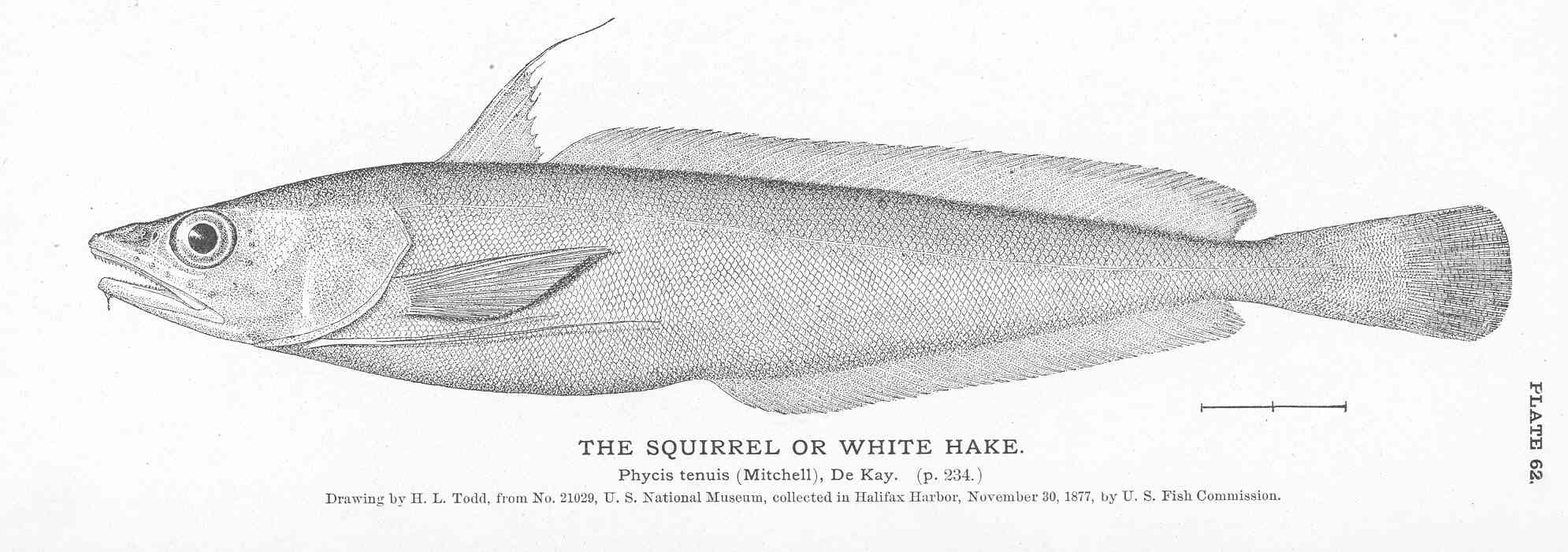
White hake primarily inhabit the continental shelf of the western Atlantic Ocean, from Labrador to North Carolina, at depths ranging from 50 to 900 meters. They prefer muddy or sandy bottoms in cold waters, often near underwater structures like rocks or wrecks.
Diet
White hake are carnivorous bottom feeders that primarily consume fish such as sand lance and herring, along with squid and crustaceans like shrimp and crabs. They use their barbels to detect and capture prey on the seafloor, with feeding activity most active at night.
Behavior
White hake are generally solitary and nocturnal, spending the day hiding in substrate and becoming active at night to hunt. They exhibit territorial behavior around feeding areas but may form loose aggregations during spawning. They are not particularly migratory but can move to deeper waters in winter.
Fishing
White hake, a prized bottom-dwelling species in the Western Atlantic from Labrador to North Carolina, offers exciting angling opportunities that support conservation through license fees and habitat programs, ensuring sustainable populations for future generations. Target them using bottom fishing techniques with sturdy rod-and-reel setups, employing heavy sinkers to reach depths of 50 to 900 meters on muddy or sandy bottoms near rocks and wrecks—drift fishing or anchoring works best for detecting bites. Opt for medium-heavy to heavy tackle, including a 6- to 7-foot rod with 20-50 pound test line, paired with circle hooks to promote safe catch-and-release; effective baits include squid, shrimp, herring, or sand lance to mimic their carnivorous diet, while jigs and soft plastics can entice strikes during nocturnal feeds. The best seasons are late spring through summer when they're more active near spawning grounds, with prime fishing times at night when they hunt; focus on cooler months in deeper waters for larger specimens. Anglers should target specific spots like the Grand Banks or off Maine's coast, adhering to regional regulations such as size limits and quotas as effective management tools that maintain healthy stocks—check local guidelines for bag limits to support population stability. The IGFA all-tackle world record stands at 46 pounds 4 ounces, caught in 2022, highlighting the thrill of pursuing these powerful fish, while angler-funded initiatives protect waterways and promote practices like slot limits to ensure white hake thrive alongside other marine species.
Conservation Status
Listed as Not Evaluated by IUCN.