
Overview
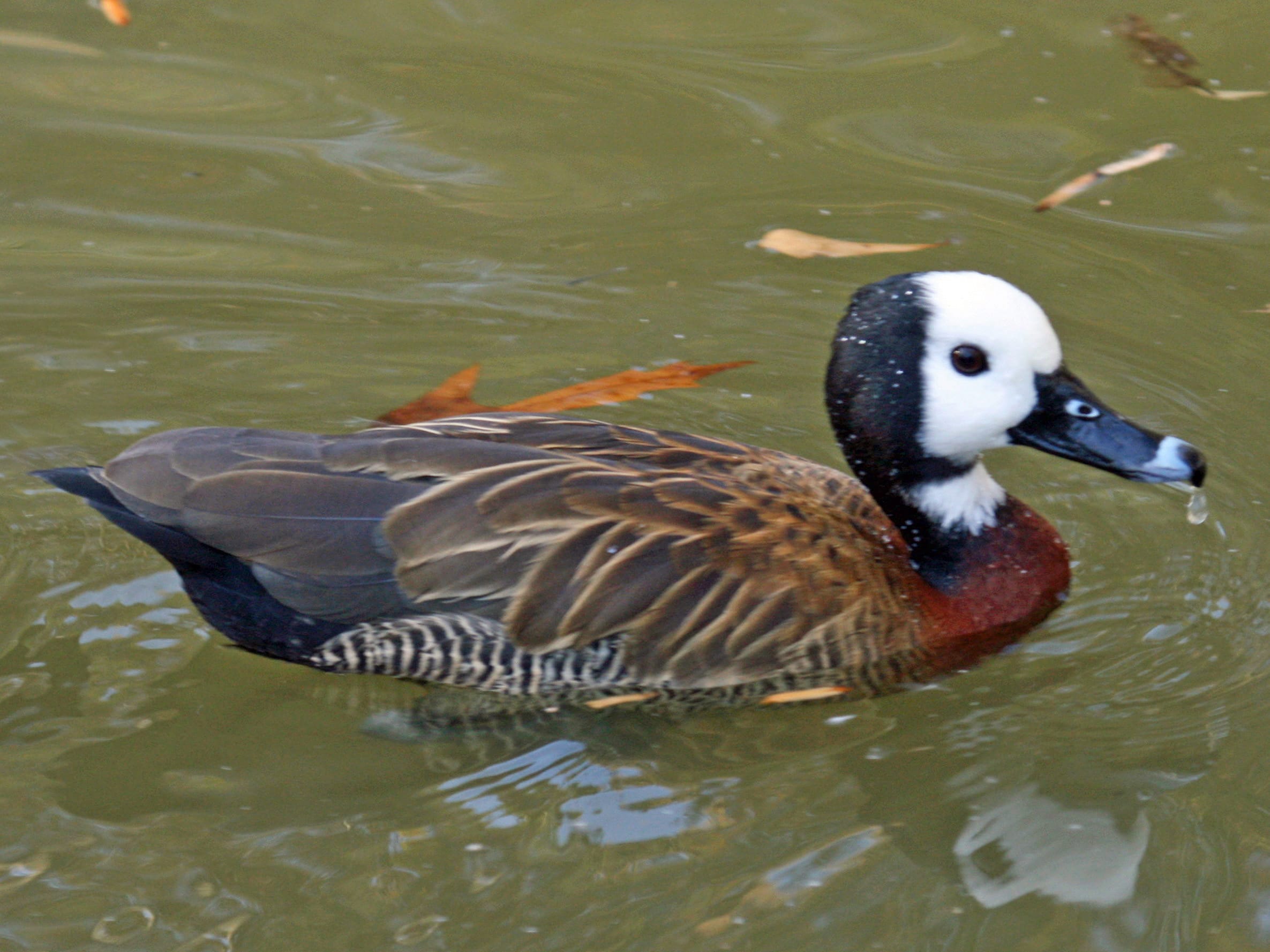
It has a long grey bill, a long head, and longish legs. It has a black neck and head, and distinctive white face that gives them their name, though the amount of white color visible has regional variations among the species. For example, the white-faced whistling ducks with more black coloration are commonly found in western Africa where rainfall superceeds the dry season. The back and wings are dark brown to black, and the underparts are black with a fine white barring on the flanks. The neck is chestnut. Males and females have similar plumage. Juveniles are similar in color to adults, but have a much less contrasted head pattern.
Taxonomy
- Kingdom
- Animalia
- Phylum
- Chordata
- Class
- Bird
- Family
- Anatidae
- Genus
- Dendrocygna
- Species
- viduata
Habitat
The habitat is still freshwater lakes or reservoirs, with plentiful vegetation.
Diet
Aquatic invertebrates and aquatic plants.
Behavior
This species is gregarious, and at favoured sites, the flocks of a thousand or more birds arriving at dawn are an impressive sight. As the name implies, these are noisy birds with a clear three-note whistling call.
Hunting
Typically hunted with a 12 ga shotgun. Shot size #2-4 is sufficient. Effectively hunted with decoys and calling. Dogs are used for bird retrieval. Steel shot is required for waterfowl in the United States.
Conservation Status
Listed as Least Concern by IUCN.