
Overview
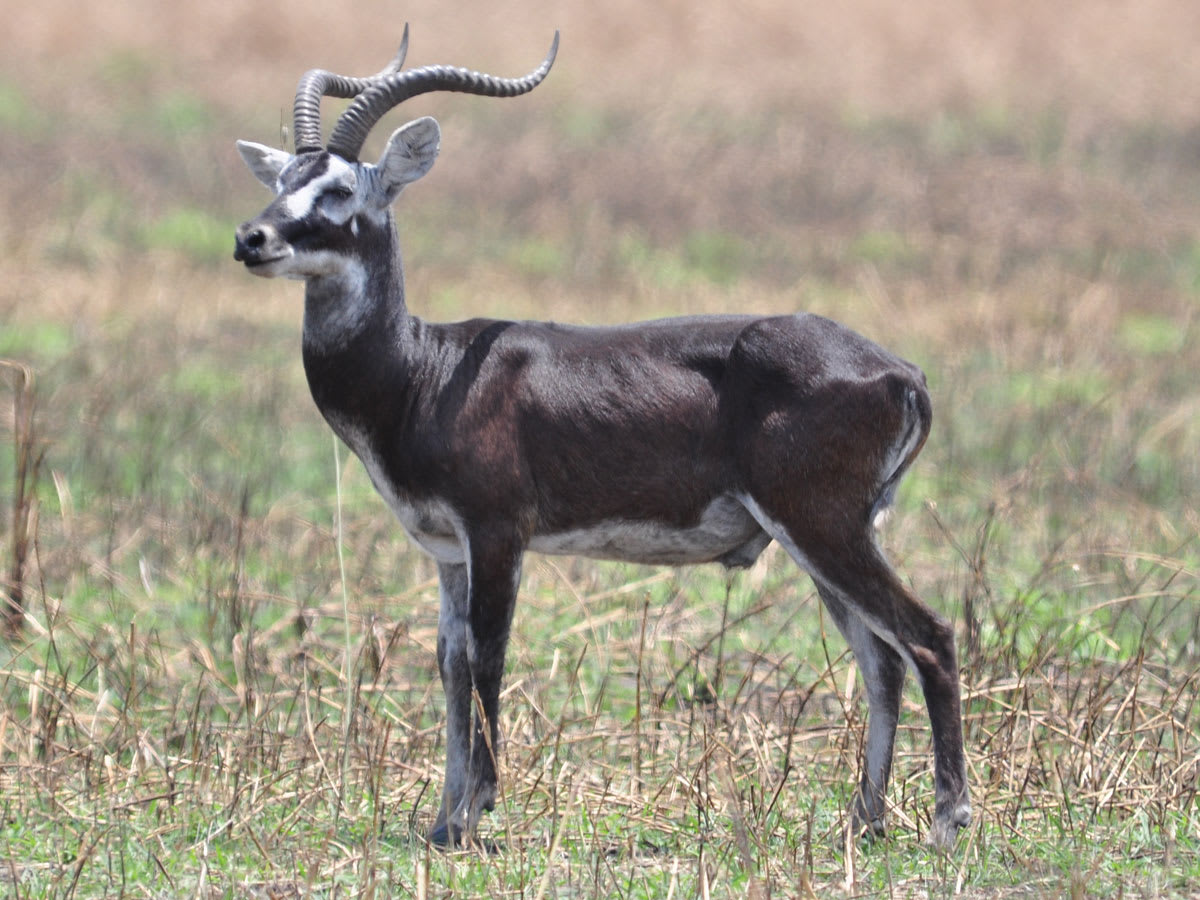
The white-eared kob is somewhat larger in body and horns than the western kob, but is about the same size as the Uganda kob. It has the most distinctive appearance of any kob. Adult males have entirely white ears, conspicuous white rings around the eyes, white patches on throat and upper neck, and white underparts. With age, most males develop a darker color that spreads from the forehead and sides of the face to the entire upper body. Some individuals are almost black except for the vividly contrasting white markings, and are spectacularly handsome. Females and young males are chestnut red with the backs of the ears buff. The darkest-colored males are found on the East Bank of the White Nile, but those with the longest horns are from the West Bank.
Taxonomy
- Kingdom
- Animalia
- Phylum
- Chordata
- Class
- Mammal
- Order
- Artiodactyla
- Family
- Bovidae
- Genus
- Kobus
- Species
- Kobus kob
Habitat
Floodplains and savannah. Distribution- Southern Sudan on both sides of the White Nile, and the Gambella region of extreme western Ethiopia. Individuals or small groups occasionally wander into northern Uganda.
Diet
Primarily grazes on floodplain grasses and is water dependant.
Behavior
The white-eared kobs on the East Bank of the White Nile undergo one of the largest migrations still taking place in Africa, the annual trek of nearly one million animals from dry season range to wet season range and back again. Those on the West Bank are non-migratory.
Hunting
White-eared kob occur south-west Ethiopia but are currently not allowed to be hunted.
Conservation Status
Listed as Least Concern by IUCN.