
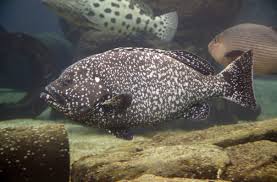
Taxonomy
- Kingdom
- Animalia
- Phylum
- Chordata
- Class
- Actinopterygii
- Order
- Scorpaeniformes
- Family
- Serranidae
- Genus
- Epinephelus
- Species
- multinotatus
Habitat
This species inhabits coral reefs, rocky substrates, and lagoon environments in the Indian Ocean, often at depths ranging from 10 to 200 meters. It prefers areas with abundant cover like caves and crevices for shelter. Geographically, it is found from the eastern coast of Africa to Australia and the Arabian Peninsula.
Diet
The white blotched grouper primarily feeds on small fish, crustaceans, and cephalopods such as squid. It employs an ambush hunting strategy, lying in wait among reefs before striking quickly. Feeding activity peaks during daylight hours, particularly in the morning and late afternoon.
Behavior
White blotched groupers are generally solitary or form small groups, exhibiting territorial behavior by defending specific reef areas from intruders. They are diurnal, active during the day for hunting and resting at night in crevices. This species is known for its ability to change color slightly for camouflage and is often cautious around divers.
Fishing
The white blotched grouper is a popular sport and food fish in the Indian Ocean, providing anglers with thrilling challenges that fund conservation through license fees and habitat restoration programs. Use bottom fishing or trolling techniques with heavy tackle, including a sturdy rod rated for 20-50 lb line, a strong reel for deep-water battles, and hooks sized 5/0 to 8/0 to handle their aggressive strikes; opt for live bait like small fish or squid, or artificial lures such as jigs and soft plastics that imitate crustaceans and cephalopods. The best season runs from November to March during warmer months when they form spawning aggregations, with prime fishing times in the morning and late afternoon when they're most active; target them around coral reefs, rocky substrates, and lagoon environments at depths of 10-200 meters, focusing on areas with caves and crevices for shelter. Record sizes reach up to 19 pounds 1 ounce and 120 cm in length, with IGFA potentially recognizing larger catches for this species. As a Least Concern species per IUCN, conservation efforts like catch-and-release and slot limits in certain regions serve as effective tools to sustain populations, ensuring that angler-funded programs continue to protect these vital marine habitats.
Conservation Status
Listed as Least Concern by IUCN.