
Overview
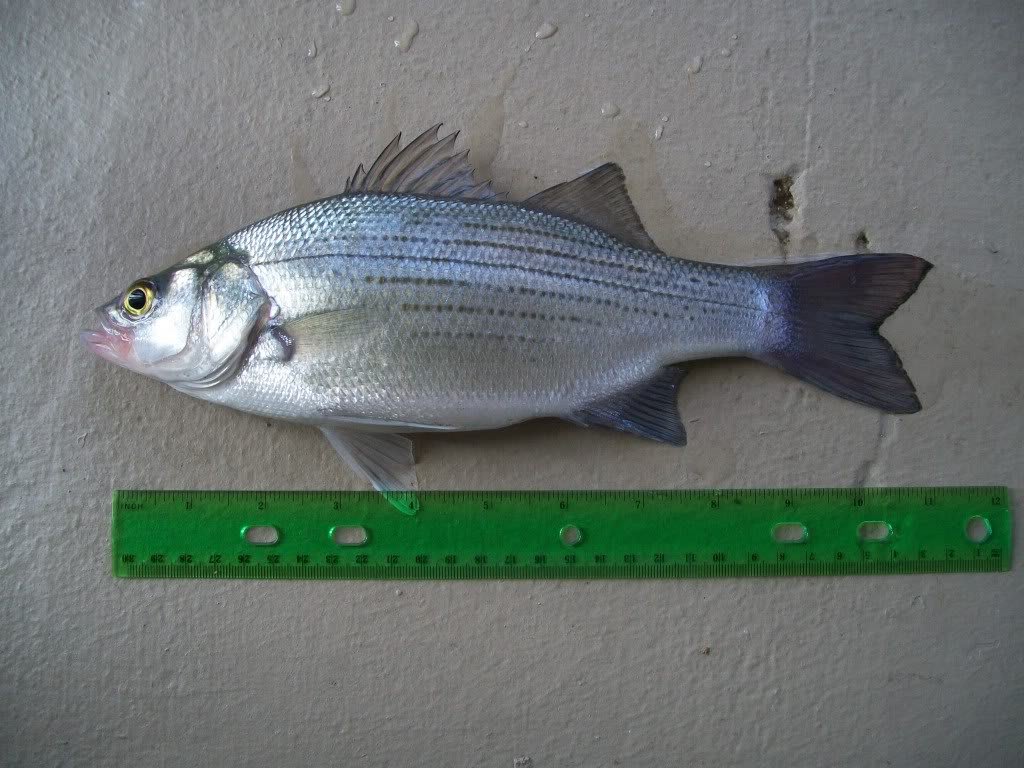
The white bass looks quite a bit like a shortened version of its larger relative, the striped bass (Morone saxatilis). It has the same silvery white sides and black stripes. It differs most noticeably in being shorter and stockier with a smaller head, and the dorsal fins are set closer together. They can be distinguished from the yellow bass (M. mississippiensis), by its more silvery color and regular, unbroken stripes as well as by its protruding, pugnacious looking, basslike lower jaw (in the yellow bass the jaws are about equal). It can be distinguished from the white perch (M. americana) by the latter's lack of prominent stripes on the sides (though stripes may be present in very small juveniles).
Taxonomy
- Kingdom
- Animalia
- Phylum
- Chordata
- Class
- Actinopterygii
- Order
- Perciformes
- Family
- Moronidae
- Genus
- Morone
- Species
- chrsops
Habitat
Most abundant in clear lakes and reservoirs, they have been transplanted into the systems of various states including California.
Diet
Zooplankton, Larvae, Bugs, Lizards, Frogs, Crayfish, Small Fish, Minnows, Sunfish, Perch, Shad
Behavior
White bass are active early spring spawners. Schools of males migrate upstream to spawning areas as much as a month before females. There is no nest preparation. Spawning occurs either near the surface, or in midwater. Running water with a gravel or rock substrate is preferred.
Fishing
They are an excellent light tackle fish that will take a bait or lure readily.
Conservation Status
Listed as Least Concern by IUCN.