
Overview
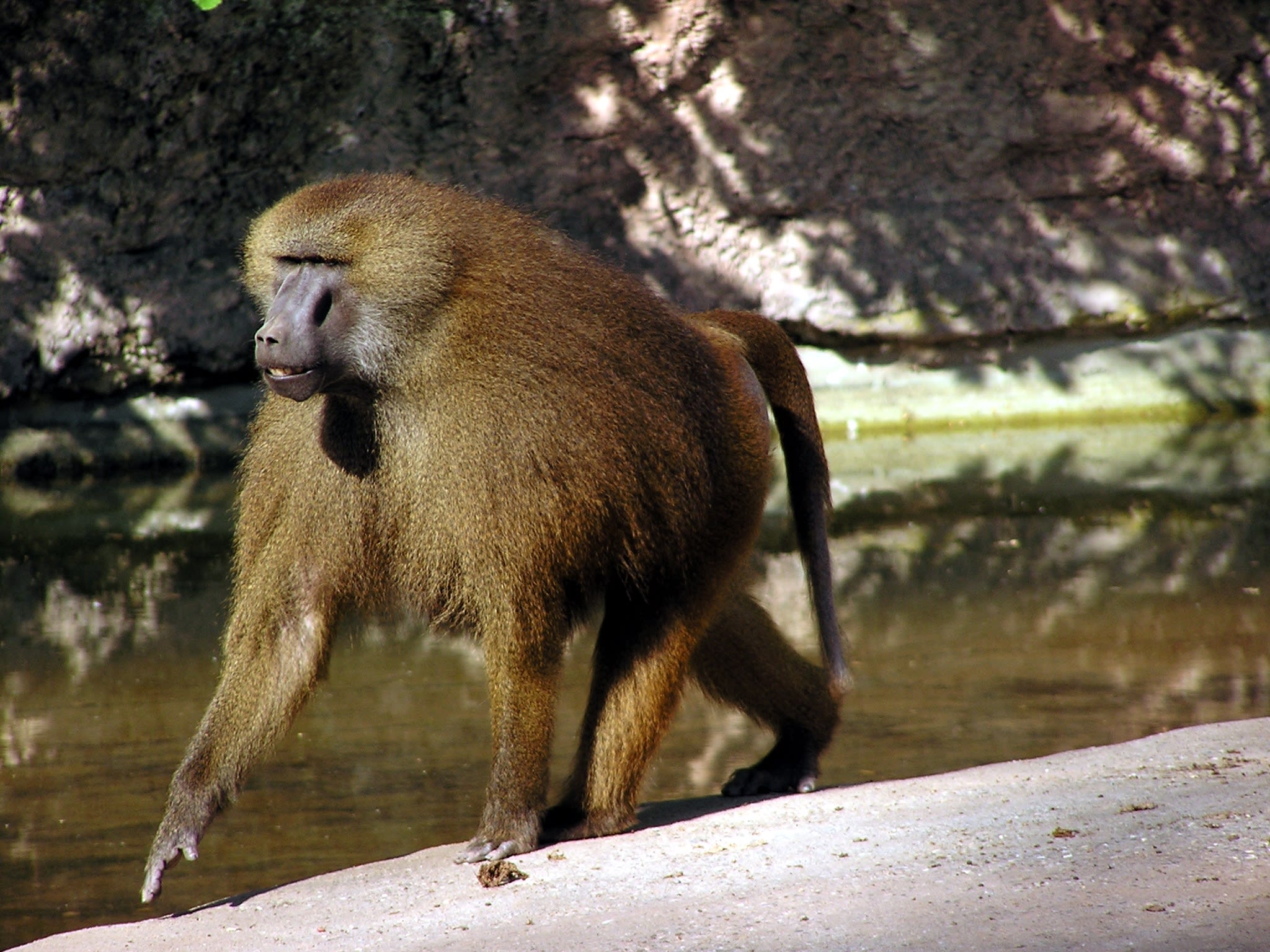
Baboons are some of the world’s largest monkeys. There are five species of baboon—olive, yellow, chacma, Guinea, and hamadryas—scattered across various habitats in Africa and Arabia. The baboon, like other Old World monkeys, does not have a prehensile (gripping) tail, but it is still able to climb when necessary. All baboons have dog–like noses, powerful jaws, sharp canine teeth, and thick fur. The male baboon also has a ruff—a longer mane around its neck.
Taxonomy
- Kingdom
- Animalia
- Phylum
- Chordata
- Class
- Mammal
- Family
- Cercopithecidae
Habitat
Savannas and woodlands
Diet
earthworms, insects, grubs, eggs and young of ground-nesting birds, small mammals, amphibians, reptiles, and birds, roots and fruit
Behavior
Baboons sleep, travel, feed, and socialize in groups of about 50. These groups usually consist of seven or eight males and about twice as many females plus their young. The family unit of females and juveniles forms the core of the troop. Male baboons will leave their natal troops as they mature and move in and out of other troops.
Conservation Status
The Guinea Baboon (Papio papio) is classified as Least Concern by the IUCN, but its population is decreasing due to habitat loss from agriculture and human expansion. Major threats include hunting for bushmeat and fragmentation of savanna habitats.