
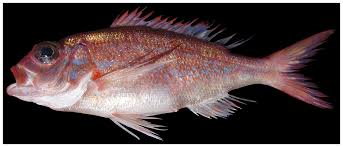
Taxonomy
- Kingdom
- Animalia
- Phylum
- Chordata
- Class
- Actinopterygii
- Order
- Perciformes
- Family
- Lutjanidae
- Genus
- Pristipomoides
- Species
- aquilonaris
Habitat
Wenchman primarily inhabit deep waters of the continental shelf, ranging from 100 to 500 meters, over rocky or coral reefs. They prefer the Western Central Atlantic Ocean, including areas around the Bahamas, Caribbean islands, and Brazil. This species avoids shallow coastal areas, thriving in cooler, deeper marine environments.
Diet
Wenchman feed mainly on smaller fish, shrimps, crabs, and occasionally cephalopods like squid. They are nocturnal predators, actively hunting in deeper waters at night using their keen eyesight. Their feeding behavior involves ambushing prey near reefs, helping to control populations of smaller marine organisms.
Behavior
Wenchman are typically solitary or form small loose groups around reef structures, showing territorial behavior when feeding. They are nocturnal, spending daylight hours resting in deeper waters and becoming active at dusk to hunt. This species exhibits schooling behavior during spawning migrations, but otherwise remains relatively inactive during the day.
Fishing
Target Wenchman, a prized snapper species in the Western Central Atlantic including the Bahamas, Caribbean islands, and Brazil, using effective deep-water bottom fishing techniques with heavy tackle to handle depths of 100 to 500 meters over rocky or coral reefs; use a sturdy rod with 20-50 lb test line, a strong reel, and circle hooks to minimize injury during catch-and-release. Opt for live bait like shrimp, squid, or small fish, or artificial lures such as jigs for their nocturnal hunting behavior, which makes nighttime the prime time for action. The best season is year-round in tropical waters, with peak activity during warmer months when spawning occurs, enhancing opportunities for ethical angling. Focus on deeper reef structures during dusk and night when these fish are most active, helping anglers contribute to conservation by practicing selective harvesting. The IGFA all-tackle world record for Wenchman is 4 pounds 6 ounces, caught in 1986 off Florida, underscoring the thrill of pursuing these fish while respecting size limits. Conservation efforts, supported by angler license fees and excise taxes, maintain healthy Wenchman populations through regulated fishing and habitat protection programs, ensuring sustainable practices like slot limits and catch-and-release promote long-term aquatic ecosystem health in the Atlantic.
Conservation Status
Listed as Least Concern by IUCN.