
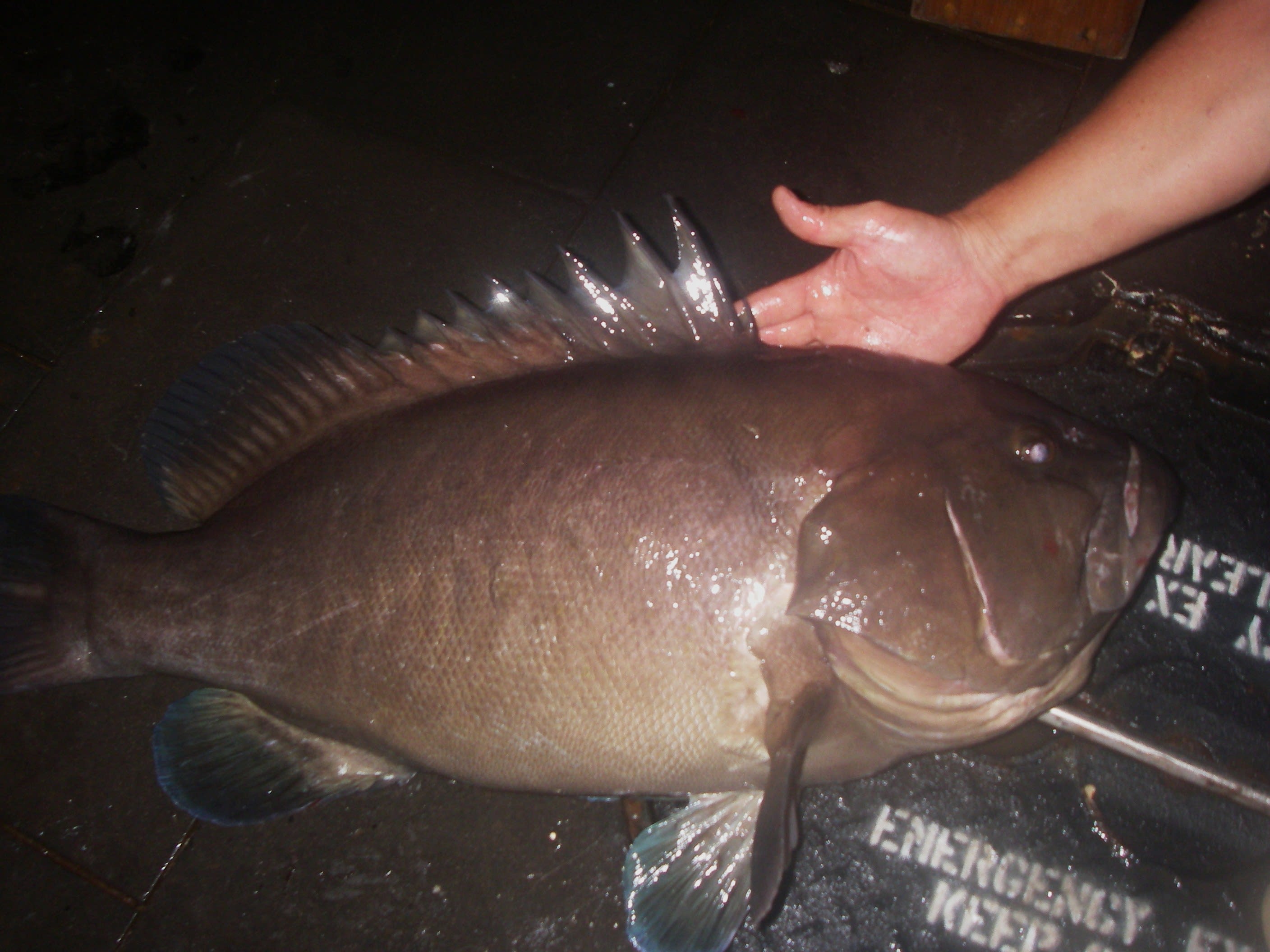
Taxonomy
- Kingdom
- Animalia
- Phylum
- Chordata
- Class
- Actinopterygii
- Order
- Scorpaeniformes
- Family
- Serranidae
- Genus
- Hyporthodus
- Species
- nigritus
Habitat
Warsaw grouper inhabit deep waters of the continental shelves, typically at depths of 50 to 500 meters, preferring rocky reefs, drop-offs, and hard-bottom substrates. They are found in the western Atlantic Ocean, from North Carolina to Brazil, including the Gulf of Mexico and Caribbean islands. These areas provide ample cover and prey.
Diet
Warsaw grouper primarily feed on fish such as snappers and grunts, as well as crustaceans like crabs and shrimp, and occasionally squid. They are ambush predators that hunt by lying in wait near structures, striking quickly at passing prey, often during dawn or dusk when activity is high.
Behavior
Warsaw grouper are solitary fish that maintain territories around reefs and rocky areas, defending them aggressively against intruders. They are primarily nocturnal or crepuscular, spending much of the day hidden in crevices and becoming more active at night to hunt. These fish exhibit slow movement and rely on camouflage for protection.
Fishing
Warsaw grouper are a challenging and highly regarded sport fish found in deep waters of the western Atlantic, Gulf of Mexico, and Caribbean, making them ideal targets for experienced anglers seeking big-game thrills on rocky reefs and drop-offs at depths of 50 to 500 meters. Employ heavy bottom fishing techniques or deep-dropping with electric reels for the best results, using stout rods rated for 80-200 pound test line, large conventional reels, and strong leaders to handle their powerful runs; opt for baits like live fish, squid, crabs, or large jigs to mimic their natural prey such as snappers and crustaceans. The prime season is late spring through summer, with dawn and dusk being the most productive times when these solitary predators are most active. The IGFA all-tackle world record is an impressive 436 pounds 12 ounces, caught in 1985 off Florida, highlighting their potential for record-breaking catches. As a critically endangered species, effective management tools like mandatory catch-and-release, size limits, and closed seasons are in place to ensure sustainable populations, with recreational fishing license fees directly supporting conservation programs that fund habitat protection and stocking efforts in these vital marine environments, proving angling's role as a key driver of aquatic conservation.
Conservation Status
Listed as Critically Endangered by IUCN.