
Overview
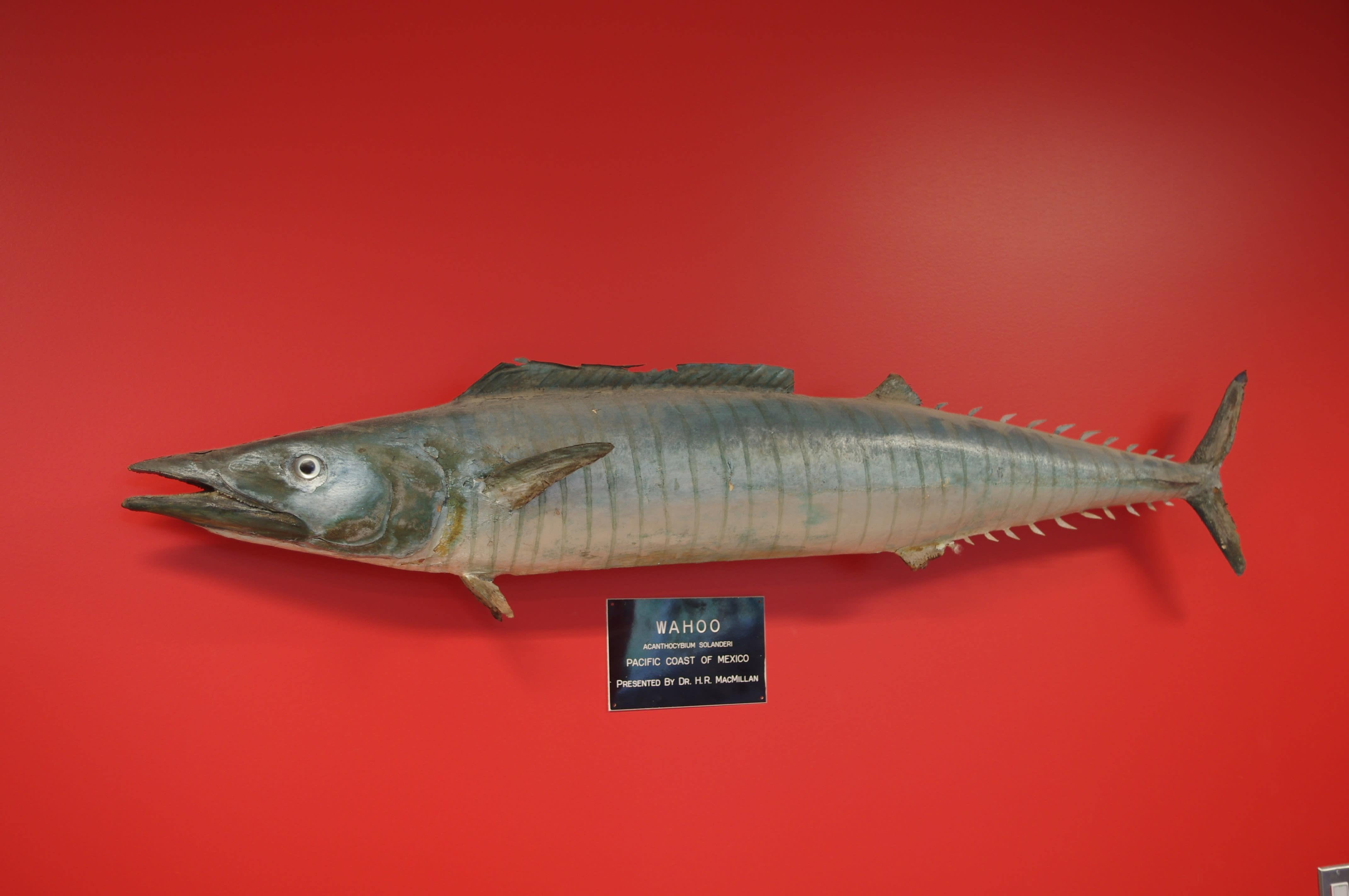
The body is elongated and covered with small, scarcely visible scales; the back is an iridescent blue, while the sides are silvery, with a pattern of irregular vertical blue bars and have razor sharp teeth. These colors fade rapidly at death. The mouth is large, and both the upper and lower jaws have a somewhat sharper appearance than those of king or Spanish mackerel.The upper jaw is movable and the teeth are large, strong and laterally compressed. The well defined lateral line dips noticeably near the middle of the first dorsal fin, further forward than on the similar looking tanguigue (Scomberomorus commerson), and is wavy back to the tail. Wahoo are also one of the fastest pelagic speices, reaching speeds up to 60 mph.
Taxonomy
- Kingdom
- Animalia
- Phylum
- Chordata
- Class
- Actinopterygii
- Order
- Pleuronectiformes
- Family
- Scombridae
- Genus
- Acanthocybium
- Species
- solandri
Habitat
Wahoo are found in Tropical and Subtropcical waters. Mostly found near reefs, offshore rigs, wrecks, or under sargassum. The Wahoo is fairly solitary but occasionally they will for small schools. Wahoo travel with seasons, usually moving into cooler waters during the summer months.
Diet
Wahoo have been known to feed on jacks, squid, herrings, pilchards, scads, mackerels, butterfishes, ect
Behavior
Worldwide in tropical and warm temperate seas. Pelagic and seasonally migratory, it tends to be a loner or travel in small groups of 2 to 6 fish.
Fishing
It is reputed to be one of the fastest fish in the sea, attaining speeds of 50 mph (80 km) and more. The first scorching run may peel off several hundred yards of line in seconds. Occasionally this fish jumps on the strike and often shakes its head violently when hooked in an effort to free itself. Fishing methods include trolling with whole, rigged baits as well as with strip baits or artificial lures. Live bait fishing and kite fishing are productive, but the wahoo is a relatively scarce species and is usually taken incidentally while fishing for other oceanic species. The wahoo has commercial importance in some countries. The flesh is finely grained and sweet and is considered excellent eating.
Conservation Status
Listed as Least Concern by IUCN.