
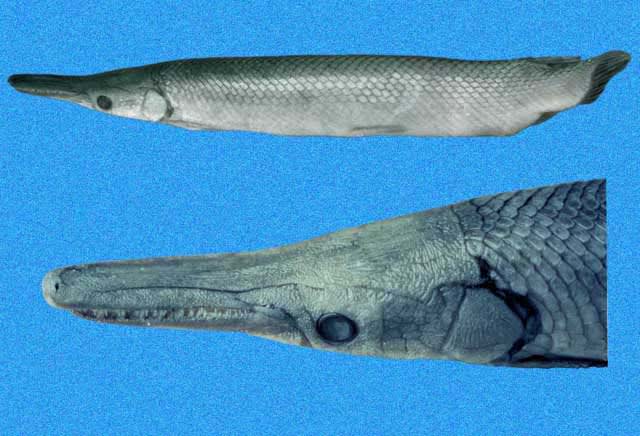
Taxonomy
- Kingdom
- Animalia
- Phylum
- Chordata
- Class
- Actinopterygii
- Order
- Perciformes
- Family
- Lepisosteidae
- Genus
- Atractosteus
- Species
- tropicus
Habitat
Tropical gar primarily inhabit slow-moving freshwater rivers, lakes, and swamps in southern Mexico and Central America, such as the Pacific drainages and Gulf of Mexico regions. They prefer warm, tropical waters with abundant vegetation and submerged structures for cover. These fish are also found in brackish environments near river mouths.
Diet
Tropical gar are carnivorous ambush predators that primarily eat fish, crustaceans, and amphibians, using their sharp teeth to seize prey. They hunt in low-light conditions or at night and can surface to gulp air, allowing them to survive in oxygen-poor waters. Feeding behavior includes lying motionless near the surface before striking quickly.
Behavior
Tropical gar are solitary and territorial, often hiding among vegetation or near the water's surface during the day and becoming more active at night to hunt. They exhibit air-breathing behavior to supplement oxygen in stagnant waters, which allows them to survive in harsh conditions. These fish are generally wary and elusive, making them challenging to approach in the wild.
Fishing
Tropical gar provide thrilling sport fishing challenges in their warm, tropical waters, supporting conservation efforts through angler license fees that fund habitat restoration and protect aquatic ecosystems. Use bowfishing as the top technique for their hard scales and elusive nature, or opt for heavy conventional tackle with stout rods (medium-heavy to heavy action), 20-50 lb test monofilament or braided line, and large, sturdy hooks to handle their sharp teeth; effective baits and lures include live fish, cut bait like mullet or shiners, and large topwater plugs or soft plastics that mimic their prey. The best season is spring and early summer during spawning when water temperatures rise, with peak activity at dawn, dusk, or night in low-light conditions; target them in slow-moving freshwater rivers, lakes, swamps, and brackish areas near river mouths in southern Mexico, Central America, and parts of the southern US like Texas and Florida, focusing on zones with abundant vegetation and submerged structures for ambushes. These fish can reach weights up to 32 pounds 8 ounces, with the IGFA all-tackle world record standing as a testament to their fighting spirit. Practice catch-and-release to sustain populations, as tropical gar can live 10-20 years, and support stocking programs that enhance biodiversity in oxygen-poor waters, ensuring regulated fishing continues to bolster conservation initiatives.
Conservation Status
Listed as Not Evaluated by IUCN.