
Overview
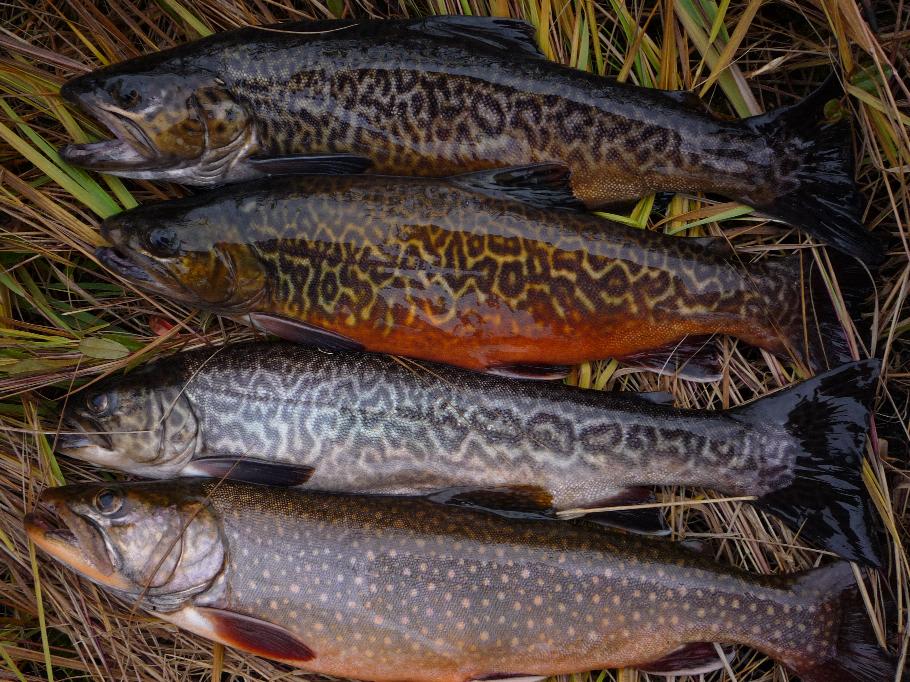
The tiger trout is a sterile hybrid cross between a female brown trout and a male brook trout.
Taxonomy
- Kingdom
- Animalia
- Phylum
- Chordata
- Class
- Actinopterygii
- Order
- Perciformes
- Family
- Salmonidae
- Genus
- Salmo
- Species
- trutta x Salvelinus fontinalis
Habitat
Tiger trout inhabit cold, clear freshwater environments such as streams, rivers, and lakes in North America, often in areas with good water flow and oxygenation. They prefer temperatures below 65°F and are commonly found in mountainous regions or northern states. These habitats provide ample cover from rocks, logs, and vegetation.
Diet
Tiger trout primarily feed on aquatic insects like mayflies and caddisflies, as well as small fish such as minnows and juvenile trout. They also consume crayfish and other crustaceans, exhibiting opportunistic feeding behavior that is most active during dawn and dusk. Their aggressive nature makes them effective predators in their environment.
Behavior
Tiger trout are generally solitary and territorial, often establishing home ranges in deeper pools or under cover to ambush prey. They exhibit aggressive behavior, particularly when defending territory or feeding, and are most active in cooler water temperatures. This species is known for its strong fighting ability when hooked, making it popular among anglers.
Fishing
Tiger trout, a sterile hybrid of brown and brook trout prized for their aggressive strikes and acrobatic fights, are best targeted using techniques like fly fishing with streamers or nymphs, or spinning with small lures to mimic their diet of aquatic insects and small fish; cast near structures like rocks and logs where they ambush prey. Opt for medium-light rods (6-8 feet) with 4-8 lb test line, reels with smooth drags, and baits/lures such as woolly buggers, Mepps spinners, or live minnows for effective presentations. The best seasons are spring and fall when water temperatures are below 65°F, with peak activity at dawn and dusk in cold, clear freshwater habitats like streams, rivers, and lakes in states such as Montana, Colorado, and Pennsylvania—focus on areas with good flow and cover for the highest success. These fish can reach impressive sizes, with the largest reported at 20 pounds 13 ounces, highlighting their appeal as a sport fish. Conservation efforts, including stocking programs funded by angler license fees, maintain healthy populations and support habitat protection in cold-water environments; practices like catch-and-release and any local slot limits are key management tools that promote sustainable fishing and waterway preservation.
Conservation Status
Tiger trout, as a sterile hybrid, have not been assessed by the IUCN, but their populations are managed through stocking programs rather than natural reproduction. Major threats include habitat degradation from pollution and climate change affecting cold-water habitats.