
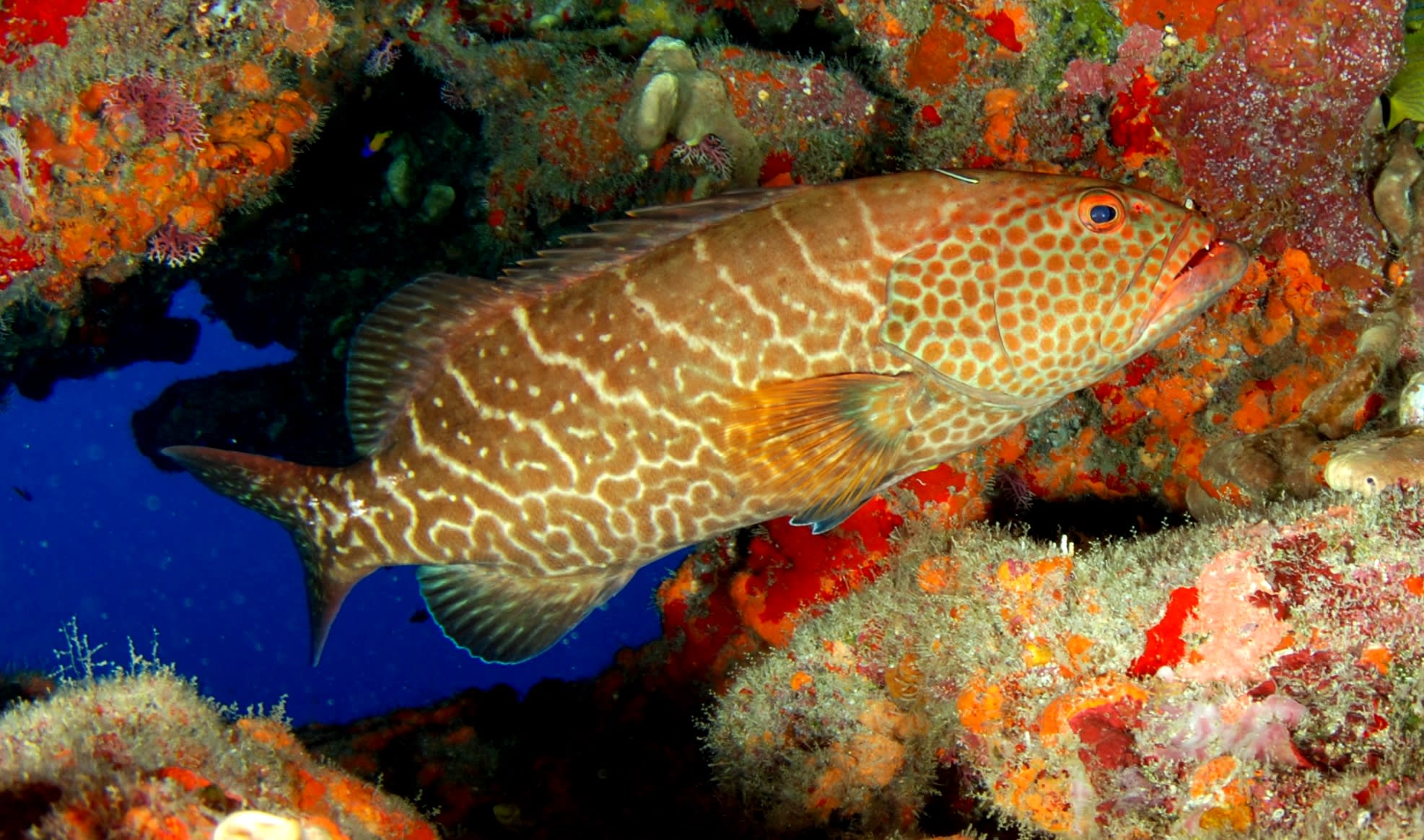
Taxonomy
- Kingdom
- Animalia
- Phylum
- Chordata
- Class
- Actinopterygii
- Order
- Scorpaeniformes
- Family
- Serranidae
- Genus
- Mycteroperca
- Species
- tigris
Habitat
Tiger groupers primarily inhabit coral reefs, rocky bottoms, and ledges in tropical and subtropical waters. They prefer depths from 10 to 100 meters in the western Atlantic, often found around structures like shipwrecks or caves for shelter. Geographic preferences include the coasts of Florida, the Bahamas, and the Caribbean.
Diet
Tiger groupers are carnivorous predators that feed on fish such as snappers and grunts, as well as crustaceans like crabs and shrimp. They employ ambush tactics, hiding in crevices before striking, and are most active during the day. Feeding occurs opportunistically when prey is abundant in their reef habitats.
Behavior
Tiger groupers are solitary and territorial, defending their home ranges on reefs from intruders. They are diurnal, actively hunting during the day and resting in crevices at night. These fish exhibit cautious behavior around divers and can change colors for camouflage or communication.
Fishing
Tiger groupers are a popular sport fish in the western Atlantic, from South Florida and the Bahamas to the Caribbean, where recreational fishing supports conservation through angler-funded programs that protect coral reefs and maintain healthy populations. Employ bottom fishing or trolling techniques with medium-heavy rods (7-9 feet), reels spooled with 20-50 pound test monofilament or braided line, and sturdy hooks to handle their strong fights in depths of 10-100 meters around coral reefs, rocky ledges, and wrecks. Use live baits like small fish, crabs, or shrimp, or opt for artificial lures such as jigs and soft plastics that mimic their prey for the best results. Target them during the day when they are most active, with prime seasons in summer when spawning aggregations occur, boosting catch rates in these tropical waters. Tiger groupers can reach up to 14 pounds 8 ounces and lengths of 150 cm, with the IGFA all-tackle world record at 55 pounds 8 ounces caught in the Bahamas in 2002. Adhere to local regulations, such as slot limits and bag restrictions, which are effective management tools that ensure sustainable populations and promote catch-and-release practices to support long-term conservation efforts.
Conservation Status
Listed as Least Concern by IUCN.