
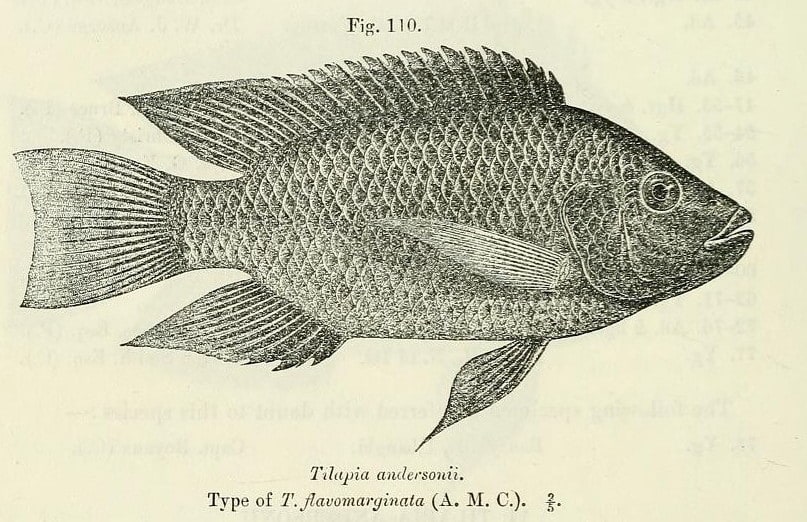
Taxonomy
- Kingdom
- Animalia
- Phylum
- Chordata
- Class
- Actinopterygii
- Order
- Gadiformes
- Family
- Cichlidae
- Genus
- Oreochromis
- Species
- andersonii
Habitat
Threespot tilapia inhabit freshwater rivers, lakes, and floodplains in southern Africa, preferring warm, slow-moving waters with abundant vegetation. They are commonly found in the Zambezi, Okavango, and Kafue river systems, thriving in areas with muddy or sandy substrates and submerged plants for cover.
Diet
Threespot tilapia primarily feed on algae, aquatic plants, and detritus, supplemented by insects, small crustaceans, and occasionally small fish. They are opportunistic feeders, grazing during the day in shallow waters and using their specialized mouths to scrape food from surfaces. Feeding activity peaks in the morning and late afternoon when visibility is good.
Behavior
Threespot tilapia are generally social fish that form schools in open water but become territorial during breeding seasons. They are active during the day, often hiding in vegetation to avoid predators, and exhibit aggressive defense of nesting sites. Males perform courtship displays to attract females, and they are known for their adaptability to varying water conditions.
Fishing
Targeting Threespot tilapia, a valued sport and food fish in southern Africa's freshwater systems, offers anglers a chance to contribute to conservation through responsible practices; license fees from fishing help fund habitat restoration in rivers like the Zambezi and Okavango. Use effective techniques such as bottom fishing or float rigs to present bait near vegetation-rich areas, focusing on light to medium spinning tackle with 6-10 lb test line, a 7-foot rod, and size 6-10 hooks to handle their feisty fights in slow-moving waters. Opt for bait like worms, small insects, or plant-based lures to mimic their diet of algae and detritus, as they feed most actively in the morning and late afternoon; the best season is during the warmer months from November to March when they are more aggressive due to breeding. Focus on habitats with muddy or sandy substrates and submerged plants in rivers and lakes such as the Zambezi, Kafue, and Okavango, where they school in shallower waters—approach quietly to avoid spooking them. Record sizes reach up to 45 cm and 10 lbs 6 oz, showcasing their potential as a thrilling catch. As a Vulnerable species per IUCN, adhere to slot limits and catch-and-release policies as effective management tools that maintain healthy populations, supported by angler-funded programs that protect these vital waterways and promote sustainable fishing.
Conservation Status
Listed as Vulnerable by IUCN.