
Overview
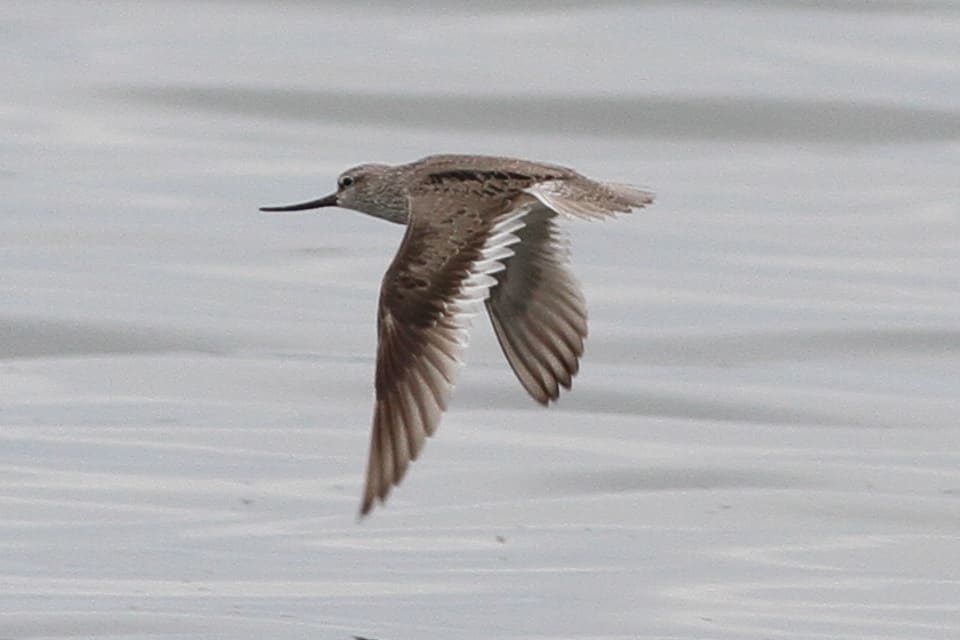
Slightly larger than the common sandpiper at 22–25 cm (8.7–9.8 in) length, its long upcurved bill – somewhat reminiscent of an avocet's, but not as strongly curved – makes it very distinctive. As the scientific specific name implies, this wader has a grey back, face and breast in all plumages; a white supercilium may appear more or less distinct. The belly is whitish and the feet yellow; the bill has a yellowish base, with the rest being black.
Taxonomy
- Kingdom
- Animalia
- Phylum
- Chordata
- Class
- Bird
- Family
- Charadriidae
- Genus
- Xenus
- Species
- cinereus
Habitat
Muddy areas.
Diet
It feeds in a distinctive and very active way, chasing insects and other mobile prey, and sometimes then running to the water's edge to wash its catch.
Behavior
t lays three or four eggs in a lined ground scrape. The Terek sandpiper likes to associate with ruddy turnstones (Arenaria interpres), smallish calidrids, and Charadrius (but maybe not Pluvialis) plovers; a vagrant bird at Paraty (Rio de Janeiro state) was noted to pair up with a spotted sandpiper (Actitis macularius). Thus it may be that the Terek sandpiper under natural conditions may mate with common sandpiper (A. hypoleucos), the Old World sister species of spotted sandpiper (A. macularius). As hybridisation in shorebirds is extremely commonplace and Actitis is among the closer relatives of the Terek sandpiper, such pairings (should they indeed occur) may produce hybrid offspring.
Hunting
More information is needed.
Conservation Status
Listed as Least Concern by IUCN.