
Overview
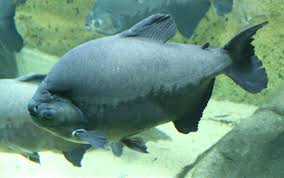
Tambaqui are oval-shaped fishes with distinctive counter-shading, being black ventrally and golden to olive or moss green dorsally. The pattern varies with the water type, with darker colors in dark rivers and lighter, duller hues in turbid water. Tambaqui look like their sharp-tooth cousins, the piranhas, but they possess a unique dentition. The teeth are multicusped molariform and incisive teeth. Tambaqui posses no maxillary teeth in contrast to the pirapitinga (Colossoma bidens) and all Brycon species. There are two rows of teeth in the upper jaw and pair of conical teeth behind the row of teeth in the lower jaw. The strong jaws and teeth enable them to crush large and often quite hard fruits and seeds of rubber trees and palm trees upon which they feed. A secondary feeding adaptation found in the mouth of the tambaqui is long and fine gillrakers that are used, especially in young fish in feeding on zooplankton.
Taxonomy
- Kingdom
- Animalia
- Phylum
- Chordata
- Class
- Actinopterygii
- Order
- Cypriniformes
- Family
- Characidae
- Genus
- Colossoma
- Species
- macropomum
Habitat
At flood times, tambaqui are found in the flooded forests. During the dry season, they stay in rivers and fishing becomes more productive.
Diet
Tambaqui primarily feed on fruits, seeds, and nuts from floodplain trees like rubber and palm species, which they crush with their strong molariform teeth. They also consume aquatic plants, algae, and occasionally small invertebrates or zooplankton, especially when young. Feeding activity peaks during the flood season when food is abundant in inundated forests.
Behavior
Tambaqui are schooling fish that form large groups for protection and feeding, particularly in rivers and flooded areas. They are primarily diurnal, active during the day for foraging, and exhibit migratory behavior following seasonal floods to access new food sources. These fish are not highly territorial but may show aggression during spawning.
Fishing
Anglers locate tambaqui by finding a tree with ripe fruit or seeds; there fish can be found waiting to devour the fruit as it falls into the water. Fruits and seeds or imitations of them are used as bait and the most suitable tackle is medium to heavy. Subsistence fishermen often wait beneath the trees where they harpoon the giant characins when they surface to take the floating seeds. This fish is the largest characin in the region and is an important food fish as well as an angling target. There's a high demand for this species for aquaculture because it can live in mineral poor waters and is very resistant to diseases.
Conservation Status
Listed as Not Evaluated by IUCN.