
Overview
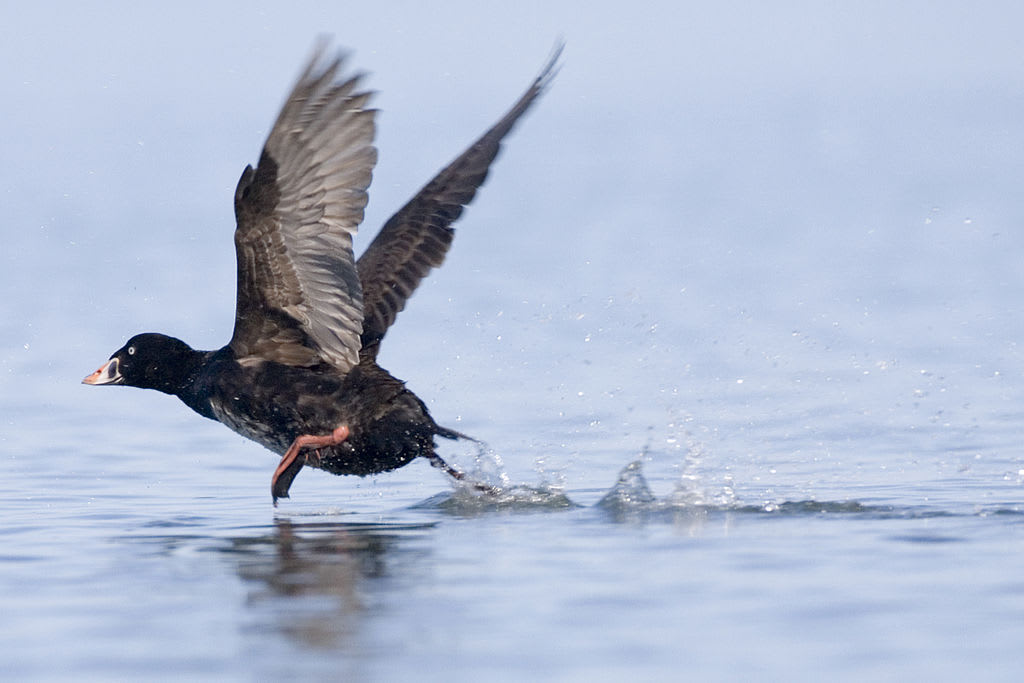
The Surf Scoter a sea duck only found in North America. This bird has a length of around 19 inches and an average weight of 2 lbs.. The drake is almost entirely black in color with a white patch on its forehead and another white patch on the back of its neck. Their bill is very distinct with the drake having a large swollen top bill that is white, red, and yellow with an orange coloration. The hen is dark brown to light brownish in coloration with occasional white feathers on the body. The female’s appearance is similar in all Scoter species. They prefer nesting sites in brushy wooded areas near bodies of water. They prefer estuaries along the coast and also in some fresh water. They mainly feed on mollusks, aquatic vegetation, seeds, and musk grass.
Taxonomy
- Kingdom
- Animalia
- Phylum
- Chordata
- Class
- Bird
- Family
- Anatidae
- Genus
- Melanitta
- Species
- perspicillata
Habitat
During breeding season the Scoter is located in northern parts of Canada and Alaska. When migration occurs these birds will split into two different migration paths. Half will go west and others on the east side of the United States.
Diet
The surf scoter mainly feeds on benthic invertebrates. During the breeding period, surf scoters forage in pairs or small groups on a diverse range of freshwater invertebrates. However, the sea ducks feed on marine organisms for the rest of the year, in flocks ranging from a few individuals to several thousands birds. Important foods include crustaceans, herring spawn, gastropods and small bivalves such as mussels.
Behavior
The lined nest is built on the ground close to the sea, lakes or rivers, in woodland or tundra. 5–9 eggs are laid. The offspring will fledge independently at about 55 days.
Hunting
Typically hunted with a 12 ga shotgun. Shot size #2-4 is sufficient. Effectively hunted with decoys and calling. Dogs are used for bird retrieval. Steel shot is required for waterfowl in the United States.
Conservation Status
Listed as Least Concern by IUCN.