
Overview
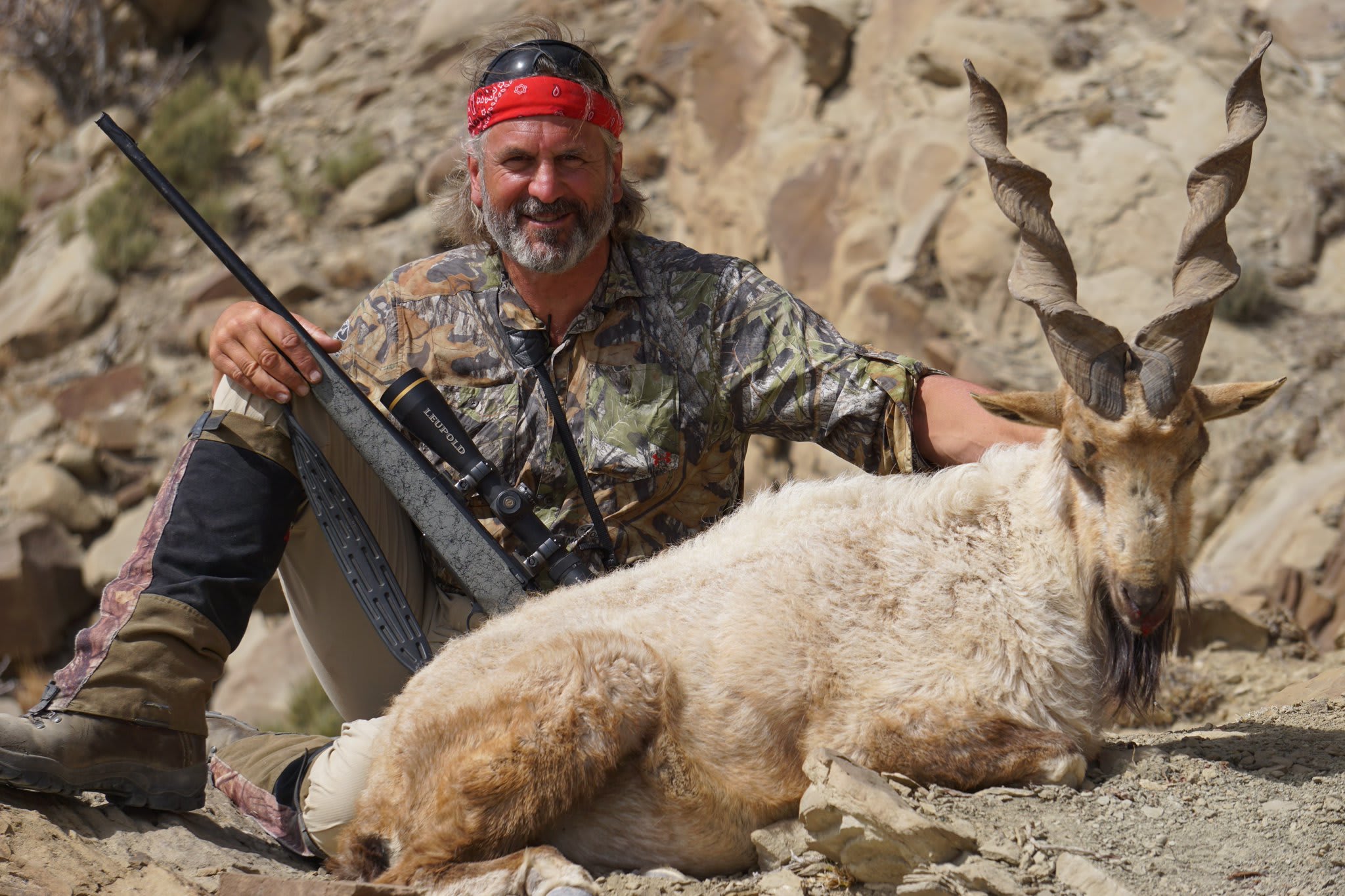
A smaller markhor with a comparatively short body. The coat is short, coarse and thick in winter, short and smooth in summer. The male's ruff is much shorter and less conspicuous than in the northern races. The horns are straight, forming two to three complete spiral turns that can have either a tight twist resembling a corkscrew or a more open twist of the Kabul type. The Sulaiman markhor was first given subspecific status on the basis of its tightly spiralling horns. Paradoxically, such horns appear to be in the minority in most of its range. Schaller found that 100 percent of the markhors he examined from Gadabar Ghan had open spirals, as did 89 percent from Toba-Kakar and 65 percent from around Quetta. He was unable to distinguish an open-spiraled Sulaiman horn from a normally straight, open-spiraled Kabul horn. He also found a very small percentage of Sulaiman markhors with slightly flaring horns somewhat similar to those from Kashmir. In colonial times it was customary to measure these horns in a straight line; however, SCI measures them around the spiral along the keel that begins at the back of the base. Mature Sulaiman markhor females have 6-7-inch (15-18 cm) horns showing one twist.
Taxonomy
- Kingdom
- Animalia
- Phylum
- Chordata
- Class
- Mammal
- Order
- Artiodactyla
- Family
- Bovidae
- Genus
- Capra
- Species
- Capra falconeri
Habitat
Desert mountains not usually higher than 10,000 feet (3,000 m), but offering some of the more difficult and dangerous hunting for mountain game in the world. Stockley wrote that the ground this animal lived on was particularly bad, the rock being crumbly and rotten as well as steep. He felt it was only this that had saved the animal from extermination by local tribesmen. Compared to the other markhor subspecies, this animal inhabits land that is more clear and arid. Distribution- Pakistan, south of the Gumal River, mainly in the Sulaiman range and the Torghar hills of the Toba-Kakar range (District Zhob), and in the Takatu Hills (District Quetta).
Diet
Markhors tend to graze in warmer months and browse more heavily in the winter. Like the Ibex, they stand on their hind legs to eat leaves and shoots from trees.
Behavior
The mating season occurs in winter, during which the males fight each other. The gestation period lasts 135 to 170 days, after which usually one or two offspring are born. The Markhor live in flocks, numbering usually close to ten animals, composed of adult females and their offspring. Adult males are largely solitary. Their alarm call closely resembles the bleating of domestic goats.
Hunting
As with other species in northern Pakistan, markhor hunts are held in several community controlled hunting areas (CHAs) where 80% of the license fee is turned over to the communities to ensure sustainability of conservation initiatives. Difficulty varies when hunting markhor, depending on terrain and weather. When these animals are on cliffsides or out of shooting range, hunters must be patient, as the markhor will frequent a water resource every other day. Most hunting is done on foot but some driving may be needed.
Conservation Status
Listed as near threatened by the IUCN.