
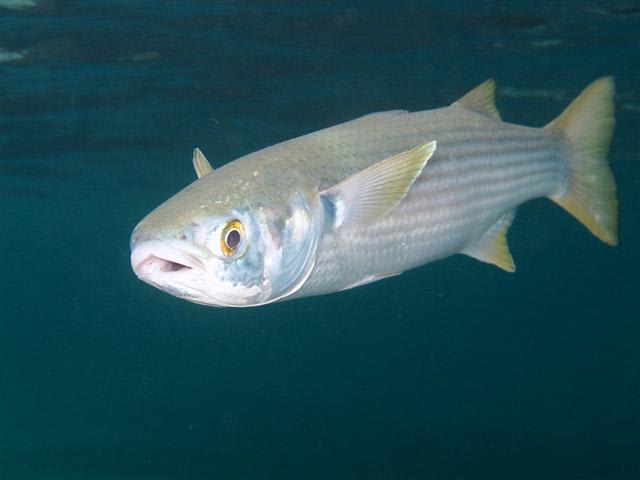
Taxonomy
- Kingdom
- Animalia
- Phylum
- Chordata
- Class
- Actinopterygii
- Order
- Perciformes
- Family
- Mugilidae
- Genus
- Mugil
- Species
- cephalus
Habitat
Striped mullet primarily inhabit coastal marine waters, estuaries, and brackish lagoons, often in shallow areas with sandy or muddy substrates. They prefer warm, temperate to tropical regions and can tolerate a wide range of salinities, from freshwater to full seawater. In the United States, they are commonly found in places like Texas's Upper Laguna Madre.
Diet
Striped mullet mainly feed on detritus, algae, and diatoms scraped from the bottom substrates using their specialized mouths. They exhibit filter-feeding behavior, sifting through organic matter in the water column. Feeding activity is most active during the day, particularly in the morning and evening.
Behavior
Striped mullet are highly schooling fish that form large groups for protection and feeding, often migrating seasonally between inshore and offshore waters. They are active swimmers during the day and tend to rest in deeper areas at night, exhibiting evasive behaviors like jumping when threatened. These fish are not particularly territorial but may show schooling hierarchies based on size.
Fishing
Striped mullet, a popular sport and food fish, offer exciting angling opportunities while supporting aquatic conservation through license fees that fund habitat restoration and population monitoring programs; target them in shallow coastal waters, estuaries, and brackish lagoons like Texas's Upper Laguna Madre, where they school over sandy or muddy substrates in warm, temperate to tropical regions. Employ light tackle setups with a 6- to 8-foot medium-light rod, a spinning reel spooled with 6- to 10-pound monofilament line, and a simple bottom rig or float rig to present bait effectively, using live options like shrimp, worms, or small pieces of bread to mimic their detritus and algae diet, as they are primarily filter-feeders. The best techniques involve casting near schools during their active feeding periods in the morning and evening, using a slow retrieve or stationary presentation to entice bites, though cast nets or seines are common for commercial harvest; focus on the late fall and winter spawning seasons for peak activity, but fishing can be productive year-round in stable populations. Record sizes include the IGFA all-tackle world record of 10 pounds 6 ounces, with adults typically reaching 30 to 50 cm and up to 70 cm in exceptional cases. Effective management tools like slot limits and bag restrictions in areas such as the U.S. Gulf Coast help maintain healthy mullet populations, ensuring sustainable harvests that benefit from angler-funded initiatives like excise taxes on tackle, which protect waterways and promote catch-and-release practices to support long-term conservation efforts.
Conservation Status
Listed as Least Concern by IUCN.