
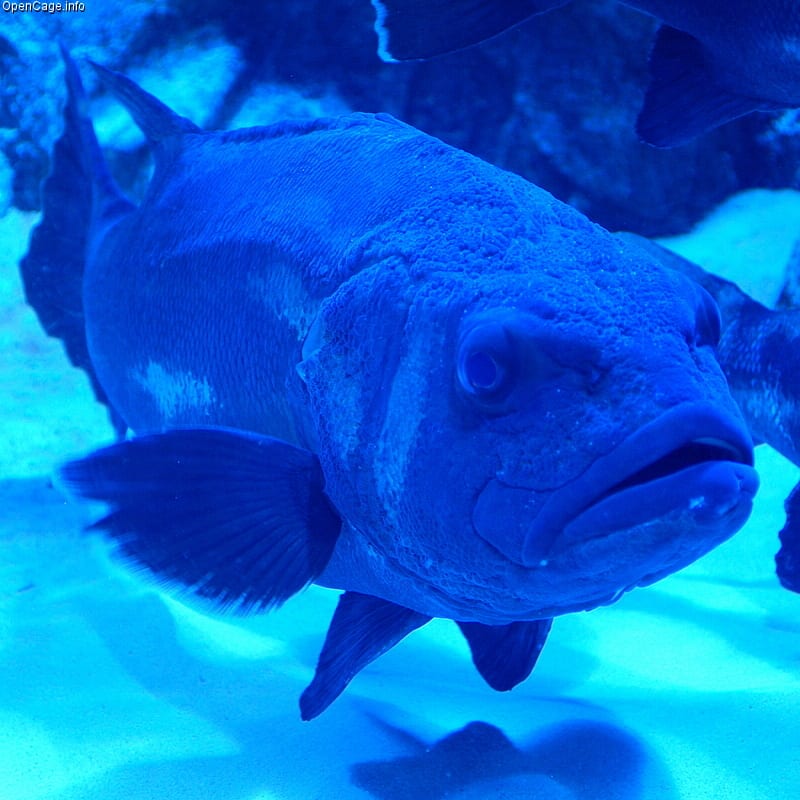
Taxonomy
- Kingdom
- Animalia
- Phylum
- Chordata
- Class
- Actinopterygii
- Order
- Perciformes
- Family
- Polyprionidae
- Genus
- Stereolepis
- Species
- doederleni
Habitat
This species inhabits coastal waters of the Northwest Pacific, including areas around Japan, Russia, and South Korea, typically over rocky reefs and sandy bottoms. It prefers depths from 50 to 200 meters, where it can find shelter and ambush prey. These fish are often found in both inshore and offshore environments.
Diet
Striped jewfish primarily feed on smaller fish such as sardines and anchovies, as well as squid and crustaceans. They are ambush predators that hunt during the day, using their size and speed to capture prey in open water or near the seafloor. Feeding activity peaks in the morning and evening when prey is more abundant.
Behavior
Striped jewfish are generally solitary and territorial, defending specific areas around reefs or structures. They are active during the day, patrolling their territory for food, and tend to rest in deeper waters at night. This species exhibits aggressive behavior when threatened or competing for food, but they are not known for long migrations.
Fishing
Targeting striped jewfish (Stereolepis doederleni) in the Northwest Pacific waters around Japan, Russia, and South Korea requires heavy tackle and strategic techniques to handle these powerful ambush predators found over rocky reefs and sandy bottoms at depths of 50 to 200 meters. Use bottom fishing or jigging methods with strong rods (8-12 feet), reels spooled with 50-80 lb test line, and circle hooks to minimize injury and support catch-and-release practices; effective baits and lures include live sardines, anchovies, or squid mimics, presented near the seafloor to mimic their natural prey. The best season is summer during spawning, with peak activity in the morning and evening for higher success rates. Focus on inshore and offshore coastal areas where they patrol for food, ensuring you adhere to local regulations as effective management tools that sustain populations. Striped jewfish can grow to record sizes, with the IGFA all-tackle record at 186 pounds 15 ounces, showcasing the excitement of this sport fish. Angler-funded programs through license fees and excise taxes play a key role in conservation, supporting habitat restoration and monitoring to prevent overfishing declines, making recreational fishing a vital tool for protecting these waters.
Conservation Status
Listed as Not Evaluated by IUCN.