
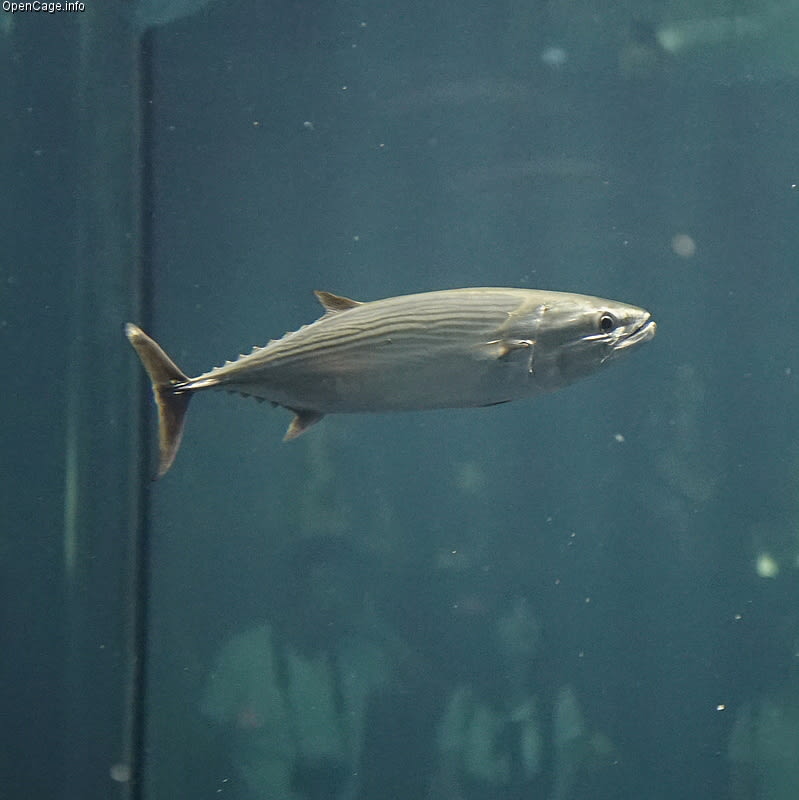
Taxonomy
- Kingdom
- Animalia
- Phylum
- Chordata
- Class
- Actinopterygii
- Order
- Perciformes
- Family
- Scombridae
- Genus
- Sarda
- Species
- orientalis
Habitat
Striped bonito primarily inhabit open pelagic waters of tropical and subtropical oceans, often near the surface or in mid-water depths. They prefer areas with strong currents, upwellings, or near islands and reefs that attract prey. Their range spans the Atlantic, Indian, and Pacific Oceans, avoiding colder temperate regions.
Diet
Striped bonito feed mainly on small schooling fish such as anchovies, sardines, and mackerel, as well as squid and crustaceans. They hunt in coordinated schools, using high speeds to chase and corral prey, typically during daylight hours when visibility is optimal.
Behavior
Striped bonito are highly social fish that form large schools for protection and cooperative hunting. They are fast swimmers, capable of speeds up to 40 mph, and exhibit migratory patterns following food sources or warmer waters. They can be aggressive and acrobatic when hooked, making them exciting for anglers.
Fishing
Striped bonito, a hard-fighting member of the tuna family, offer exciting sport fishing opportunities that support ocean conservation through angler-funded programs like license fees and habitat restoration; target them in open pelagic waters of tropical and subtropical oceans, such as the Atlantic, Indian, and Pacific, focusing on areas with strong currents, upwellings, or near islands and reefs where they school and hunt prey. Use trolling as the top technique, pulling lures at speeds of 5-10 knots to mimic their fast-swimming prey, or opt for casting with metal jigs, spoons, or live bait like anchovies and sardines for surface action; equip yourself with medium-heavy rods (7-9 feet) paired with conventional reels spooled with 20-50 lb test line and strong hooks to handle their explosive runs and acrobatic jumps. The best seasons are during warmer months from spring through fall when they migrate and spawn, with peak activity in daylight hours when they actively feed on schools of small fish; aim for early morning or late afternoon for the most bites. The IGFA all-tackle world record stands at 23 pounds 8 ounces, caught in the Pacific, highlighting their impressive size potential. Conservation efforts, including catch-and-release practices and slot limits in certain regions, ensure healthy populations by allowing mature fish to spawn, with angler contributions through excise taxes directly funding marine protected areas and research.
Conservation Status
Listed as Least Concern by IUCN.