
Overview
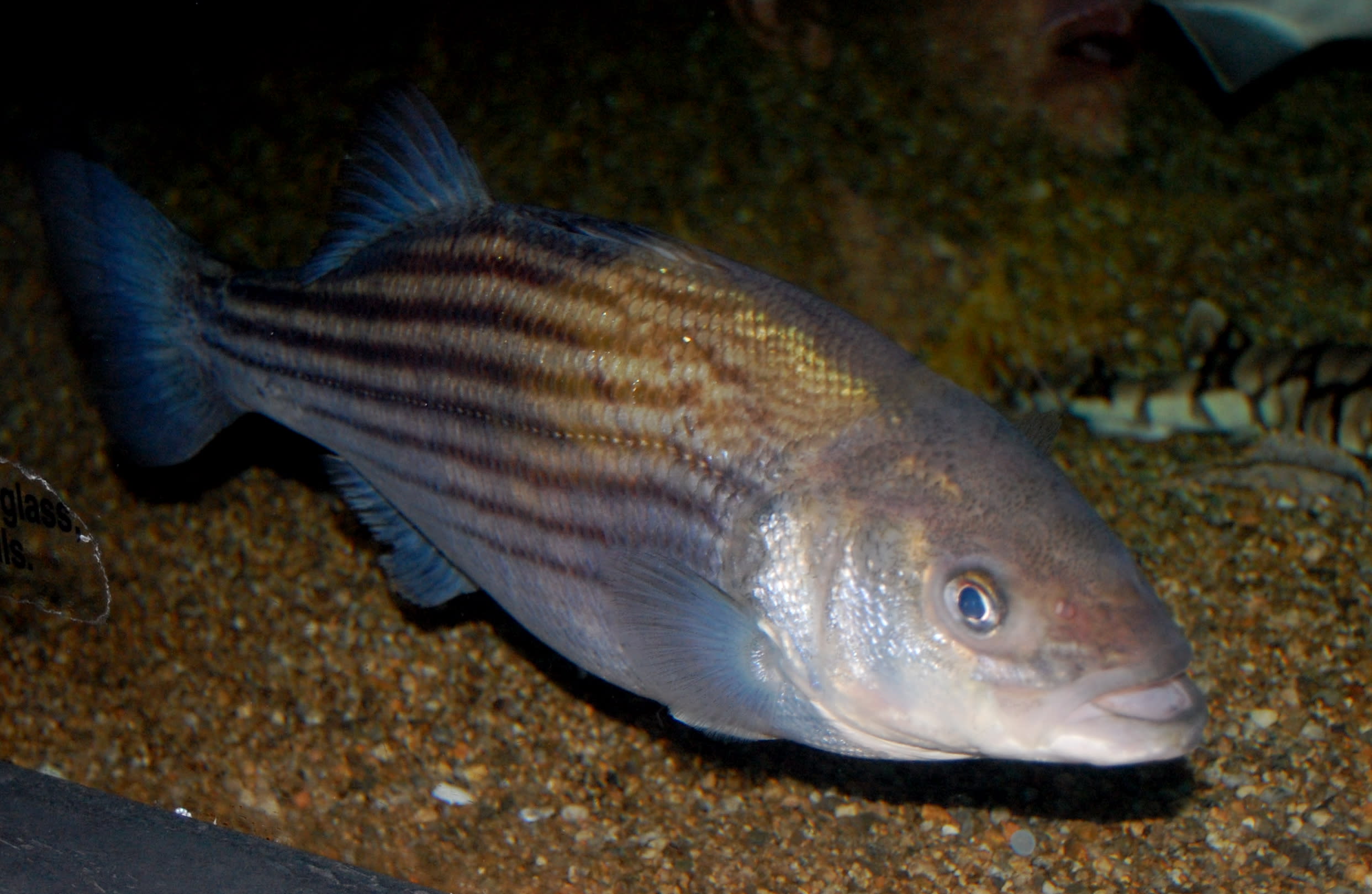
In saltwater, the striped bass is anadromous and migratory. The striped bass is easily recognized by the 7 or 8 prominent black stripes that run along the scale rows on each side of its long, sleek, silvery body. One stripe runs along the lateral line, and the remainder are about equally divided above and below it. The first dorsal fin has 8 10 spines and the second, 10 13 soft rays. The anal fin has 3 spines followed by 7 13 soft rays. The dorsal fins are completely separated. The striped bass is longer and sleeker and has a larger head than its close and similar looking relative, the white bass. The striped and white basses have been crossed to create a hybrid known as the whiterock or sunshine (in Florida) bass. Striped bass can be distinguished from hybrids by the regularity of stripes while the hybrid usually has interrupted or broken stripes.
Taxonomy
- Kingdom
- Animalia
- Phylum
- Chordata
- Class
- Actinopterygii
- Order
- Perciformes
- Family
- Moronidae
- Genus
- Morone
- Species
- saxatilis
Habitat
In some of these waters populations have become landlocked due to artificial impoundments that blocked their return to the sea. In recent years, striped bass have been introduced into freshwater systems in most of the states.
Diet
A voracious and opportunistic predator, the striped bass will consume all types of fishes. Baits and lures include mullet, squid, eels, crabs, clams, bloodworms, plugs, spoons, flies, and casting lures.
Behavior
This species is seasonally migratory for spawning purposes. Spawners often seek areas with strong turbulent flow and substrates of rock and/or fine gravel. At Powell Reservoir, Utah, spawning occurred over a rocky shoal in or near the mixing zone of river water and reservoir water.
Fishing
To most freshwater anglers, this very important game fish is relatively new. A voracious and opportunistic predator, the striped bass will consume all types of fishes. A wide variety of fishing methods are successfully employed, including trolling, jigging, bait fishing, surf casting, fly fishing, and spinning. Baits and lures include mullet, squid, eels, crabs, clams, bloodworms, plugs, spoons, flies, and casting lures
Conservation Status
Listed as Least Concern by IUCN.