
Overview
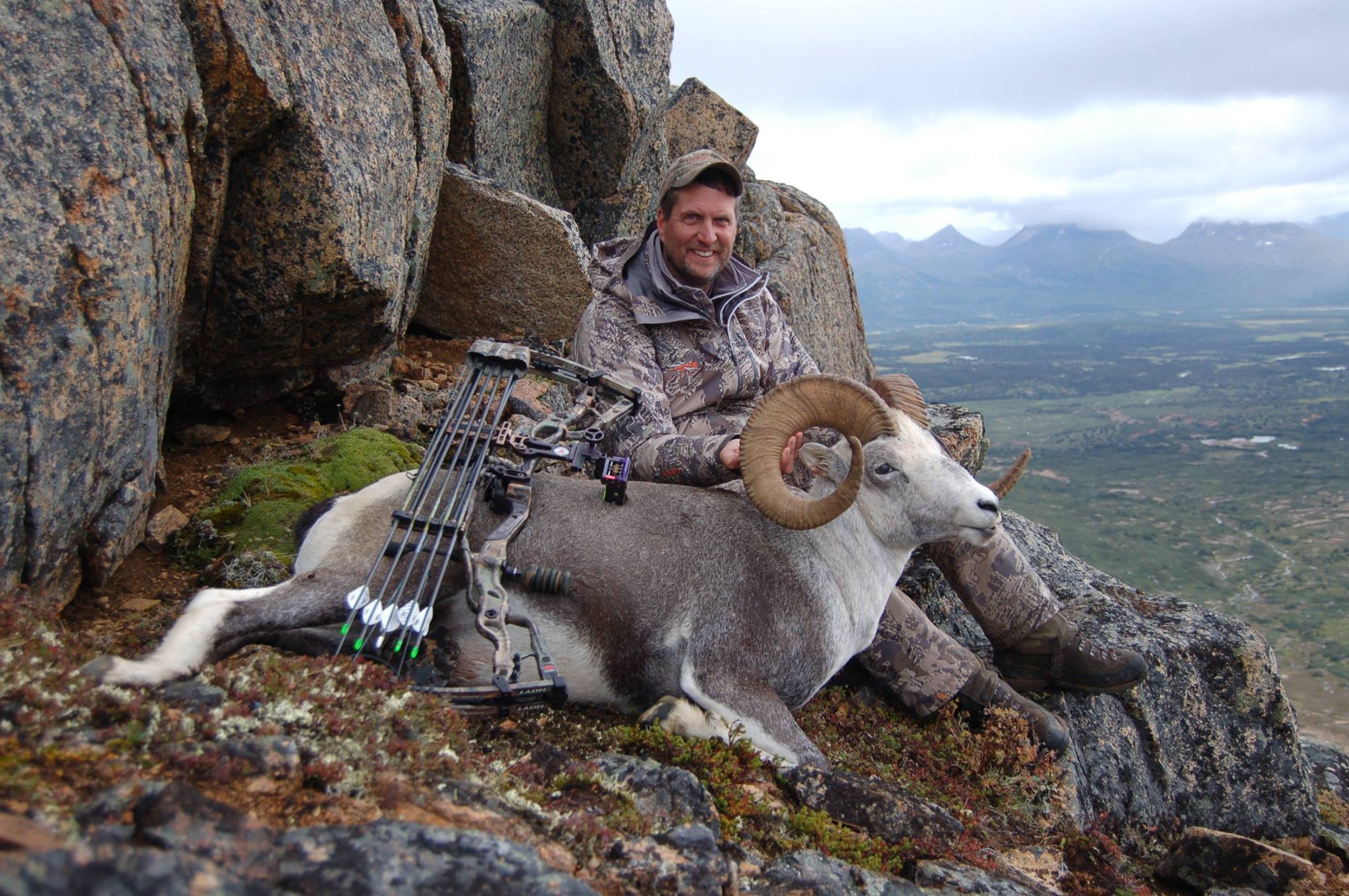
The Stone sheep has been described as a Dall sheep in evening dress, differing from the Dall mainly by not being white. Individuals vary greatly in color and pattern, ranging from almost white in the north through shades of gray and brown to nearly black in southern areas. (Sheep that appear black at a distance actually have a brownish tinge at close range.) Sheep of various colors may be found in the same group. The head, and often the neck, are a lighter color than the body. The muzzle, belly, backs of legs, and rump are white. The tail is black, and is usually connected by a dark band to the dark hairs of the back. Older rams sometimes have a dark band across the white belly. Horns are brown or dark amber and exhibit considerable variation in size and shape. The age rings are more clearly defined than in Dall or bighorn rams. Females have short, slim horns, and are considerably smaller than males. Stone sheep are generally darker in color in British Columbia than in any other area where they are found.
Taxonomy
- Kingdom
- Animalia
- Phylum
- Chordata
- Class
- Mammal
- Order
- Artiodactyla
- Family
- Bovidae
- Genus
- Ovis
- Species
- Thinhorn sheep, dalli
Habitat
Alpine country, including glacier edges, below the permanent snow line. Essential elements are steep, rugged cliffs and rock outcroppings for escape from predators, and nearby meadows for feeding.
Diet
They graze on large varieties of grasses in the summer months, and consume lichens and mosses in smaller amounts, especially when necessary in colder months.
Behavior
Stone sheep travel long distances to reach vegetation that meets their dietary needs. Females group together with lambs and yearlings, and males remain in bachelor herds except during the early winter mating season.
Hunting
Stone sheep hunts are more expensive than those for Dall sheep, and there are fewer licenses available. All hunts are conducted with horses, and can often be arranged to include other species as well. As it would be impossible to draw a line where Stone sheep end and Dall sheep begin, SCI's rule for record-keeping purposes is that a Dall sheep may have no dark hairs whatever, except on the tail. Any sheep that is not pure white (other than the tail) will be treated as a Stone sheep or Fannin Sheep. This follows long-established hunting tradition. Either a Fannin or a Stone counts toward the Grand Slam and the Ovis World Slam. However, for the Ovis World Slam Super 20, 30, or 40, both a Stone AND Fannin may be included.
Conservation Status
Listed as Least Concern by the IUCN.