
Overview
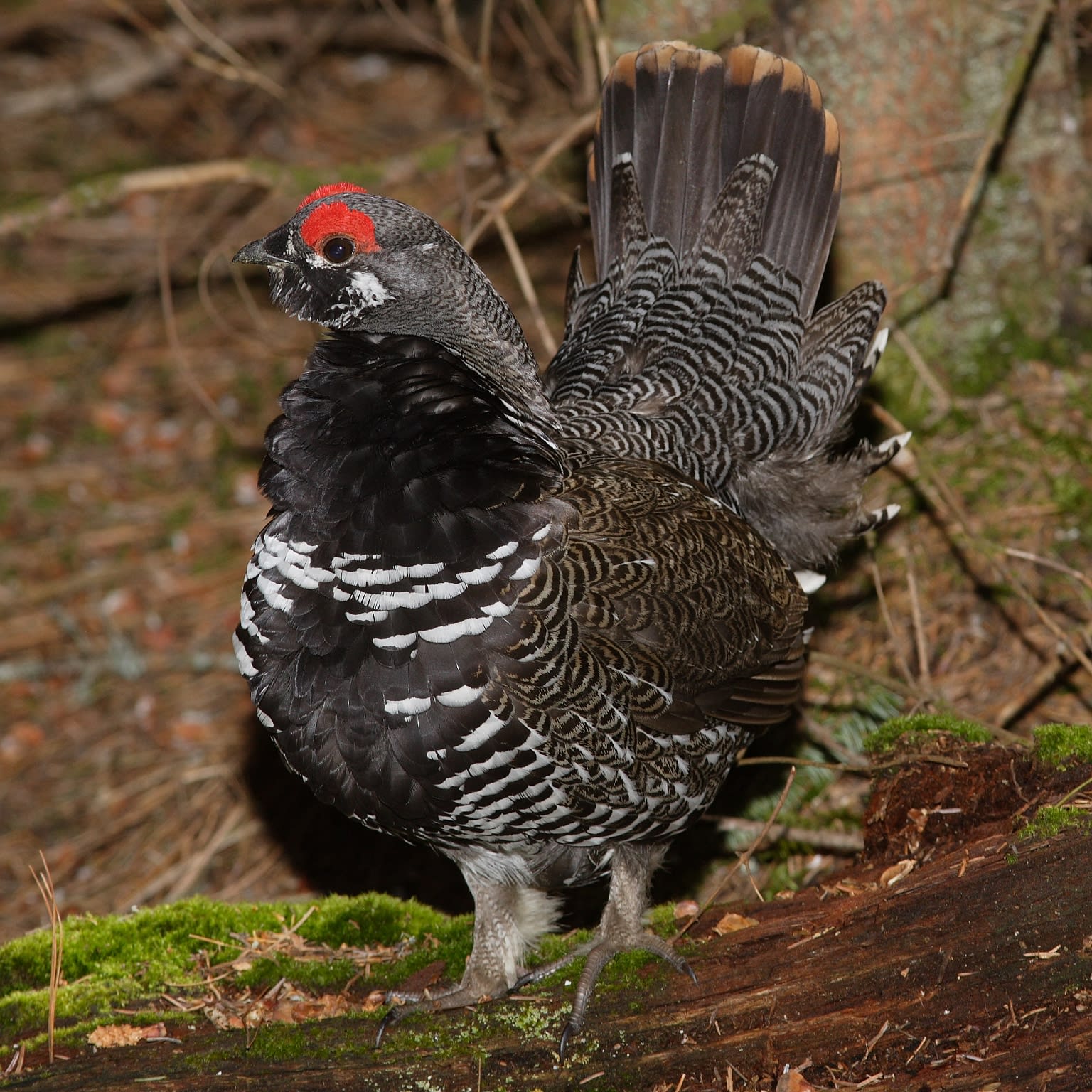
Races vary slightly in plumage, especially in the tail pattern and in the extent of white on the underparts, but in general adult males are mainly grey above and black below, with white spots along the side, and a red patch of bare skin over the eye. Adult females are mottled brown (red morph) or mottled grey (grey morph) with dark and white bars on the underparts. Juveniles resemble females. Females may be confused with ruffed grouse but they have a dark tail with a pale band at the end (while the reverse is true in ruffed grouse) and they do not erect their crown feathers when alarmed the way ruffed grouse do.
Taxonomy
- Kingdom
- Animalia
- Phylum
- Chordata
- Class
- Bird
- Family
- Phasianidae
- Genus
- Falcipennis
- Species
- canadensis
Habitat
Spruce grouse are always associated with conifer-dominated forests, be they pine, spruce, or fir. They seem to prefer young successional stands. In summer they can be found near rich understory of blueberries and other shrub, and in winter they prefer denser stands.
Diet
Conifer needles, berries, plants, fungi, insects.
Behavior
Males are promiscuous; they disperse and advertise a territory that is visited by females for mating. Females are solely responsible for the rest of the reproductive effort though males have been known to stay with young chicks and seem to aid in keeping the brood together. For a nest, they scratch a depression in the ground in a bush or under a low-lying coniferous branch or fallen tree, away from other females and from the males' territories. The nest is lined with grasses, leaves, and a few feathers. Nesting season is from early May to early July. Up to 10 eggs may be laid, the usual number being 4-7.
Hunting
Upland game bird most effectively hunted with a bird dog.
Conservation Status
Listed as Least Concern by IUCN.