
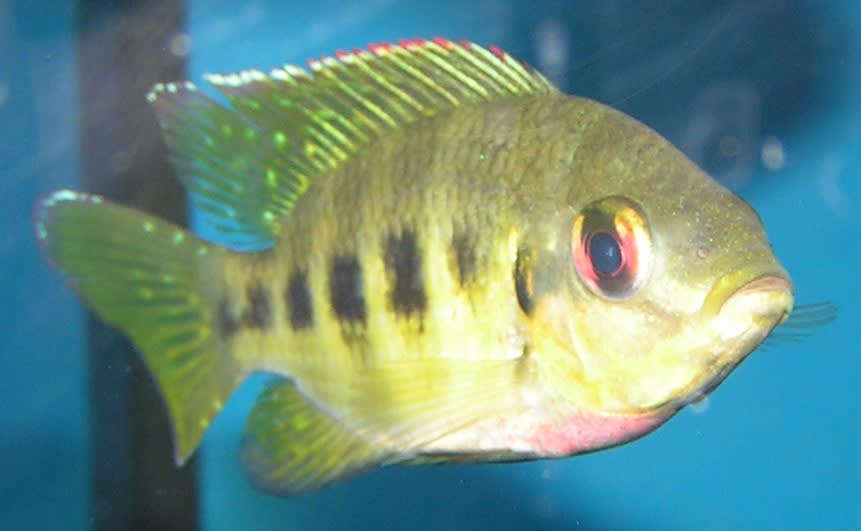
Taxonomy
- Kingdom
- Animalia
- Phylum
- Chordata
- Class
- Actinopterygii
- Order
- Gadiformes
- Family
- Cichlidae
- Genus
- Tilapia
- Species
- mariae
Habitat
Spotted tilapia primarily inhabit freshwater rivers, lakes, and streams in West Africa, favoring warm, slow-moving waters with abundant vegetation and substrates for hiding. They are adaptable to various aquatic environments, including man-made ones like reservoirs and canals, but thrive in areas with dense plant cover and muddy bottoms.
Diet
Spotted tilapia are omnivorous, feeding on algae, aquatic plants, insects, and small invertebrates like crustaceans and worms. They exhibit opportunistic feeding behavior, often grazing on biofilms during the day or scavenging in groups near the substrate.
Behavior
Spotted tilapia are territorial and aggressive, particularly males who defend nesting sites vigorously. They form pairs during breeding and exhibit parental care, with females mouthbrooding eggs; they are diurnal, active during the day, and often school in loose groups outside of breeding season.
Fishing
Targeting spotted tilapia (Tilapia mariae) in their native West African waters, such as the Cross, Sanaga, or Pra rivers, offers anglers a rewarding opportunity to engage in sustainable recreational fishing that supports conservation efforts through license fees and habitat programs. Use effective techniques like bottom fishing with a simple bobber rig or light spinning setups to entice these omnivorous fish, focusing on presenting baits near structures like submerged vegetation or muddy substrates where they feed. Recommended tackle includes a 6- to 8-foot light-action rod paired with 6- to 10-pound test line and size 8-12 hooks to handle their average size of 15-30 cm and weights up to 4 pounds without causing unnecessary harm. Opt for bait such as live worms, small insects, or plant-based lures like dough balls and soft plastics that mimic their natural diet of algae and invertebrates; these baits work best when fished slowly near the bottom during the day, as spotted tilapia are diurnal and most active in warm, tropical conditions. The best seasons are year-round in their equatorial habitats, with peak activity during the wet season when waters are warmer and food is abundant, ideally from dawn to dusk for higher catch rates. Focus on slow-moving freshwater rivers, lakes, and streams with dense vegetation and cover, casting near edges or structures to avoid spooking territorial fish. The IGFA all-tackle world record for tilapia species is around 4 pounds 6 ounces for related types, serving as a benchmark for spotted tilapia anglers. Conservation-wise, adhere to local regulations, such as slot limits or catch-and-release practices in managed areas, which are proven tools for maintaining stable populations—spotted tilapia are classified as Least Concern by the IUCN, and angler-funded initiatives in West Africa help protect these waterways through stocking programs and habitat restoration, ensuring fishing remains a vital conservation ally.
Conservation Status
Listed as Least Concern by IUCN.