
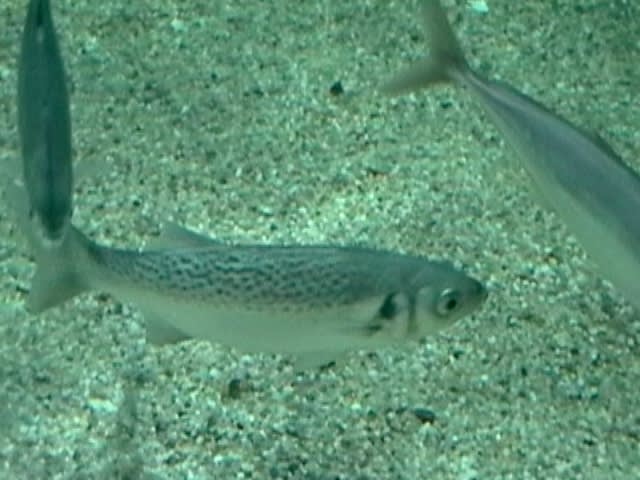
Taxonomy
- Kingdom
- Animalia
- Phylum
- Chordata
- Class
- Actinopterygii
- Order
- Perciformes
- Family
- Moronidae
- Genus
- Dicentrarchus
- Species
- punctatus
Habitat
Spotted seabass inhabit coastal waters, estuaries, and rocky or sandy seabeds in the Northeast Atlantic and Mediterranean Sea. They prefer depths from 10 to 100 meters, often near structures like reefs or wrecks that provide cover. This species tolerates a range of salinities, allowing it to venture into brackish waters.
Diet
Spotted seabass primarily feed on small fish such as anchovies and sardines, as well as crustaceans like crabs and shrimp. They are ambush predators that hunt during dawn and dusk, using their speed to chase and capture prey in open water or near the seafloor. Feeding behavior includes solitary or small group hunting in their preferred habitats.
Behavior
Spotted seabass are schooling fish that form loose groups, particularly during migration or feeding, but can become solitary in deeper waters. They are most active at dawn and dusk, exhibiting territorial behavior around feeding grounds or spawning areas. This species migrates seasonally to warmer waters in winter and is known for its strong swimming capabilities to evade predators.
Fishing
Target spotted seabass, a popular sport fish in the Northeast Atlantic and Mediterranean regions, using effective techniques like trolling, casting lures, or bottom fishing near structures such as reefs, wrecks, and rocky seabeds in depths of 10-100 meters; focus on estuaries and coastal waters where they school and ambush prey. Use light to medium spinning or baitcasting tackle with a 7-9 foot rod, 10-20 lb test line, and a reel capable of handling fast runs, paired with hooks sized 1/0 to 4/0 for versatility. Opt for bait like live anchovies, sardines, shrimp, or crabs to mimic their natural diet, or use lures such as jigs, soft plastics, and spoons that imitate small fish for exciting topwater or subsurface action. The best seasons are spring and early summer during spawning migrations, with peak activity at dawn and dusk when they hunt aggressively; always check local regulations for closed seasons or size limits, which serve as effective management tools to sustain populations. Spotted seabass can reach record sizes up to 1 meter and 4 lbs 12 oz, with the IGFA all-tackle world record for similar seabass species highlighting their fighting spirit—aim for fish in the 30-60 cm range for a balanced catch. As a Least Concern species with stable populations, recreational fishing supports conservation through angler license fees and excise taxes that fund habitat restoration and stocking programs, promoting catch-and-release practices to maintain healthy waterways and ensure long-term sustainability.
Conservation Status
Listed as Least Concern by IUCN.