
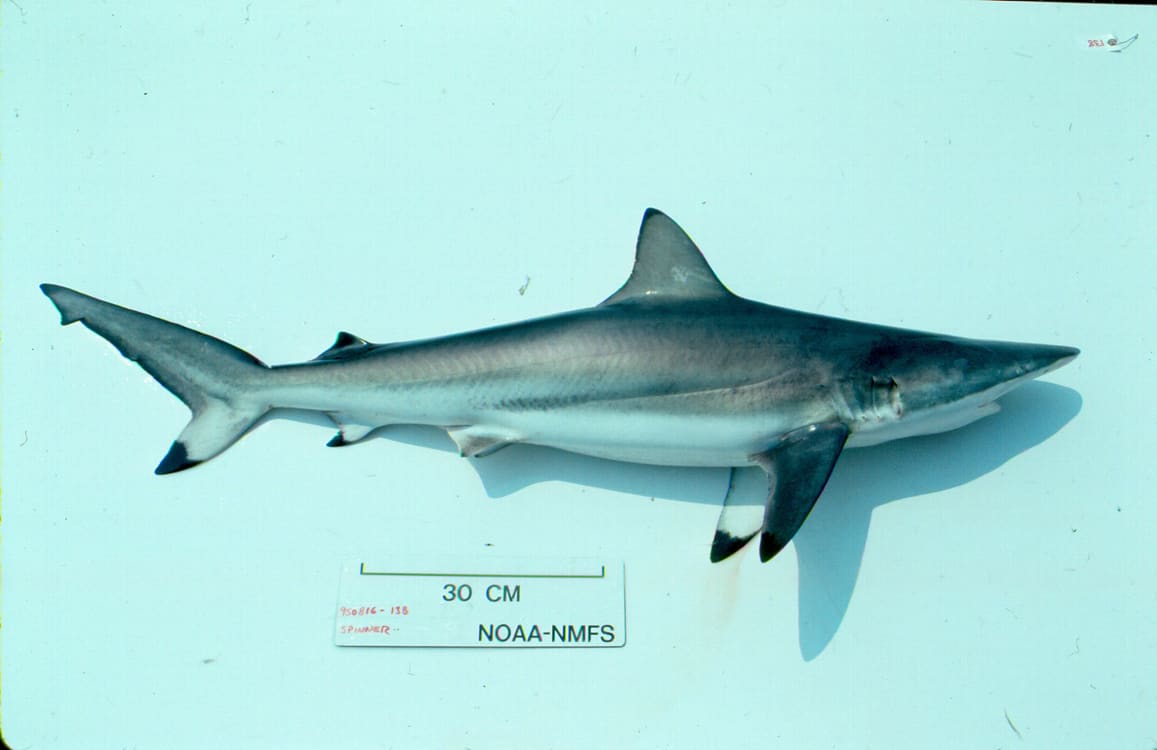
Taxonomy
- Kingdom
- Animalia
- Phylum
- Chordata
- Class
- Chondrichthyes
- Order
- Carcharhiniformes
- Family
- Carcharhinidae
- Genus
- Carcharhinus
- Species
- brevipinna
Habitat
Spinner sharks inhabit coastal waters, often near the surface in tropical and warm temperate oceans, preferring areas with sandy or muddy bottoms. They are commonly found in the Atlantic, Indian, and Pacific Oceans, from shallow inshore regions to depths of about 100 meters. These sharks migrate seasonally to follow prey and warmer waters.
Diet
Spinner sharks primarily feed on small schooling fish such as menhaden, mullet, and sardines, as well as squid and occasionally crustaceans. They employ a unique feeding behavior of spinning and leaping out of the water to corral and catch prey. Feeding activity peaks during the day when schools of fish are most active.
Behavior
Spinner sharks are often solitary but can form loose schools, especially when feeding or migrating. They are fast swimmers and exhibit energetic spinning leaps when hunting, which is a notable behavior used to disorient prey. These sharks are migratory, traveling long distances, and can become aggressive when threatened or caught on fishing lines.
Fishing
As a proven conservation tool, recreational fishing for spinner sharks supports aquatic habitat protection through angler license fees and excise taxes that fund restoration programs, helping maintain healthy shark populations in our oceans. Target these fast-swimming predators using trolling with live bait like menhaden or mullet, or lures that mimic small schooling fish, as they employ their signature spinning leaps to hunt; chumming can also attract them in coastal areas. Opt for heavy-duty tackle including a sturdy rod with 30-50 pound test line, a strong reel with drag, and circle hooks to promote safe catch-and-release practices that minimize injury. The best seasons are during warmer months from spring through fall when they migrate to follow prey in tropical and warm temperate waters, with peak activity during daylight hours when feeding is most intense. Focus on habitats like nearshore coastal waters with sandy or muddy bottoms up to 100 meters deep in the Atlantic, Indian, or Pacific Oceans, particularly around the United States coasts such as Texas near Port Aransas, where they are commonly found schooling or hunting. The IGFA all-tackle world record stands at 209 pounds 9 ounces, caught in 1980 off Texas, highlighting the thrill of these encounters while emphasizing the importance of regulations like slot limits and catch-and-release in many regions as effective management tools that sustain populations, especially given their Near Threatened status by the IUCN—angler-funded programs play a key role in protecting these migratory species and their ecosystems.
Conservation Status
Listed as Near Threatened by IUCN.