
Overview
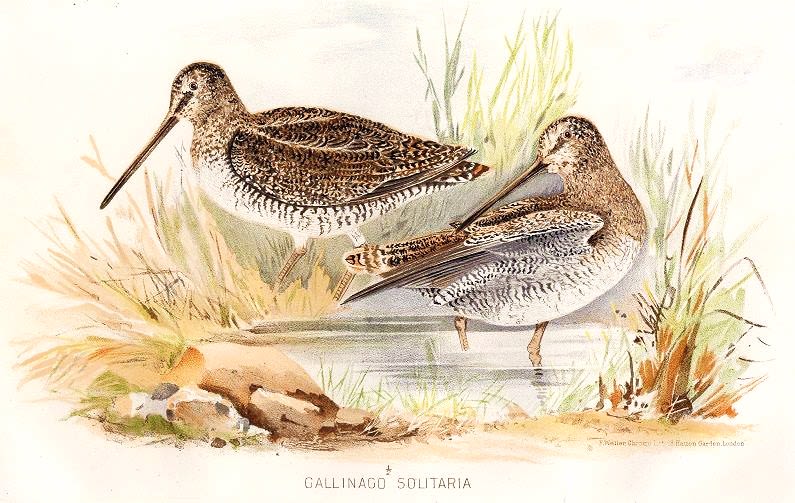
This is a large and heavy snipe with a stocky body and relatively short legs for a wader. Its upperparts, head and neck are streaked and patterned with medium brown stripes and whitish edges to the feathers forming lines down its back. The face is whitish. The breast is ginger-brown and the belly is white with brown barring on the flanks. The brown and black bill is long, straight and fairly slender. The legs and feet are yellowish-olive to yellowish-brown. All plumages are similar, but females average larger.
Taxonomy
- Kingdom
- Animalia
- Phylum
- Chordata
- Class
- Bird
- Family
- Charadriidae
- Genus
- Gallinago
- Species
- solitaria
Habitat
This snipe breeds in mountain bogs and river valleys above the timberline, typically from 2,400 m to 5000 m. It is often found in similar marshes and swamps at lower altitudes when not breeding or on migration.
Diet
Invertebrates, such as insects and worms, seeds and plants.
Behavior
The solitary snipe builds a saucer-shaped nest of dry grass in the drier areas of its breeding wetland. The nest is concealed in a dense tuft of grass or sedges. This bird has an aerial display, which involves flying high in circles, followed by a powerful stoop during which the bird makes a drumming sound, caused by vibrations of modified outer tail feathers. t is quite approachable, but if alarmed, it crouches, and its cryptic plumage provides effective camouflage when the bird stands motionless amongst marsh vegetation. When flushed, it drops back into the marsh after a short slow flight.
Hunting
More information is needed.
Conservation Status
Listed as Least Concern by IUCN.