
Overview
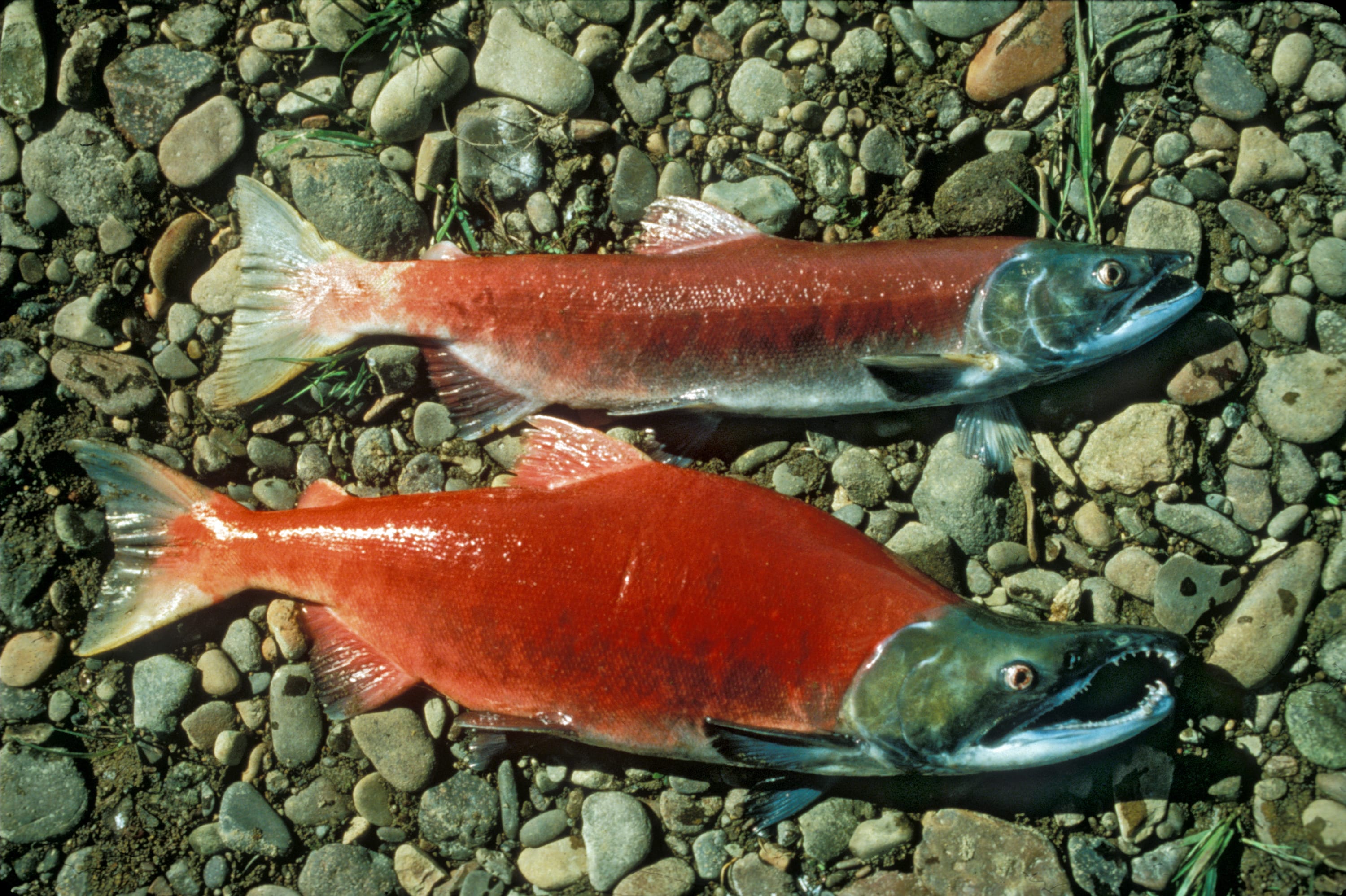
This is a non anadromous, or “landlocked,” form of the sockeye salmon and although the two are the same species and morphologically alike, there are individual differences. The strictly freshwater kokanee does not grow as large as the anadromous sockeye. Maximum size is variable depending on environmental conditions. Males turn from silvery to red at spawning time, while females become a somewhat darker grayish or grayish red color. Rarely, some freshwater populations, turn dull green or yellow instead of red. Both male and female die after spawning just like anadromous Pacific salmon.
Taxonomy
- Kingdom
- Animalia
- Phylum
- Chordata
- Class
- Actinopterygii
- Order
- Perciformes
- Family
- Salmonidae
- Genus
- Oncorhynchus
- Species
- nerka
Habitat
Sockeye salmon primarily inhabit cold, clear waters of the North Pacific Ocean, including the Arctic Sea and coastal areas of Alaska, Canada, and the northwestern United States. They spend most of their adult lives in open ocean environments but migrate to freshwater rivers, lakes, and streams for spawning, preferring gravel-bottomed areas with swift currents. Juveniles reside in nutrient-rich lakes and rivers before heading to the sea.
Diet
Its diet consists primarily of planktonic matter (mostly small aquatic crustaceans like “water flies” and a few insects).
Behavior
Sockeye salmon are highly migratory, forming large schools in the ocean and undertaking epic journeys back to their natal streams for spawning. They are primarily active during daylight hours for feeding and exhibit strong homing instincts using olfactory cues. During spawning, they become territorial, with males aggressively defending redds from rivals.
Fishing
The Kokanee is an extremely popular food and sport fish, but its diet consists primarily of planktonic matter (mostly small aquatic crustaceans like “water flies” and a few insects) which makes it a difficult fish to catch with traditional angling gear and baits. However, using a small piece of worm, a kernel of corn, a salmon egg, or insect larva such as a maggot as bait, or fly fishing with similar imitations have been successful. It is considered a delicacy when smoked
Conservation Status
Listed as Least Concern by IUCN.