
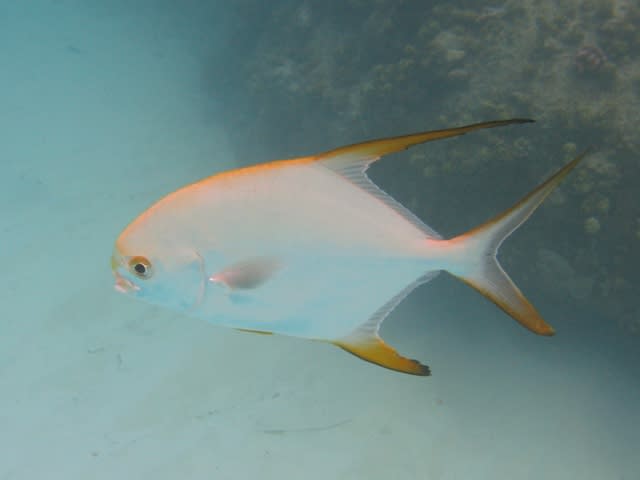
Taxonomy
- Kingdom
- Animalia
- Phylum
- Chordata
- Class
- Actinopterygii
- Order
- Cichliformes
- Family
- Carangidae
- Genus
- Trachinotus
- Species
- blochii
Habitat
This species inhabits coastal waters, including sandy beaches, reefs, and estuaries in the tropical and subtropical Indo-Pacific region. It prefers shallow areas up to 50 meters deep with sandy or muddy substrates for foraging. They are commonly found near shorelines and around islands in warm waters.
Diet
Snubnose Pompano primarily feed on small fish, crustaceans like shrimp and crabs, and mollusks such as clams. They hunt in schools during daylight hours, using their speed to chase prey in the water column. Feeding activity peaks in the morning and late afternoon over sandy bottoms.
Behavior
Snubnose Pompano form large schools for protection and feeding, often swimming rapidly in open water. They are diurnal, active during the day and resting at night, with seasonal migrations to follow food sources. These fish are not highly territorial but use group dynamics to evade predators.
Fishing
Anglers targeting the Snubnose Pompano, a prized sport fish in the tropical Indo-Pacific, should focus on trolling or casting techniques near shorelines, reefs, and estuaries to intercept their fast-moving schools. Use medium-light spinning or trolling outfits with 10-20 lb test line, paired with circle hooks to minimize injury and support catch-and-release practices that sustain populations. Effective baits include live shrimp, small crabs, or clams, while lures like silver spoons or jigs mimicking small fish work best for enticing strikes during their daylight feeding frenzies. The prime season runs from warmer months in regions like the Indian Ocean and Australia, with optimal times in the morning and late afternoon over sandy or muddy substrates up to 50 meters deep—prime habitats where these fish forage in schools. Record sizes include catches exceeding 100 cm and up to 11 pounds 2 ounces, with the IGFA all-tackle world record highlighting their fighting spirit as a conservation-friendly pursuit. As a Least Concern species per IUCN, regulated fishing through license fees funds habitat protection and stocking programs, ensuring Snubnose Pompano populations remain stable while promoting ethical angling that balances recreation with long-term waterway conservation.
Conservation Status
Listed as Least Concern by IUCN.