
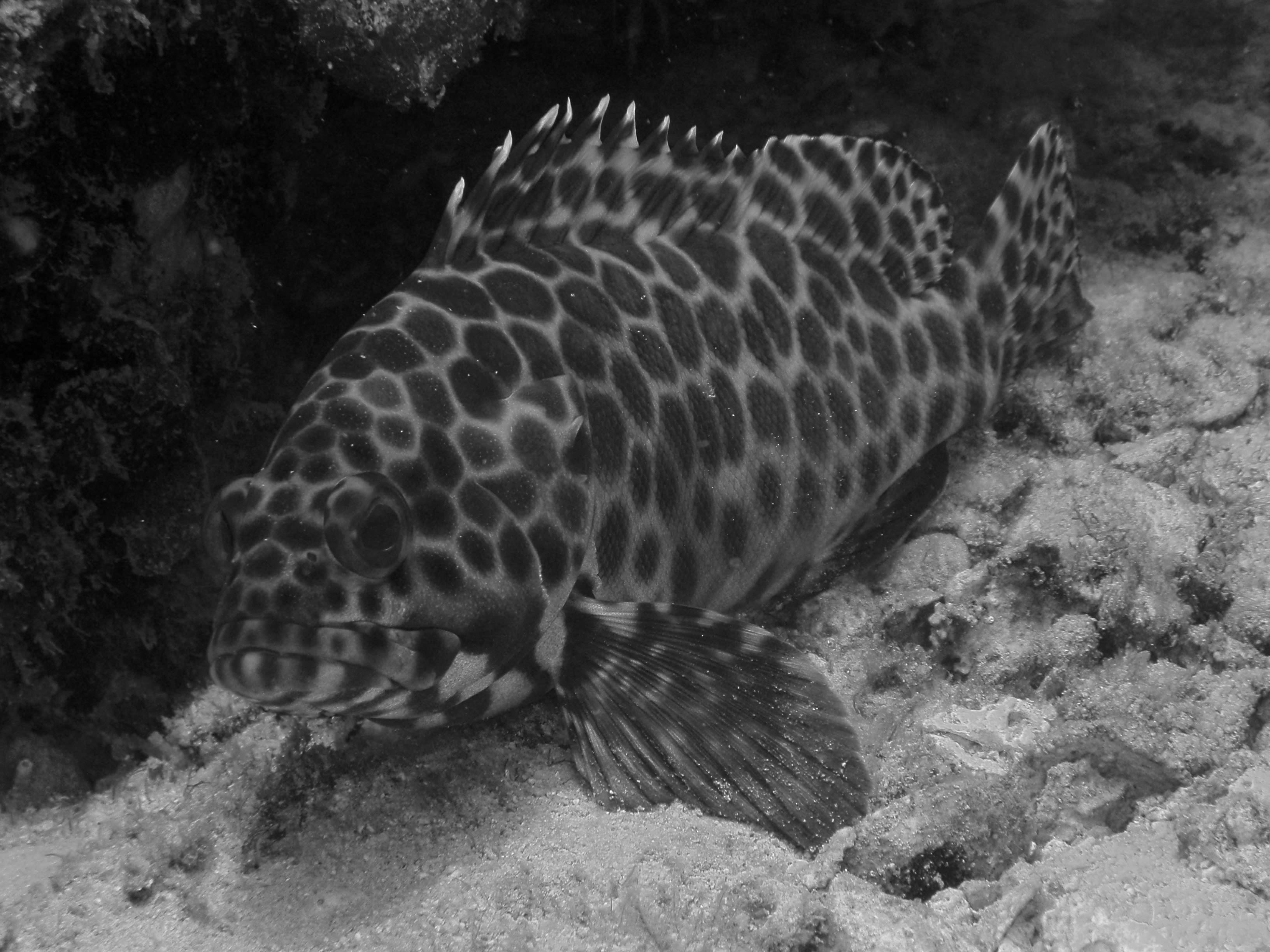
Taxonomy
- Kingdom
- Animalia
- Phylum
- Chordata
- Class
- Actinopterygii
- Order
- Scorpaeniformes
- Family
- Serranidae
- Genus
- Epinephelus
- Species
- macrospilos
Habitat
The Snubnose grouper primarily inhabits coral reefs and rocky substrates in tropical and subtropical waters. It prefers depths from 10 to 100 meters, often found around caves, ledges, and drop-offs in the Indo-Pacific region. This species avoids shallow, sandy areas, favoring structures that offer hiding spots.
Diet
The Snubnose grouper feeds mainly on small fish, crustaceans like crabs and shrimp, and occasionally cephalopods such as squid. It employs an ambush strategy, hiding among corals and striking quickly at prey. Feeding activity peaks during dawn and dusk in its reef habitats.
Behavior
Snubnose groupers are solitary and territorial, often claiming specific reef areas and chasing away intruders. They are primarily nocturnal or crepuscular, spending the day hidden in crevices to avoid predators. This species exhibits protogynous hermaphroditism, starting life as females and changing to males under certain conditions.
Fishing
Targeting the Snubnose grouper, a prized sport fish in the Indo-Pacific's coral reefs, involves effective bottom fishing or jigging techniques around caves, ledges, and drop-offs in depths of 10 to 100 meters, where these solitary ambush predators hide and strike at prey; use medium-heavy rods with 20-30 lb test line, sturdy reels, and circle hooks to handle their strong runs and reduce gut hooking for better catch-and-release success. Opt for live baits like shrimp, crabs, or small fish, or artificial lures such as jigs and soft plastics that mimic their natural diet of crustaceans and small fish, casting near structures during dawn and dusk when feeding activity peaks for the best strikes. The prime season runs from spring to summer in warmer tropical waters, aligning with spawning aggregations that support population stability, though fishing can occur year-round with regulations varying by region—always check local guidelines as effective management tools to maintain healthy stocks. The IGFA all-tackle world record stands at approximately 2 pounds 8 ounces, reflecting the species' modest size, but anglers contribute to conservation by practicing slot limits and catch-and-release, which, funded through license fees, help protect reef habitats and ensure sustainable populations as part of broader angler-supported programs that fund habitat restoration in the Indian and Pacific Oceans.
Conservation Status
Listed as Least Concern by IUCN.