
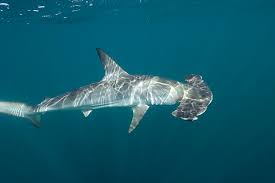
Taxonomy
- Kingdom
- Animalia
- Phylum
- Chordata
- Class
- Chondrichthyes
- Order
- Squaliformes
- Family
- Sphyrnidae
- Genus
- Sphyrna
- Species
- zygaena
Habitat
Smooth hammerhead sharks inhabit coastal waters of warm temperate and tropical oceans, often over continental shelves and around islands. They prefer depths from the surface down to about 500 meters and are commonly found in areas with abundant prey. Their range includes the Atlantic, Indian, and Pacific Oceans.
Diet
Smooth hammerheads primarily feed on bony fish such as sardines and mackerel, squid, and crustaceans like crabs. They also consume smaller sharks, rays, and occasionally seabirds, using their hammer-shaped head to pin down prey. They are opportunistic hunters, often active during the day in schools or alone.
Behavior
Smooth hammerheads are often solitary but may form schools, especially juveniles, and are migratory, following warm waters and prey seasonally. They exhibit curiosity towards divers and other objects, using their electroreceptive ampullae in the hammerhead to detect prey. They are generally active during the day and can be territorial around feeding areas.
Fishing
Target smooth hammerhead sharks using trolling, chumming, or drift fishing techniques in open coastal waters to capitalize on their migratory and daytime hunting behavior, ensuring you use heavy tackle to safely handle their powerful runs and size. Opt for a robust conventional rod and reel setup with 50-80 lb test monofilament or braided line, paired with a strong wire leader (at least 300 lb test) and large circle hooks to minimize injury during catch-and-release. Effective baits include live or dead fish like mackerel and sardines, or squid, which mimic their primary diet; lures such as large swimming plugs or skirted trolling lures can also work well. The best seasons are during warmer months in tropical and temperate regions, such as summer in the Atlantic or Pacific, with peak activity during daylight hours over continental shelves and around islands at depths up to 500 meters. Focus on areas like the Southeast Atlantic, Western Indian Ocean, or Southwest Pacific for higher encounter rates. The IGFA all-tackle world record stands at 369 pounds 7 ounces, highlighting the species' impressive size potential. As a Vulnerable species per the IUCN, anglers play a vital role in conservation by following regulations like mandatory catch-and-release, slot limits, and seasonal closures, which are effective management tools funded through fishing licenses that help sustain populations and protect oceanic habitats through habitat restoration programs.
Conservation Status
Listed as Vulnerable by IUCN.